Will the Supreme Court Hear Mamata Banerjee's Plea Against Bengal SIR Tomorrow?
Synopsis
The Supreme Court will review Mamata Banerjee's challenge against the Special Intensive Revision of electoral rolls, amid allegations of bias by the Election Commission. This pivotal case may have significant implications for voter representation ahead of the crucial elections in West Bengal.
Key Takeaways
The Supreme Court will hear Mamata Banerjee's plea against the SIR.
The case raises questions about voter rights .
Concerns about political bias by the Election Commission are central to the challenge.
The outcome may have wider implications for electoral processes across India.
West Bengal's government is actively involved in addressing the SIR concerns.
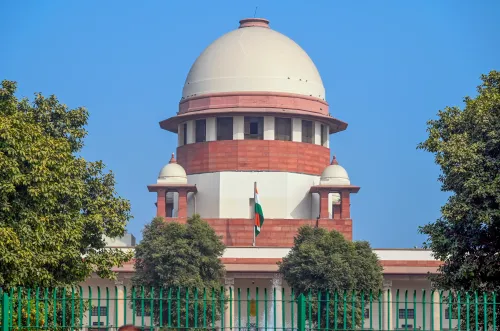
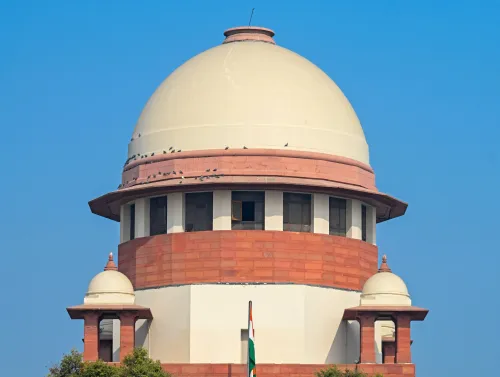
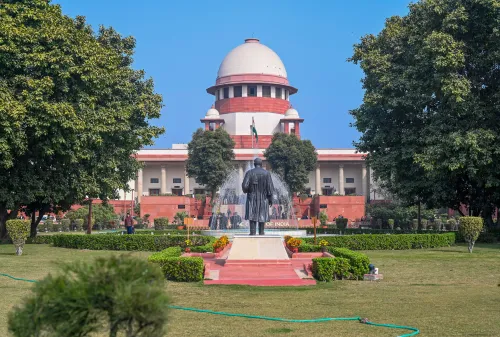
New Delhi, Feb 8 (NationPress) The Supreme Court is set to hear on Monday the petition lodged by West Bengal Chief Minister Mamata Banerjee, contesting the ongoing Special Intensive Revision (SIR) of electoral rolls in the state, which is preparing for elections this year.
The cause list released on the apex court's website indicates that a Bench headed by the Chief Justice of India (CJI) Surya Kant, along with Justices Joymalya Bagchi and N.V. Anjaria, will consider Banerjee's petition, alongside similar petitions from Trinamool Congress (TMC) MPs Dola Sen and Derek O'Brien on February 9.
In her petition, Chief Minister Banerjee raises concerns about the legality of the SIR process, alleging that the Election Commission of India (ECI) is acting with political bias. She claims that the current voter revision process could lead to the removal of names of numerous voters from marginalized communities.
Banerjee has requested interim orders preventing the deletion of any voter's name during the SIR process, especially those categorized under 'logical discrepancy.'
Previously, the apex court had issued a notice to the ECI regarding CM Banerjee's petition and scheduled the case for further consideration on Monday.
The CJI Kant-led Bench remarked that variations in spelling due to local dialects are common across India and should not serve as grounds for excluding legitimate voters.
During the proceedings, CM Banerjee asserted that women changing surnames post-marriage and individuals relocating were being disproportionately impacted by the SIR process.
She accused the ECI of selectively targeting West Bengal ahead of the upcoming elections, noting that similar voter revision processes were not occurring in Northeastern states like Assam, and stated that her repeated appeals to the ECI have gone unanswered.
The CJI assured the court would seek a practical solution, emphasizing that no genuine voter's rights could be infringed upon.
In a related update, the West Bengal government has informed the ECI that it can provide 8,505 Group-B officers for the ongoing SIR exercise.
The government also specified that Bengali-speaking officers should be assigned to minimize discrepancies related to language and spelling.
Meanwhile, the ECI clarified that permanent resident certificates from elected representatives or Block Development Officers (BDOs) will not be recognized as valid identity documents for the SIR process. Only certificates issued by District Magistrates, Additional District Magistrates, and Sub-Divisional Officers, or in Kolkata, by Collectors, under the 1999 legal provisions will be accepted as valid.
The ruling Trinamool Congress has raised objections to this clarification, with CM Banerjee accusing the ECI of intentionally rejecting valid documents to eliminate legitimate names from the voter list.
Point of View
It's essential to observe the complexities surrounding Mamata Banerjee's plea against the SIR process. This case touches on vital issues of electoral integrity and representation, highlighting broader national concerns about the fairness of electoral processes. The Supreme Court's decision will likely resonate far beyond West Bengal, underscoring the importance of safeguarding every citizen's right to vote.
NationPress
7 Oct 2026
Frequently Asked Questions
What is the Special Intensive Revision (SIR)?
The Special Intensive Revision (SIR) is a process initiated by the Election Commission to update electoral rolls, ensuring that all eligible voters are included and any discrepancies are addressed.
Why is Mamata Banerjee challenging the SIR?
Mamata Banerjee is challenging the SIR on the grounds of alleged political bias by the Election Commission, claiming it could result in the removal of names of marginalized voters from the electoral rolls.
What impact could the Supreme Court's decision have?
The Supreme Court's ruling could significantly affect voter representation in West Bengal and set a precedent for how electoral processes are managed in the future.
What is the role of the Election Commission in this context?
The Election Commission is responsible for overseeing the conduct of free and fair elections, including the maintenance and revision of electoral rolls.
When will the Supreme Court hear the case?
The Supreme Court is scheduled to hear the case on February 9.