Should the ECI Publish Names Flagged for 'Logical Discrepancies' in Bengal?
Synopsis
The Supreme Court mandates ECI to publish names flagged for 'logical discrepancies' during West Bengal's electoral roll revision, ensuring transparency and fairness in the process.
Key Takeaways
Supreme Court mandates transparency in electoral roll revision.
Publication of names flagged for 'logical discrepancies'.
Opportunity for affected individuals to respond.
ECI directed to maintain proper communication.
West Bengal government to ensure adequate staffing.
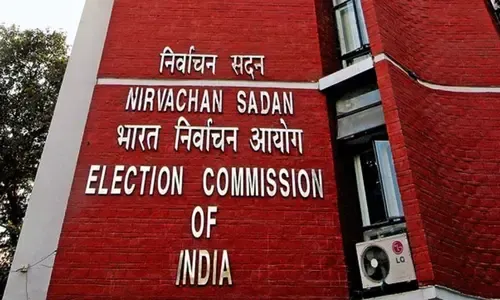
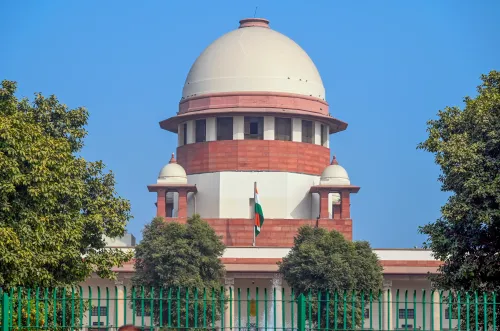
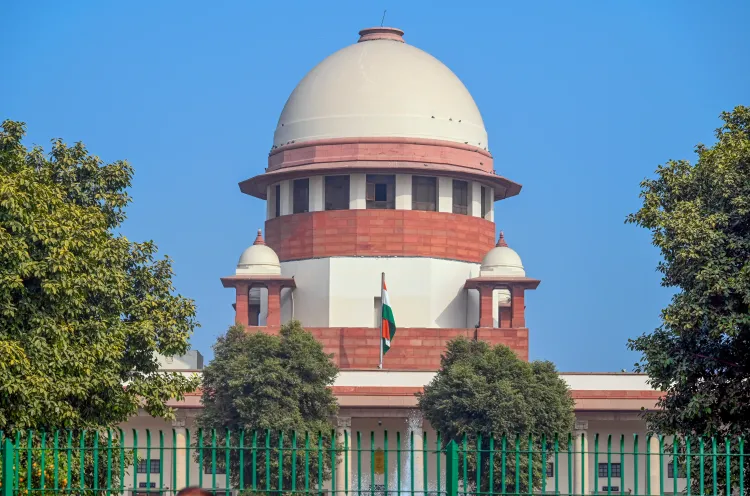
New Delhi, Jan 19 (NationPress) The Supreme Court on Monday issued a series of directives to the Election Commission of India (ECI) aimed at ensuring the ongoing Special Intensive Revision (SIR) of electoral rolls in West Bengal is carried out in a transparent manner, safeguarding citizens from unnecessary difficulties. A bench led by Chief Justice of India (CJI) Surya Kant instructed the poll body to disclose the names of individuals who have received notices for having “logical discrepancies” in their voter enumeration forms. This bench, which also included Justices Dipankar Datta and Joymalya Bagchi, mandated that these lists be made available at various local government offices, noting that approximately 1.25 crore notices have already been issued in this category.
The discrepancies highlighted by the ECI involve issues such as mismatches in parental names, minimal age gaps between parents and children, age inconsistencies with grandparents, and instances where the number of children exceeds six.
The apex court emphasized that individuals flagged must be afforded a fair opportunity to respond, clarifying that those who received notices can present documents or objections via authorized representatives, including Booth Level Agents (BLAs) with appropriate credentials.
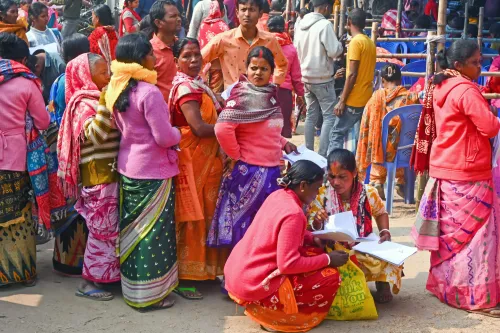
To alleviate concerns about voters having to travel long distances, the CJI Kant-led bench instructed that offices for submitting documentation and objections should be established within panchayat bhavans and block offices. In cases where documents are deemed inadequate, election officials are to provide an opportunity for a hearing, which can be attended by the voter directly or through a representative.
The Supreme Court further mandated that officials responsible for receiving documents or conducting hearings must provide a receipt, noting that such certification would serve as proof of compliance by the voter.
Additionally, the court instructed the West Bengal government to ensure sufficient staffing at the designated offices and urged the Director General of Police (DGP) to maintain law and order throughout the process.
During the proceedings, senior advocate Kapil Sibal, representing Trinamool Congress leaders, argued that notices were being sent for minor spelling mistakes and instances where the age difference between parents and children was less than 15 years.
Conversely, senior advocate Rakesh Dwivedi, representing the ECI, denied claims that notices were issued for spelling discrepancies but acknowledged that cases with an age gap of 15 years or less were being flagged.
Nonetheless, the Supreme Court remarked that the SIR process must not lead to the arbitrary exclusion of genuine voters. It also expressed discontent with the ECI's practice of communicating with field officials through WhatsApp instead of formal circulars.
“It’s unacceptable to manage everything via WhatsApp. Circulars must be issued,” the CJI Kant-led bench stated. The matter is scheduled for further review in two weeks.
Point of View
This ruling reflects the Supreme Court's commitment to upholding democratic principles. The ruling emphasizes the importance of transparency and fairness in the electoral process, ensuring that citizens are not unjustly excluded from participating in democracy. The nation must remain vigilant and supportive of measures that enhance electoral integrity.
NationPress
19 Sept 2026
Frequently Asked Questions
What are 'logical discrepancies'?
Logical discrepancies refer to inconsistencies in voter enumeration forms, such as mismatches in parental names or age gaps between parents and children.
How can individuals respond to notices from the ECI?
Individuals can respond to notices by submitting documents or objections through authorized representatives, such as Booth Level Agents.
Where will the names flagged by the ECI be published?
The names flagged will be published at gram panchayat offices, block offices, and ward offices across West Bengal.
What should voters do if their documents are found unsatisfactory?
Voters will be given an opportunity for a hearing, which they can attend in person or through an authorized representative.
What is the significance of the Supreme Court's ruling?
The Supreme Court's ruling is significant as it aims to ensure that the electoral revision process is transparent and fair, protecting genuine voters from arbitrary exclusion.