Supreme Court Critiques States, Mandates CCTV and GPS to Combat Illegal Sand Mining in Chambal Sanctuary
Synopsis
The Supreme Court has reprimanded Madhya Pradesh, Rajasthan, and Uttar Pradesh for failing to control illegal sand mining in the National Chambal Gharial Sanctuary, issuing urgent directives to protect endangered wildlife and restore ecological balance.
Key Takeaways
Supreme Court mandates enhanced surveillance.
Urgent measures to protect endangered gharials.
States face consequences for neglect.
Environmental protection is a constitutional obligation.
Next hearing scheduled for May 11.
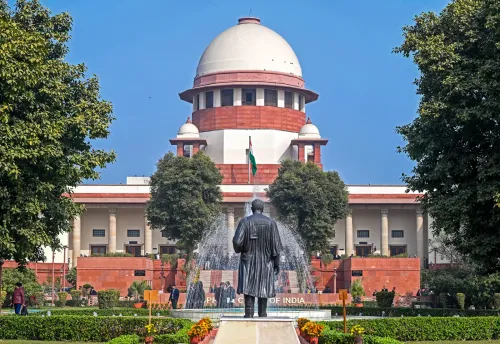
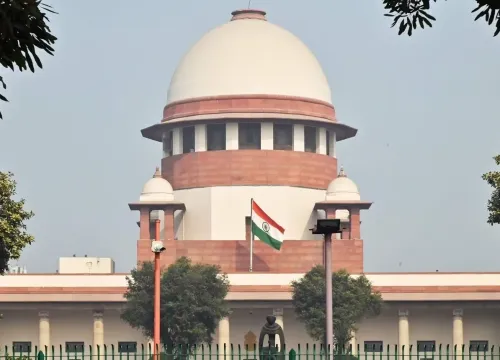
New Delhi, April 17 (NationPress) The Supreme Court has taken a firm stance against the states of Madhya Pradesh, Rajasthan, and Uttar Pradesh concerning the rampant illegal sand mining activities occurring in the National Chambal Gharial Sanctuary. The court highlighted that the current state of affairs indicates a “systemic and institutional failure” among state authorities and issued a series of stringent directives to address this issue and safeguard endangered aquatic wildlife.
A Bench comprising Justices Vikram Nath and Sandeep Mehta, while examining a suo motu case, noted that uncontrolled and indiscriminate mining practices have led to “severe disruption of riverine and ecological systems” and pose a direct threat to biodiversity, particularly the critically endangered gharial species.
The apex court drew attention to recent violent incidents, including the tragic killings of forest guards Harikesh Gurjar in Madhya Pradesh and Jitendra Singh Shekhawat in Rajasthan, who were fatally impacted by vehicles allegedly linked to illegal mining operations.
“The repeated fatal attacks on police officials and forest personnel illustrate a pattern of organized violence and brazen criminal activities by illegal mining operators,” the court remarked, raising serious concerns about the failures in law enforcement.
The top court also flagged alarming reports of extensive illegal mining occurring near an inter-state bridge on National Highway-44 along the Morena-Dholpur border, warning that excavations around bridge pillars have created “deep cavities”, posing an “imminent risk of structural failure” and threatening public safety.
In strong condemnation of the actions (or lack thereof) by the states, the Justice Nath-led Bench stated that the authorities seem to have “abdicated, if not entirely abandoned, their statutory and constitutional responsibilities”. The court expressed concern about a disturbing pattern of inaction and administrative indifference, indicating that these are not just isolated incidents but a fundamental systemic failure.
The apex court expressed its disappointment over claims that forest officials lack sufficient resources to combat armed mining mafias, asserting that the state “cannot be allowed to claim helplessness or hide behind its own inadequacies.”
In a strongly worded statement, the Justice Nath-led Bench declared such negligence “indefensible and wholly unacceptable in a constitutional democracy governed by the rule of law.”
Citing its powers under Article 142 of the Constitution, the Supreme Court issued several interim directives aimed at enhancing enforcement and surveillance measures. It mandated the installation of high-resolution CCTV cameras along vulnerable river banks and routes commonly used for illegal mining, with real-time monitoring overseen by district police and forest officials.
Additionally, the apex court ordered the mandatory installation of GPS tracking devices, on a pilot basis, in all vehicles and machinery utilized for mining activities in Morena, Madhya Pradesh, and Dholpur, Rajasthan. Any vehicle found engaged in illegal mining must be promptly seized, and offenders prosecuted under relevant environmental and criminal laws, with environmental compensation to be recovered according to the “polluter pays” principle.
The Justice Nath-led Bench also called for the establishment of joint patrol teams consisting of police and forest officials, equipped with modern surveillance tools, protective gear, and sufficient arms to effectively combat organized mining syndicates.
Moreover, the state governments were instructed to develop a uniform Standard Operating Procedure (SOP) for addressing illegal mining, including coordinated inter-state actions and protocols for managing violent resistance.
The apex court warned of severe repercussions for non-compliance, stating that any neglect of duty would result in “personal accountability” and potential contempt proceedings against negligent officials.
Additionally, the Justice Nath-led Bench warned that failure to implement effective measures could lead to drastic actions, including the deployment of paramilitary forces, a complete ban on sand mining in the affected states, and the imposition of heavy fines.
“Protecting natural resources and fragile ecosystems is not only a statutory duty but a constitutional necessity,” the top court affirmed, emphasizing that environmental protection is a fundamental aspect of the right to life under Article 21.
The matter is scheduled for further hearing on May 11, with state governments required to submit detailed compliance reports outlining the measures taken following the Supreme Court’s directives.
Point of View
It is crucial to highlight the Supreme Court's decisive action against illegal mining in the Chambal sanctuary. This ruling not only seeks to protect endangered species but also underscores the need for accountability and effective governance in environmental protection.
NationPress
16 Sept 2026
Frequently Asked Questions
What prompted the Supreme Court's intervention in illegal sand mining?
The Supreme Court intervened due to rampant illegal sand mining in the Chambal Sanctuary, which poses a threat to biodiversity and indicates systemic failures by state authorities.
What measures has the Supreme Court ordered to combat illegal mining?
The court has mandated the installation of CCTV cameras and GPS tracking in mining vehicles, along with the formation of joint patrol teams involving police and forest officials.
What are the consequences for states failing to comply with the Supreme Court's directives?
States that do not comply may face personal accountability for officials, potential contempt proceedings, and severe penalties including a complete ban on sand mining.
What is the significance of protecting the Chambal Sanctuary?
Protecting the Chambal Sanctuary is vital for preserving its unique biodiversity, particularly the critically endangered gharial species, and maintaining ecological balance.
When is the next hearing scheduled regarding this matter?
The next hearing is scheduled for May 11, where state governments must provide compliance affidavits detailing the actions taken.