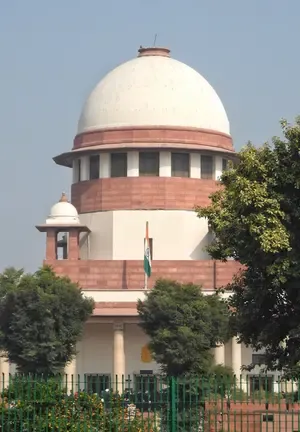
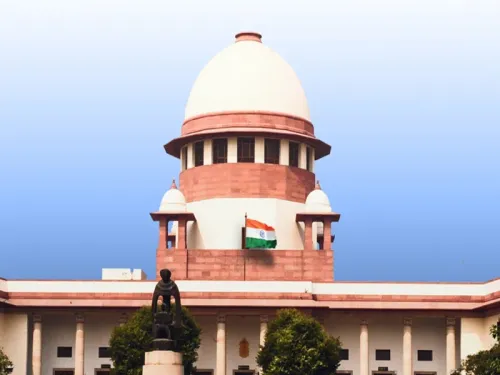
PIL in Supreme Court seeks national fire safety standards for public buildings
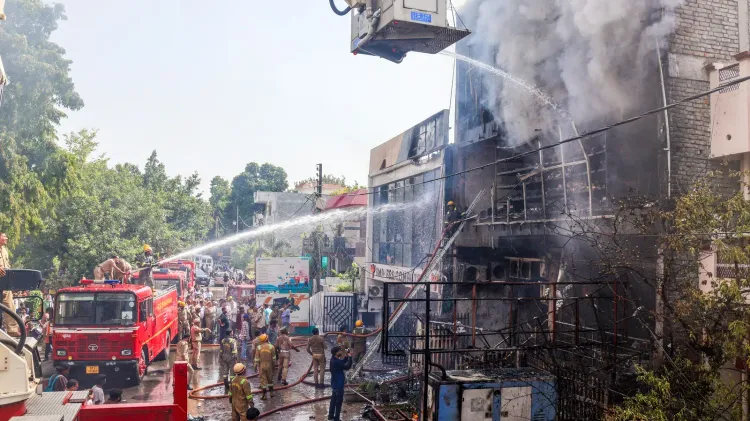
Synopsis
A PIL before the Supreme Court has put India's fragmented fire safety regime on trial. Citing disasters from Uphaar to Rajkot's TRP Game Zone, advocate Narendra Kumar Goswami is asking the court to do what Parliament hasn't — mandate a single national fire and life-safety standard for every school, hospital, hotel, and coaching centre in the country.
Key Takeaways
Advocate Narendra Kumar Goswami filed a PIL in the Supreme Court on 26 June seeking a National Minimum Fire and Life-Safety Framework for public buildings.
The petition targets high-risk premises including schools, hospitals, coaching centres, hotels , and commercial establishments .
Fires cited include the Uphaar Cinema , AMRI Hospital , Surat Takshashila Arcade , Rajkot TRP Game Zone , and Aliganj coaching centre tragedies.
The PIL invokes Articles 14 and 21 of the Constitution, arguing the state has a duty to ensure safety in public spaces.
A representation was submitted to Union and state authorities on 24 June before approaching the Supreme Court, with no action reported.
If admitted, the case could compel uniform fire safety enforcement across all states and union territories.
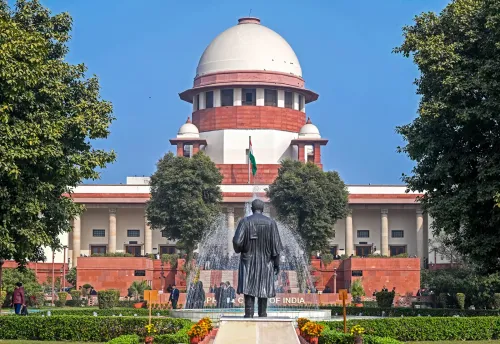
A public interest litigation (PIL) has been filed before the Supreme Court of India seeking directions for the creation and enforcement of a National Minimum Fire and Life-Safety Framework for high-risk public occupancy premises across the country. The petition, filed on 26 June by advocate Narendra Kumar Goswami in his personal capacity, cites a pattern of recurring fire tragedies in schools, hospitals, coaching centres, hotels, and commercial establishments as evidence of systemic regulatory failure.
What the PIL Demands
The writ petition has sought directions to both the Union government and state governments to establish uniform minimum fire and life-safety standards for public buildings, irrespective of the regulatory framework currently in place in individual states. It has specifically called for coverage of schools, hospitals, coaching centres, hotels, guest houses, entertainment venues, and commercial establishments under a single national standard.
The petition also prays for effective compliance mechanisms, periodic inspections, emergency preparedness protocols, evacuation planning, and clear accountability for violations by both authorities and building occupiers.
The Case for Urgency: A Catalogue of Tragedies
The PIL draws on a documented series of fire disasters to establish the urgency of the matter. Incidents cited include the Uphaar Cinema fire, the AMRI Hospital fire, the Surat Takshashila Arcade coaching centre blaze, the Anaj Mandi fire, the Rajkot TRP Game Zone fire, the Malviya Nagar guest house fire in Delhi, and the Aliganj coaching centre fire in Lucknow, among others.
'The recurring pattern of catastrophic fires demonstrates systemic regulatory failures, fragmented legal standards and inadequate enforcement mechanisms, resulting in continuing threats to public safety,' the plea stated.
The Legal and Constitutional Basis
The petition contends that the matter raises substantial questions of law regarding the enforcement of fundamental rights under Articles 14 and 21 of the Constitution, which guarantee equality before law and the right to life respectively. It argues that the state has a constitutional obligation to ensure reasonable safety standards in public spaces.
The PIL also leans on prior Supreme Court precedents, including the judgment in Avinash Mehrotra v. Union of India concerning fire safety in schools, and the apex court's suo motu proceedings on hospital fires. It further references the National Building Code, Model Building Bye-Laws, NDMA guidelines, and the Model Fire Service Bill, 2019 as existing but insufficiently enforced frameworks.
Why Fire Safety Remains a Patchwork Problem
The petition's core argument is that fire safety regulation in India is fragmented — standards and enforcement vary widely across states and union territories, creating dangerous gaps. A building that meets fire norms in one state may fall well short of standards in another, and the absence of a binding national floor has allowed this inconsistency to persist despite repeated judicial interventions.
Notably, the petitioner had already submitted a representation dated 24 June to Union and state authorities seeking the same framework, but reported that no effective action had been taken — prompting the Supreme Court petition.
What Happens Next
The PIL is yet to be listed for hearing before the Supreme Court. If admitted, the bench could issue notices to the Union and state governments, potentially setting in motion a process that has eluded legislative action for years. The outcome could have far-reaching implications for fire safety regulation across India's vast and varied public infrastructure.
Point of View
NDMA guidelines, and a Model Fire Service Bill since 2019 — and yet Rajkot's TRP Game Zone burned in 2024, just as Surat's Takshashila Arcade did in 2019. The problem is not the absence of standards but the absence of a binding national floor that states cannot undercut. A Supreme Court direction may be the only instrument capable of breaking the political inertia, but judicial mandates on fire safety — including the Uphaar verdict — have a mixed record of translating into durable enforcement. The real test will be whether any eventual order comes with a monitoring mechanism, or whether it joins the long list of well-intentioned directives that fade quietly into compliance reports no one reads.
NationPress
25 Sept 2026
Frequently Asked Questions
What is the PIL filed in the Supreme Court about fire safety?
The PIL, filed by advocate Narendra Kumar Goswami on 26 June, seeks a Supreme Court direction mandating a National Minimum Fire and Life-Safety Framework for high-risk public premises including schools, hospitals, hotels, and coaching centres across India. It argues that the current state-by-state regulatory patchwork has led to repeated fire tragedies and systemic enforcement failures.
Which fire incidents are cited in the Supreme Court PIL?
The petition references the Uphaar Cinema fire, AMRI Hospital fire, Surat Takshashila Arcade blaze, Anaj Mandi fire, Rajkot TRP Game Zone fire, Malviya Nagar guest house fire in Delhi, and the Aliganj coaching centre fire in Lucknow, among others. These are presented as evidence of recurring systemic failures in fire prevention and enforcement.
What legal grounds does the fire safety PIL rely on?
The PIL invokes Articles 14 and 21 of the Constitution — the right to equality and the right to life — arguing the state has a constitutional duty to ensure reasonable safety in public spaces. It also cites the Supreme Court's own judgment in Avinash Mehrotra v. Union of India on school fire safety and the court's suo motu proceedings on hospital fires.
Why is a national fire safety framework needed if laws already exist?
The petition argues that existing laws — including the National Building Code, Model Building Bye-Laws, NDMA guidelines, and the Model Fire Service Bill, 2019 — are fragmented and unevenly enforced across states and union territories. The PIL seeks a single binding national standard that applies uniformly, regardless of state-level regulatory differences.
What happens after the PIL is filed in the Supreme Court?
The PIL is pending listing before the Supreme Court. If the court admits it, notices will likely be issued to the Union and state governments. A favourable ruling could compel the Centre and states to formulate and enforce uniform fire safety standards, potentially reshaping public building regulation across India.