Supreme Court slams Rajasthan govt over politically pressured corruption sanction
Synopsis
The Supreme Court invoked Hamlet to condemn what it called 'blatant' political interference by Rajasthan's Chief Minister's Office in a bribery prosecution sanction — ruling that reversing a well-reasoned refusal without fresh evidence is impermissible and amounts to unnecessary harassment of a public servant. Costs of ₹50,000 were imposed on the state.
Key Takeaways
The Supreme Court dismissed Rajasthan government's SLP on 31 July , upholding the High Court order that quashed a prosecution sanction in a doctor bribery case.
The bench of Justice J.B.
Pardiwala and Justice K.
Vinod Chandran found 'blatant' political interference by the Chief Minister's Office in the sanction review.
Both the Joint Secretary and Principal Secretary in the Department of Personnel had originally found evidence insufficient to justify prosecution.
The court ruled that a mere change of opinion on the same material cannot justify review of a sanction refusal under the Prevention of Corruption Act, 1988 .
The Supreme Court imposed costs of ₹50,000 each for High Court and Supreme Court proceedings, payable within two months .
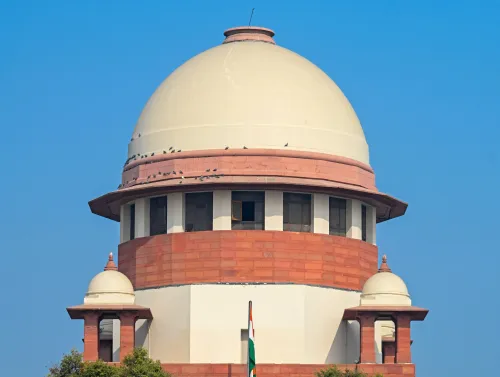
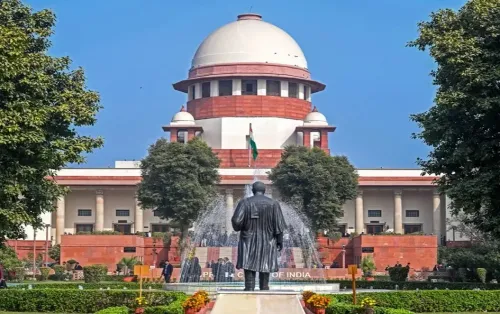
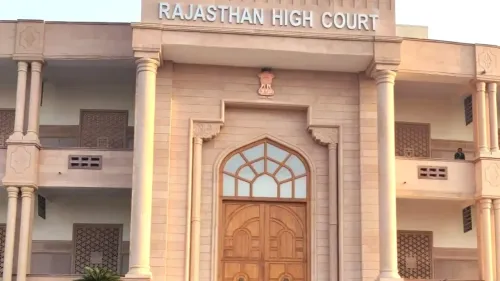
The Supreme Court of India on 31 July sharply rebuked the Rajasthan government for reversing its own decision to deny prosecution sanction against a government doctor in a bribery case, ruling that the reversal was driven by political interference from the Chief Minister's Office rather than any fresh evidence. The apex court dismissed the state's Special Leave Petition and upheld the Rajasthan High Court's order quashing the tainted sanction.
What the Court Found
A bench of Justice J.B. Pardiwala and Justice K. Vinod Chandran observed that the decision-making process under Section 19 of the Prevention of Corruption Act, 1988 had been compromised by external pressure. The court invoked Shakespeare to underscore the point: 'The decision-making process under Section 19 of the Prevention of Corruption Act, 1988 cannot resemble the dilemma in Hamlet's Soliloquy: to be or not to be. If there is ambivalence, it could be presumed that extraneous considerations weighed and here is a case where political dictate is blatantly displayed,' the bench observed.
The court held that there was 'absolutely no occasion' to revisit the earlier refusal of sanction, given that no new material had surfaced since the original decision.
Background: The Bribery Allegation and Initial Findings
The case dates to 2017, when a government doctor was accused of demanding and accepting bribe money from relatives of a patient ahead of a knee surgery. The Anti-Corruption Bureau laid a trap and recovered ₹2,000 from a drawer at the doctor's official residence.
However, both the Joint Secretary and the Principal Secretary in the Department of Personnel independently concluded that the available evidence did not establish a clear demand for bribe. They noted that the money was found in a locked drawer that had to be broken open, that the surgery had already been completed a day earlier, that no complaint had been filed by the patient or family, and that there were inconsistencies in the complainant's account. Reports also indicated that members of a political party had publicised the trap operation.
How the Chief Minister's Office Intervened
Despite these findings, the matter was sent back for reconsideration at the direction of a Joint Secretary in the Chief Minister's Office, who asserted that the money recovery and a handwash test were sufficient to establish acceptance of a bribe. Crucially, no fresh material had been placed before the reviewing authority.
The Supreme Court ruled this intervention impermissible. 'A mere change of opinion per se on the same materials cannot be a ground for review or reconsideration of an earlier order, refusing to grant sanction,' the bench stated, reiterating settled law. Reconsideration, it clarified, is permissible only when the investigating agency collects fresh material and the sanctioning authority independently applies its mind to that new evidence.
Key Legal Principles Reaffirmed
The bench reiterated that where two views are possible on whether to sanction prosecution of a public servant, the view favouring the officer should ordinarily prevail. 'It is trite that, when there are two views possible, especially in proceeding with a criminal prosecution against a public servant, the view exonerating the officer should be taken,' it said.
On the purpose of the sanction requirement, the court observed: 'Sanction is a weapon to ensure discouragement of frivolous and vexatious prosecution and is a safeguard for the innocent but not a shield for the guilty.'
Costs and Rebuke to the State
Expressing strong disapproval of the state's decision to challenge the High Court verdict before the Supreme Court, the bench noted that the doctor had been 'dragged unnecessarily to the High Court by the review, prompted by the office of the CM.' It added that the state should have accepted the High Court's interference with what it called a 'patently illegal and blatantly tainted order of sanction.'
The Supreme Court dismissed the SLP and imposed costs of ₹50,000 each for proceedings before the High Court and the Supreme Court, directing payment within two months. The ruling sends a firm signal that prosecution sanction under anti-corruption law cannot be weaponised through political channels.
Point of View
Without a single new piece of evidence, is precisely the abuse Section 19 was designed to prevent. What is striking is that the court had to make this point at all: the Rajasthan government not only reversed its own officers but then fought the High Court's correction all the way to the Supreme Court. The ₹50,000 cost imposition is nominal, but the language — 'blatantly tainted', 'Hamlet's Soliloquy', 'unnecessary harassment' — is a reputational sanction that will outlast any fine.
NationPress
14 Sept 2026
Frequently Asked Questions
Why did the Supreme Court rebuke the Rajasthan government?
The Supreme Court rebuked the Rajasthan government for reversing its own decision to deny prosecution sanction against a government doctor in a bribery case, without any fresh evidence, after the Chief Minister's Office intervened. The court found this constituted blatant political interference under the Prevention of Corruption Act, 1988.
What is prosecution sanction under the Prevention of Corruption Act?
Under Section 19 of the Prevention of Corruption Act, 1988, prior government sanction is required before a public servant can be prosecuted for corruption-related offences. The sanction is meant to protect public servants from frivolous or politically motivated prosecutions, while not shielding those genuinely guilty.
What was the original bribery allegation against the doctor?
The government doctor was accused of demanding and accepting a bribe from relatives of a patient ahead of a knee surgery in 2017. The Anti-Corruption Bureau recovered ₹2,000 from a drawer at the doctor's official residence, but senior officials found the evidence insufficient to establish a clear demand for bribe.
On what legal ground did the Supreme Court quash the sanction?
The court held that a mere change of opinion on the same material cannot justify review of an earlier refusal to grant sanction. Reconsideration is permissible only when fresh material is collected by the investigating agency and the sanctioning authority independently applies its mind to that new evidence.
What costs did the Supreme Court impose and on whom?
The Supreme Court imposed costs of ₹50,000 each for proceedings before the Rajasthan High Court and the Supreme Court on the state of Rajasthan, directing payment within two months.