Supreme Court issues hooch tragedy blueprint: methanol curbs, disaster cells for all states
Synopsis
The Supreme Court has gone far beyond striking down Maharashtra's methanol-denaturant rules — it has handed every state a detailed anti-hooch playbook, from border checkpoints and school-premise inspections to mandatory methanol stock reconciliation and a 30-year-old unimplemented committee report that could have saved lives if acted upon.
Key Takeaways
The Supreme Court on 18 September 2026 issued sweeping anti-hooch directives to all states and Union Territories, covering methanol procurement, licensing, border monitoring and disaster management.
A bench of Justice J.B.
Pardiwala and Justice K.
Vinod Chandran struck down Rules 18A and 18B of the Maharashtra Poisons Rules, 1972 as unconstitutional under Articles 14 and 19(1)(g) .
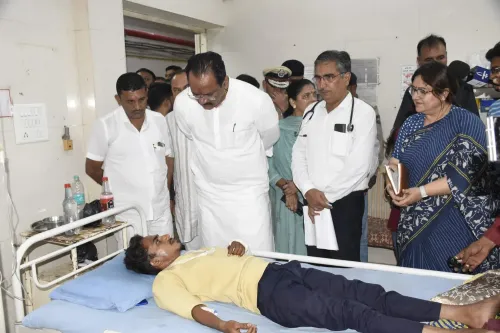
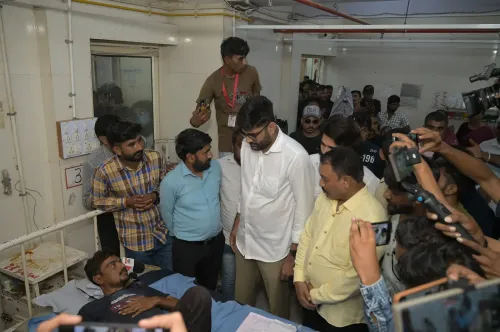
Recent hooch tragedies in Gujarat's Bhavnagar (~ 13 deaths ) and Madhya Pradesh's Sagar (~ 15 deaths ) were cited as urgent reminders for action.
The court called for implementation of the Parthasarthy Committee report from the 1991 Chhaya Bar hooch tragedy in Mumbai , in which around 93 people died.
Specialised disaster-management cells under State Health and Family Welfare Departments , increased de-addiction centres and family counselling were among the recommended measures.
Copies of the judgment have been directed to all High Courts and Chief Secretaries of every state.
The Supreme Court of India on 18 September 2026 issued a sweeping set of recommendations to all states and Union Territories to prevent hooch tragedies, calling for stricter monitoring of methanol procurement, storage and transportation, periodic scrutiny of licences and permits, and the creation of specialised disaster-management cells under state health departments. The ruling came in a batch of petitions challenging Maharashtra's methanol-denaturant rules, which the court simultaneously struck down as unconstitutional.
Key Directives from the Bench
A bench of Justice J.B. Pardiwala and Justice K. Vinod Chandran said preventing hooch tragedies required a coordinated effort spanning multiple departments — Prohibition, Excise, Police, Transport, Industries, Health and Social Justice — rather than measures focused solely on identifying methanol. The court explicitly called for involving NGOs as part of a multipronged strategy.
The bench recommended strict monitoring of state borders, including checking squads authorised to examine private vehicles for illegal liquor transport. It also called on police, in coordination with prohibition and excise authorities, to identify and dismantle illegal breweries, particularly those operating in semi-industrial and congested urban areas.
On the role of schools, the court noted that open land on municipal school premises had sometimes been used to store illegal liquor, and urged the Education Department to report any such activity to jurisdictional police.
Methanol Stockpile and Licence Controls
The apex court called for a comprehensive overhaul of the licensing regime, saying that licences should not be granted routinely but must follow verification of each applicant's antecedents, credentials and genuine requirement. It stressed that licensing should involve ongoing accountability rather than a one-time approval process.
On methanol stocks specifically, the court suggested that industrial consumers should periodically return unused or excess methanol to the seller or a designated authority to prevent stockpiling, pilferage and diversion. It further recommended that every licensee maintain mandatory consumption records and closing-stock figures, with periodic reconciliation so that unexplained shortfalls can be promptly investigated.
Vehicles used to transport liquor in violation of rules, the bench said, should not be released on bond or surety pending court orders.
Why Maharashtra's Rules Were Struck Down
The court was examining Rules 18A and 18B of the Maharashtra Poisons Rules, 1972, which required methanol purchasers to hold a Form A licence, mandated the addition of bitterant and colourant (denaturants) before sale to non-drug manufacturers, and provided for confiscation of unlicensed methanol. The bench held these provisions violated Articles 14 and 19(1)(g) of the Constitution.
The court found the rules failed the proportionality test, noting that less restrictive safeguards already existed under the same Maharashtra Poisons Rules and that effective implementation of those existing safeguards would better address pilferage. It described the impugned rules as 'manifestly arbitrary' and lacking a rational nexus with their stated objective, while acknowledging the state government's good intentions.
Hospitals, De-addiction and the Parthasarthy Report
The court flagged the poor preparedness of hospitals facing hooch emergencies, noting that facilities were 'hardly equipped' with the specialised medicines or equipment needed to handle mass casualties. It called for a comprehensive disaster-management policy under the State Health and Family Welfare Department and a dedicated specialised cell.
The bench also recommended increasing the number of de-addiction centres and fully operationalising existing ones, with an additional mandate to reach out to families affected by liquor consumption. It called for family counselling centres in every local area and public-awareness campaigns by state governments and NGOs.
Notably, the court directed that the Parthasarthy Committee report — prepared after the 1991 Chhaya Bar hooch tragedy in Mumbai in which around 93 people died — be considered by authorities at the earliest and its recommendations implemented effectively. The committee's findings have reportedly remained unimplemented for over three decades.
The Tragedies That Prompted Action
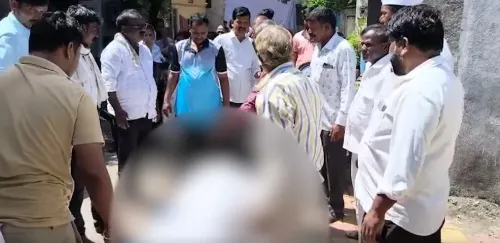
The bench cited recent hooch disasters as an urgent reminder for authorities. A tragedy in Gujarat's Bhavnagar claimed around 13 lives, while a separate incident in Madhya Pradesh's Sagar killed approximately 15 people. The court stressed that such deaths were preventable through a combination of supply-chain disruption, better enforcement and coordinated inter-departmental action.
Concluding the judgment, the bench made clear that while courts can issue directions, 'it is the police machinery that should rise to the occasion' and ensure strict enforcement of alcohol-regulation laws. Copies of the judgment were directed to be forwarded to all High Courts and Chief Secretaries of every state.
Point of View
Actionable framework for tackling hooch deaths. The most damning detail is the Parthasarthy Committee report — a document prepared after 93 people died in 1991 that apparently gathered dust for over three decades. The court's simultaneous act of striking down Maharashtra's well-intentioned but disproportionate methanol-denaturant rules underscores a key tension: states frequently add new, poorly designed layers of regulation rather than enforcing the ones already on the books. If the judgment's copies to Chief Secretaries produce only acknowledgement letters and not time-bound action plans, it will follow a familiar pattern of judicial nudges that never reach the last mile.
NationPress
18 Sept 2026
Frequently Asked Questions
What did the Supreme Court order on hooch tragedies on 18 September 2026?
The Supreme Court issued a detailed set of recommendations for all states and Union Territories to prevent hooch tragedies, including stricter methanol monitoring, overhaul of licensing regimes, border checks, specialised health-department disaster cells, and public-awareness campaigns. The directions came alongside a ruling striking down two Maharashtra rules on methanol denaturants as unconstitutional.
Why did the Supreme Court strike down Maharashtra's methanol rules?
The court struck down Rules 18A and 18B of the Maharashtra Poisons Rules, 1972 — which mandated bitterant and colourant addition to methanol sold to non-drug manufacturers — for violating Articles 14 and 19(1)(g) of the Constitution. The bench held the rules were 'manifestly arbitrary' and failed the proportionality test, noting that less restrictive safeguards already existed in the same rule framework.
Which recent hooch tragedies did the Supreme Court reference?
The court cited a hooch tragedy in Gujarat's Bhavnagar that claimed around 13 lives and another in Madhya Pradesh's Sagar that killed approximately 15 people. It described these incidents as reminders for authorities to act with urgency.
What is the Parthasarthy Committee report and why did the court invoke it?
The Parthasarthy Committee report was prepared following the 1991 Chhaya Bar hooch tragedy in Mumbai, in which around 93 people died. The Supreme Court directed authorities to consider the report 'at the earliest' and implement its recommendations effectively, implying the findings had not been acted upon in the intervening decades.
Who is affected by the Supreme Court's new hooch-prevention guidelines?
The directions apply to all state governments and Union Territories across India. They affect multiple departments — Prohibition, Excise, Police, Transport, Industries, Health and Education — as well as industrial units handling methanol, licensed liquor sellers, and hospitals required to maintain disaster-response capability for mass-casualty hooch events.