Gujarat hooch tragedy: 8 dead in Bhavnagar, Oppn demands HC-led SIT
Synopsis
Eight people are dead and 31 hospitalised after methanol-laced liquor — sold in fake Royal Stag bottles — tore through Bhavnagar. With 13 arrests, five police suspensions, and Congress demanding a High Court-led SIT, the tragedy has reignited a familiar and damning question: why does Gujarat's prohibition law keep failing the people it is meant to protect?
Key Takeaways
The Bhavnagar hooch tragedy death toll reached eight on 20 August , with 31 people still hospitalised.
Spurious liquor was allegedly made with methanol and sold in counterfeit Royal Stag branded bottles.
An FIR names 21 accused ; 13 have been arrested; raw materials reportedly sourced from Madhya Pradesh and Delhi .
Vartej police inspector A.B.
Padheriya and four other personnel have been suspended.
Congress president Amit Chavda demanded an SIT led by a sitting High Court judge and called for Home Minister Harsh Sanghavi's resignation.
AAP MLA Gopal Italia demanded a probe into assets of Bhavnagar SP and LCB officers over the past decade.
The death toll in the Bhavnagar hooch tragedy climbed to eight on Thursday, 20 August, with 31 people still undergoing treatment after consuming methanol-laced spurious liquor in Bhavnagar district, Gujarat. Opposition parties have sharply escalated pressure on the state government, demanding an independent judicial investigation into what they describe as a systemic failure of Gujarat's prohibition enforcement machinery.
What Happened
According to police, the illegally manufactured liquor was prepared using methanol and allegedly sold in bottles bearing labels of the Royal Stag brand. Investigators are examining how raw materials — reportedly sourced from Madhya Pradesh and Delhi — were transported, manufactured, and distributed across Bhavnagar and surrounding villages. An FIR has been filed naming 21 accused, of whom 13 have been arrested. Police searches for suspected bootleggers and members of the distribution network are ongoing.
Police Action and Suspensions
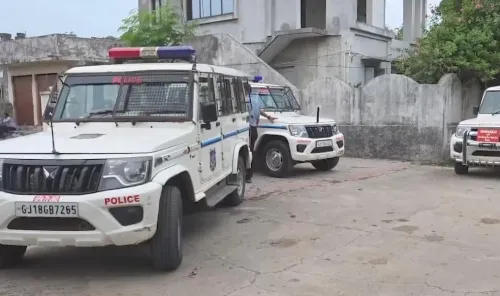
Authorities have suspended Vartej police inspector A.B. Padheriya and four other police personnel as part of the departmental accountability process. The suspensions signal early acknowledgement of enforcement lapses, though opposition leaders argue the action does not go far enough. Critics note that similar enforcement drives following previous hooch tragedies in the state failed to dismantle the underlying supply networks.
Congress Demands HC-Led SIT, Delegation to Visit Bhavnagar
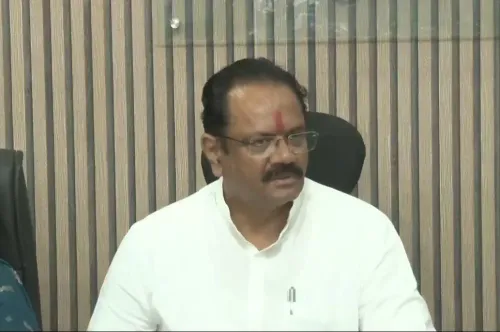
Gujarat Congress president Amit Chavda, addressing a press conference in Ahmedabad, alleged that the state's prohibition law had been reduced to a 'paper provision' and accused the Bharatiya Janata Party (BJP) government of failing to curb the illegal liquor trade. He demanded a Special Investigation Team (SIT) headed by a sitting High Court judge to probe the entire chain — from methanol procurement and manufacture to storage, distribution, and the alleged role of police and administrative officials.
Chavda also called for the resignation of Deputy Chief Minister and Home Minister Harsh Sanghavi, citing what he termed failures in law enforcement and prohibition oversight. He questioned why the sourcing of methanol and the distribution network came to light only after deaths occurred.
'The proposed SIT should examine the entire chain, including those involved in manufacturing and supplying the liquor, transporting methanol and the failure of police and administrative authorities to detect the operation,' Chavda said.
A Congress delegation scheduled to visit Bhavnagar on Friday will include state working president and MLA Jignesh Mevani, former MLA Rajesh Gohil, vice-president Dr Hemang Vasavada, general secretaries Haribhai Bharwad and Virendrasinh Vaghela, and local leaders Manoharsinh Gohil and Pravin Rathod. The party said it would prepare a report for discussion at the forthcoming Assembly session.
AAP Raises Pattern of Repeat Tragedies
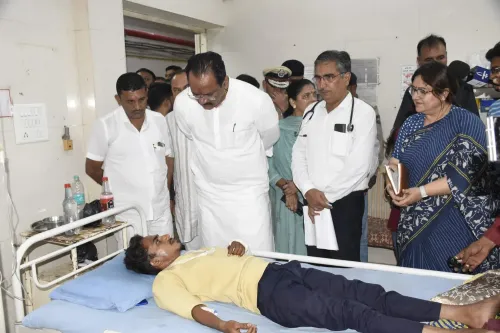
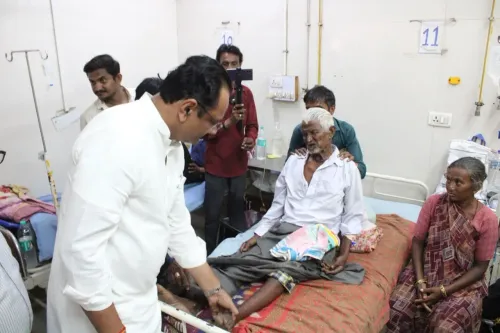
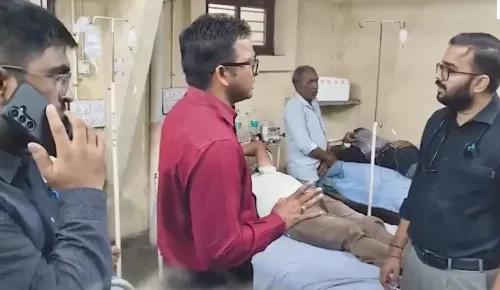
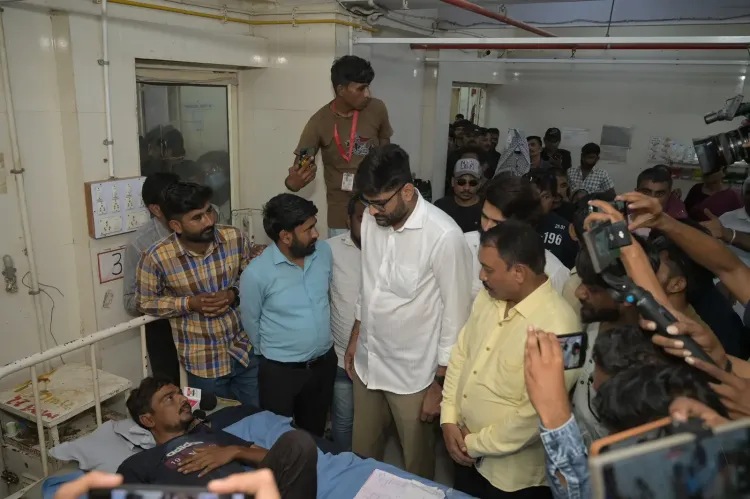
Aam Aadmi Party (AAP) MLA Gopal Italia visited patients at Sir T Hospital alongside party leaders Rajubhai Solanki and Brijraj Solanki, and also met the families of those who died. Italia questioned the effectiveness of repeated enforcement drives that have followed previous hooch tragedies in Gujarat.
'If this pain had reached Gandhinagar, another such incident would not have occurred after the Botad-Barwala hooch tragedy,' Italia said. He additionally demanded an investigation into the assets of the Bhavnagar SP and police officers who served in the district's Local Crime Branch (LCB) over the past decade — a pointed allegation of possible systemic complicity.
What Comes Next
With opposition parties set to raise the issue in the forthcoming Assembly session, the political fallout from the Bhavnagar tragedy is far from over. The key questions investigators must answer — how a methanol supply chain operated undetected across state lines, and whether enforcement failures were isolated or structural — will determine whether accountability extends beyond the five suspended officers. Gujarat's prohibition framework, long criticised as porous, faces renewed scrutiny.
Point of View
Including the Botad-Barwala tragedy, and each time the state's response has been reactive: arrests, suspensions, and political statements. The core problem — a methanol supply chain that apparently crosses state lines undetected — demands structural answers, not episodic crackdowns. The opposition's demand for an HC-led SIT is politically motivated, but the underlying question it raises is legitimate: if prohibition is state policy, why does enforcement collapse so consistently? Five suspended officers and 13 arrests address the symptom. The disease — a porous, allegedly compromised enforcement ecosystem — remains unexamined.
NationPress
5 Oct 2026
Frequently Asked Questions
What happened in the Bhavnagar hooch tragedy?
Eight people died and 31 were hospitalised in Bhavnagar district, Gujarat, after consuming spurious liquor laced with methanol. The liquor was allegedly manufactured illegally and sold in counterfeit Royal Stag branded bottles, with raw materials reportedly sourced from Madhya Pradesh and Delhi.
How many people have been arrested in the Bhavnagar hooch case?
Police have arrested 13 of the 21 accused named in the FIR. Five police personnel, including Vartej police inspector A.B. Padheriya, have also been suspended in connection with the case.
What is the Congress demanding over the Bhavnagar hooch deaths?
Gujarat Congress president Amit Chavda has demanded a Special Investigation Team (SIT) headed by a sitting High Court judge to probe the full chain — from methanol procurement to distribution. He has also called for the resignation of Deputy Chief Minister and Home Minister Harsh Sanghavi.
What did AAP MLA Gopal Italia demand?
AAP MLA Gopal Italia visited patients at Sir T Hospital and met the families of the deceased. He demanded an investigation into the assets of the Bhavnagar SP and police officers who served in the district's Local Crime Branch over the past decade, raising the possibility of systemic complicity.
How does this compare to previous hooch tragedies in Gujarat?
Gujarat, a prohibition state, has witnessed hooch tragedies before, most notably the Botad-Barwala incident. Critics, including AAP's Gopal Italia, argue that repeated enforcement drives after each tragedy have failed to dismantle the underlying supply networks, pointing to a structural rather than isolated failure.