Amit Shah slams Congress over Vande Mataram truncation
Synopsis
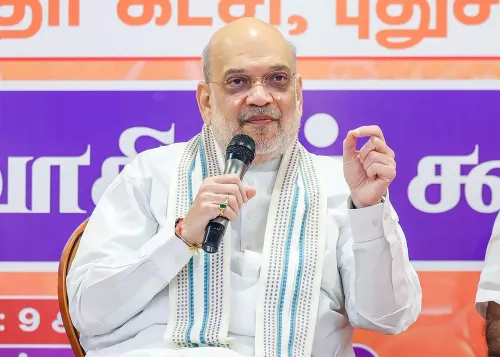
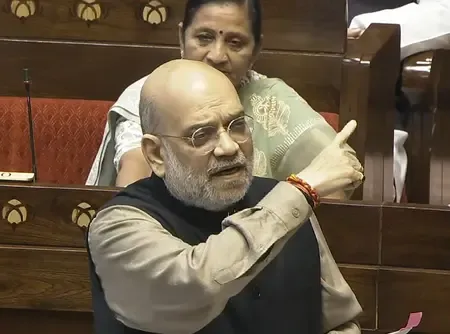
Union Home Minister Amit Shah accused the Congress Working Committee of defying Parliament by limiting Vande Mataram to two stanzas, linking the move to the 1937 appeasement decision he says fuelled the two-nation theory and Partition, and naming Rahul Gandhi as driving a repeat of that pattern.
Key Takeaways
Amit Shah accused the Congress Working Committee of deciding to sing only two stanzas of Vande Mataram , calling it 'anti-national and defiance of parliamentary law.' Shah traced the precedent to 1937 , when Congress limited the song's rendition to avoid offending Muslim sentiments — a decision he links to the two-nation theory and the Partition of 1947 .
The Modi government granted legal recognition to the complete Vande Mataram on its 150th anniversary , which Shah described as correcting a historical error.
Rahul Gandhi was named directly as the leader under whom Congress is 'once again on the path of appeasement for the same vote bank.' Shah issued a public appeal for citizens to 'stand united and raise their voices' against what he termed Congress's appeasement on the national song.
A national song, a 1937 decision, and a charge of history repeating itself — Union Home Minister Amit Shah on Thursday, August 20, 2026 launched a sharp attack on the Indian National Congress, accusing the party of once again truncating Vande Mataram for vote-bank politics, and linking that choice directly to the wounds of Partition.
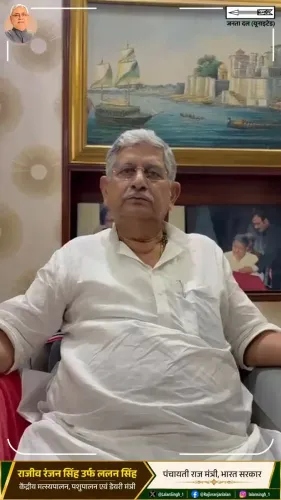
Shah's post, written in Hindi, accused the Congress Working Committee of deciding to sing only two stanzas of Vande Mataram instead of the complete national song — a move he called 'anti-national and open defiance of a law enacted by Parliament.' His words were unambiguous: 'The mistake of splitting Vande Mataram has happened once, and the country has already paid the price.'
The 1937 decision that Shah says broke the song — and the nation
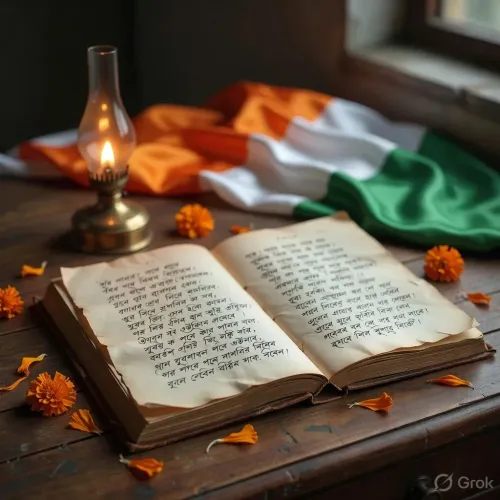
The historical charge at the centre of Shah's post traces back to 1937, when the Congress Working Committee resolved to sing only the first two stanzas of Vande Mataram — composed by Bankim Chandra Chattopadhyay — to avoid offending Muslim sentiments. Shah argues that decision gave momentum to the two-nation theory, the ideological engine that drove the Partition of India in 1947.
It is a charge the BJP has made before, but Shah's framing here is pointed: he is not merely revisiting history — he is presenting it as a live warning. 'Congress did this for appeasement in 1937. The two-nation theory gained strength from there, and the country was divided,' he wrote.
Modi government's 150th-anniversary reversal
Shah credited the Modi government with correcting what he called a historical error by granting legal recognition to the complete rendition of Vande Mataram on the song's 150th anniversary. The move, he said, gave the full song its rightful legal standing — undoing decades of institutional truncation. The specific legislative or executive instrument behind that recognition has not been independently detailed in public records available to this publication.
Rahul Gandhi named as the face of the revival
Shah did not stop at the historical argument. He named Rahul Gandhi directly, saying that under Gandhi's leadership, Congress is 'once again on the path of appeasement for the same vote bank.' The framing is deliberate — tying the current Congress president to a lineage of decisions the BJP frames as corrosive to national unity.
He closed with a direct appeal to citizens: 'I appeal to the people of this country to stand united and raise their voices against Congress's appeasement.' That call to action — rare in the register of a formal political post — signals this is not a one-day statement but the opening of a sustained campaign line.
Whether Congress responds formally, and how it frames its own position on the national song's rendition, will determine whether this becomes a parliamentary flashpoint or a campaign-season refrain. The song itself, once again, is the battlefield.
Point of View
Shah is doing something more than scoring points: he is attempting to make the national song a referendum on loyalty itself. The invocation of parliamentary law adds a legal-legitimacy layer that moves the charge beyond sentiment into institutional defiance. If Congress does not respond with a clear counter-narrative, the BJP's historical framing — however contested by historians — risks becoming the default public memory of the 1937 decision.
NationPress
21 Aug 2026
Frequently Asked Questions
What did Amit Shah say about Congress and Vande Mataram?
Amit Shah accused the Congress Working Committee of deciding to sing only two stanzas of Vande Mataram instead of the full song, calling it anti-national and a defiance of parliamentary law. He linked this to the party's 1937 decision and accused Rahul Gandhi of reviving the same appeasement politics.
Why did Congress limit Vande Mataram to two stanzas in 1937?
In 1937, the Congress Working Committee decided to sing only the first two stanzas of Vande Mataram to avoid offending Muslim sentiments. The BJP has long argued this decision gave strength to the two-nation theory that led to the Partition of India in 1947.
Did the Modi government make Vande Mataram's full rendition a law?
According to Amit Shah's post, the Modi government granted legal recognition to the complete Vande Mataram on its 150th anniversary, reversing the historical truncation. The specific legislative instrument behind this has not been independently detailed in publicly available records.
What is the two-nation theory and how is it connected to Vande Mataram?
The two-nation theory held that Hindus and Muslims were two separate nations requiring separate homelands, ultimately leading to the Partition of India in 1947. Amit Shah argued that the 1937 Congress decision to truncate Vande Mataram for minority appeasement helped give this theory political momentum.
What is Vande Mataram and why is it significant in India?
Vande Mataram is India's national song, composed by Bankim Chandra Chattopadhyay. It played a central role in the independence movement and holds constitutional and cultural significance, though debates over its full rendition versus partial singing have persisted for decades.