CM Dhami slams Congress over Vande Mataram 'two-stanza' decision
Synopsis
Uttarakhand CM Pushkar Singh Dhami accused Congress of reviving its 1937 pattern of Muslim appeasement by reportedly limiting Vande Mataram to two stanzas at its Working Committee, tagging Home Minister Amit Shah in a pointed political broadside.
A national symbol, a 1937 compromise, and a fresh political firestorm — Uttarakhand Chief Minister Pushkar Singh Dhami lit the fuse on Thursday, 20 August 2026, accusing the Indian National Congress of reviving an old pattern of minority appeasement by reportedly deciding to sing only two stanzas of Vande Mataram at its Working Committee meeting.
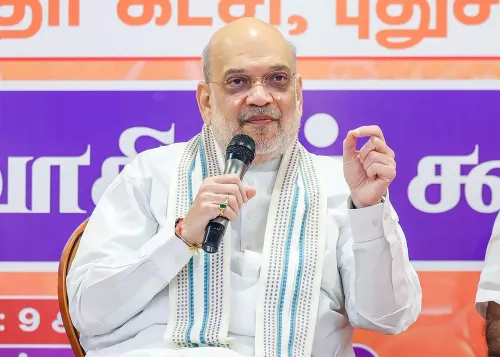
Tagging Union Home Minister Amit Shah, CM Dhami wrote that the Congress Working Committee's decision to sing only two stanzas of Vande Mataram 'exposes its politics of appeasement and its dual character towards national sentiment.' He drew a direct line to history: 'In 1937, a compromise was made with Vande Mataram in the name of Muslim appeasement — Congress is today trying to push that same mindset forward.'
The 1937 decision that never stopped haunting Congress
The episode CM Dhami invokes is real and documented. In 1937, the Congress leadership agreed to limit the official singing of Vande Mataram to its first two stanzas, responding to objections from Muslim members who found later stanzas — drawn from Bankim Chandra Chattopadhyay's novel Anandamath — religiously uncomfortable. The decision was framed at the time as an act of pluralist accommodation. BJP leaders have consistently reframed it as the original sin of vote-bank politics.
For Dhami, the symbolism cuts deeper than parliamentary procedure. 'Vande Mataram is the soul of India,' he wrote. 'Its insult is an insult to the sacrifice of those brave martyrs who gave everything while chanting Bharat Mata Ki Jai and Vande Mataram.' The invocation of martyrs — freedom fighters who went to the gallows singing the anthem — is a deliberate emotional escalation, framing a procedural party decision as an act of betrayal against the independence movement itself.
BJP's cultural nationalism playbook — and why this moment matters
BJP has long used the Vande Mataram question as a wedge issue, positioning itself as the guardian of undiluted national symbols against what it calls Congress's 'secular compromises.' Dhami's post fits squarely into that established line — but the tagging of Amit Shah signals this is not just a state-level comment. It is a deliberate escalation, inviting the party's most combative national voice into the frame and hinting that a coordinated response may follow.
The Congress Working Committee's specific recent decision on the two-stanza practice has not been independently confirmed, and the party has not yet issued a public clarification. That silence — or the response that breaks it — will define the next beat of this story.
A song that helped topple an empire is now a battlefield in a modern culture war. The question is whether Congress chooses to fight on this ground — or cede it.
Point of View
Dhami signals this is coordinated messaging, not a solo state-level remark, suggesting the party intends to press this issue at the national level. The episode illustrates how national symbols function as perpetual fault lines in Indian politics, where procedural decisions by opposition parties are rapidly converted into identity-politics ammunition. Congress's response — or absence of one — will determine whether this remains a BJP talking point or becomes a genuine public debate about the meaning of Vande Mataram in a pluralist democracy.
NationPress
4 Oct 2026
Frequently Asked Questions
Why is Congress being criticized over Vande Mataram?
Uttarakhand CM Pushkar Singh Dhami accused Congress of deciding to sing only the first two stanzas of Vande Mataram at its Working Committee meeting, calling it a continuation of its 1937 policy of Muslim appeasement.
What happened with Vande Mataram in 1937?
In 1937, the Congress leadership agreed to officially sing only the first two stanzas of Vande Mataram, responding to objections from Muslim members who found the later stanzas — drawn from Bankim Chandra Chattopadhyay's novel — religiously problematic.
Why did CM Dhami tag Amit Shah in his post?
By tagging Union Home Minister Amit Shah, CM Dhami appeared to signal that his criticism was intended as a coordinated national-level BJP message, not merely a state-level political comment.
Is Vande Mataram India's national anthem?
No. 'Jana Gana Mana' is India's national anthem. Vande Mataram is the national song, originally composed by Bankim Chandra Chattopadhyay and adopted as a rallying cry during the freedom movement.
Has Congress responded to CM Dhami's accusation?
As of the time of this report, the Congress Working Committee had not issued a public clarification or formal response to CM Dhami's post.