Shivraj Singh Chouhan joins PMAY-G state event in Patna
Synopsis
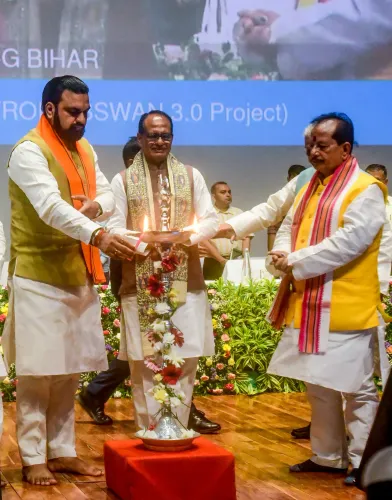
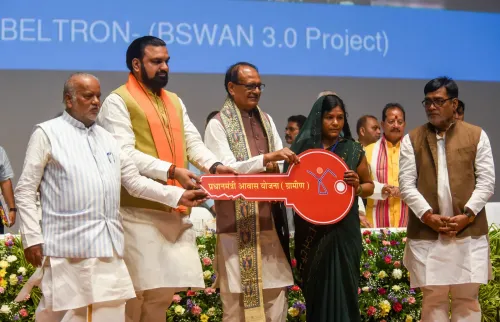
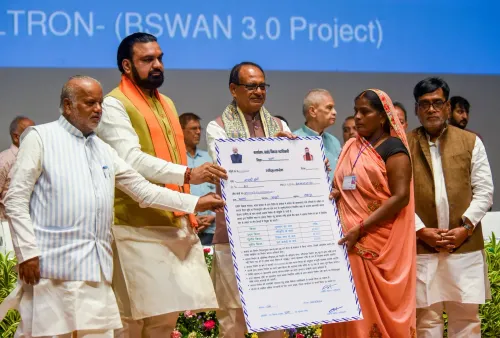
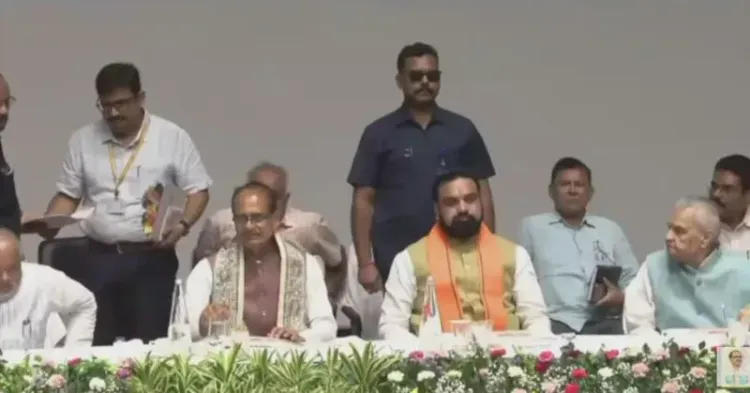
Union Minister Shivraj Singh Chouhan participated in Bihar's state-level Pradhan Mantri Awas Yojana-Gramin event at Bapu Sabhagar, Patna on 20 August 2026, reaffirming the government's commitment to providing permanent homes to every eligible rural family.
Key Takeaways
Union Minister Shivraj Singh Chouhan attended Bihar's state-level PMAY-G event at Bapu Sabhagar, Patna on 20 August 2026 .
PMAY-G was launched in 2016 as the successor to the Indira Awas Yojana, targeting pucca homes for eligible rural below-poverty-line families.
Chouhan reaffirmed the government's pledge: every needy family must have a permanent roof over their head.
As Union Rural Development Minister , Chouhan holds direct administrative responsibility for the scheme's national rollout.
Bihar , with one of India's largest rural populations, is a key state for PMAY-G implementation and a major focus of central monitoring.
Bihar's updated house-completion figures and any fresh central fund releases from the event are the key metrics to watch.
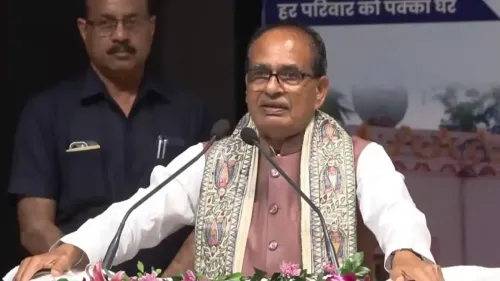
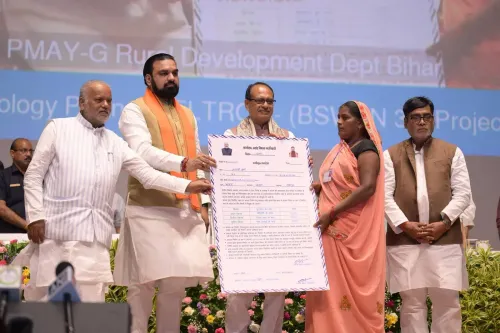
A promise made to millions of rural families echoed through Bapu Sabhagar, Patna on Thursday, 20 August 2026, as Union Agriculture and Rural Development Minister Shivraj Singh Chouhan joined Bihar's state-level programme under the Pradhan Mantri Awas Yojana-Gramin (PMAY-G) — the Centre's flagship rural housing scheme.
Sharing the moment live on social media, Chouhan wrote: 'हर जरूरतमंद परिवार के सिर पर पक्की छत हो, यही हमारा संकल्प है' — 'Every needy family must have a pucca roof over their head; this is our resolve.' The line is more than a slogan. It is the founding promise of a scheme that has reshaped rural India's skyline since its launch a decade ago.
From Indira Awas to PMAY-G: a decade of building
PMAY-G was launched in 2016 as the successor to the Indira Awas Yojana, with a mandate to provide permanent, weather-proof homes to eligible below-poverty-line rural households. Funding flows in central instalments directly to beneficiary accounts, with implementation shared between the Centre and state governments. The architecture of the scheme — direct benefit transfer, GPS-tagged construction, geo-tagged photographs — was designed to cut leakage and track progress in real time.
Bihar, one of India's most populous and rural states, has been a significant theatre for the scheme's rollout. State-level events like the one in Patna serve as both a review mechanism and a public restatement of commitment — Union ministers, state officials, and beneficiaries in the same room, progress tallied, bottlenecks surfaced.
Chouhan's role: Rural Development at the Centre
As the minister holding the Rural Development portfolio alongside Agriculture, Chouhan carries direct administrative responsibility for PMAY-G's national execution. His presence at a state-level event in Bihar underlines the Centre's active monitoring posture — these are not ceremonial visits. They are accountability checkpoints where house-completion figures, pending fund releases, and last-mile delivery gaps come under scrutiny.
A four-term Chief Minister of Madhya Pradesh, Chouhan brings ground-level familiarity with how central schemes translate — or fail to translate — into actual construction in rural districts. That lens matters when the gap between sanctioned houses and completed ones is still the scheme's most watched metric.
Bihar's updated completion numbers and any fresh central allocations announced at the event will be the figures to watch as the programme pushes toward its housing-for-all finish line.
Point of View
Grounding rural development visits in state capitals signals that housing and livelihood are being treated as a linked welfare arc. The real test, as always, lies in the gap between sanctioned and completed houses — a number Bihar will now be expected to publicly defend.
NationPress
21 Aug 2026
Frequently Asked Questions
What is Pradhan Mantri Awas Yojana-Gramin (PMAY-G)?
PMAY-G is a central government scheme launched in 2016 to provide pucca (permanent) houses to eligible below-poverty-line rural families. It replaced the earlier Indira Awas Yojana and uses direct benefit transfers and geo-tagged construction monitoring.
Why did Shivraj Singh Chouhan attend the Bihar PMAY-G event?
As Union Minister for Rural Development, Chouhan holds direct administrative responsibility for PMAY-G's national execution. State-level events serve as review checkpoints where completion figures and fund-release status are assessed.
What did Shivraj Singh Chouhan say at the Patna event?
Chouhan stated that the government's resolve is to ensure every needy family has a pucca roof over their head — reaffirming the core promise of the PMAY-G scheme.
Where was the Bihar PMAY-G state-level programme held?
The event was held at Bapu Sabhagar in Patna, the capital of Bihar, on 20 August 2026.
How is PMAY-G funded and implemented?
PMAY-G is jointly funded by the Centre and state governments, with central funds released in instalments directly to beneficiary bank accounts. Implementation is shared, with states responsible for ground-level construction and the Centre monitoring progress through geo-tagged data.