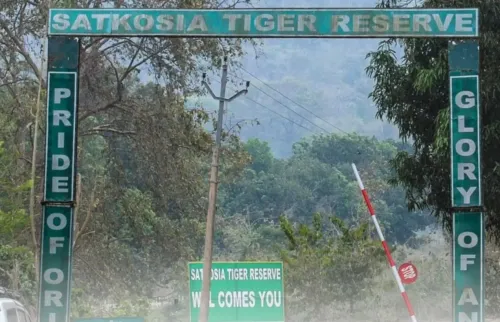
Odisha forms 5-member panel to probe Satkosia Tiger Reserve relocation
Synopsis
Odisha's high-level inquiry into Satkosia Tiger Reserve's relocation process isn't just administrative housekeeping — it follows a damning OHRC finding that mandated protocols, including Gram Sabha consent and Forest Rights Act compliance, were bypassed. With criminal action against officials now on the table, the outcome could set a precedent for how India handles tribal displacement in protected forest zones.
Key Takeaways
The Odisha government constituted a five-member inquiry committee on 20 August to probe relocation violations at Satkosia Tiger Reserve , Angul.
The panel is chaired by Arabinda Kumar Padhee , Additional Chief Secretary, Revenue and Disaster Management, and includes retired IFS officer Anup Nayak as independent expert.
The committee was formed following an Odisha Human Rights Commission (OHRC) directive dated 9 February , which found NTCA protocols were not followed.
The inquiry covers the entire village-wise relocation process, except Raiguda village , and must be completed within six weeks .
The panel can recommend differential compensation , restoration of rights, and criminal or departmental action against erring officials.
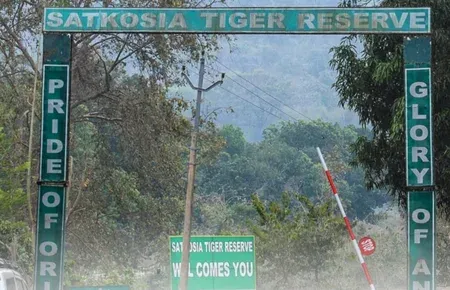
The Odisha government on Thursday, 20 August constituted a five-member high-level inquiry committee to examine allegations of procedural violations in the village relocation process at the Satkosia Tiger Reserve in Angul district. The panel was formed in compliance with a February 9 directive from the Odisha Human Rights Commission (OHRC), which had found that mandated protocols were not followed in letter and spirit.
Committee Composition
The panel is chaired by Arabinda Kumar Padhee, Additional Chief Secretary of the Odisha Revenue and Disaster Management Department. Its members include Bhaskar Jyoti Sarma, Principal Secretary of the Forest, Environment and Climate Change Department; Pabitra Mohan Samal, Principal Secretary of the Law Department; and B. Parameswaran, Commissioner-cum-Secretary for the ST and SC Development, Minorities and Backward Classes Welfare Department.
In line with the OHRC order, the state also appointed retired Indian Forest Service officer Anup Nayak, former Member Secretary of the National Tiger Conservation Authority (NTCA), as an independent expert with specialised knowledge of wildlife law, the Forest Rights Act, 2006, and rehabilitation policy. The committee's constitution was formalised through a notification issued by the Forest, Environment and Climate Change Department on 17 August.
Scope of the Inquiry
The committee has been tasked with examining the entire village-wise relocation process at Satkosia Tiger Reserve, with the exception of Raiguda village. Its terms of reference are wide-ranging and include verifying compliance with the Wildlife (Protection) Act, 1972, the Forest Rights Act, 2006, and applicable NTCA guidelines.
The panel will also identify cases of wrongful inclusion or exclusion of beneficiaries, assess the adequacy of compensation and rehabilitation provided to displaced families, and recommend corrective measures — including payment of differential compensation, restoration of rights, and livelihood support where warranted. Notably, the committee has also been empowered to identify officers responsible for procedural irregularities and recommend both departmental and criminal action wherever necessary.
What the OHRC Found
In its February 9 order, the OHRC noted that the relocation from a core or critical tiger habitat is governed by Section 38V of the Wildlife (Protection) Act, 1972, and NTCA guidelines. The commission underscored that any such relocation must be genuinely voluntary, based on a mutually agreed rehabilitation package, and preceded by a proper habitat assessment, settlement of rights under the Forest Rights Act, and informed consent of the Gram Sabha.
During its inquiry, the OHRC found that the procedures and protocols prescribed by the NTCA — required to be followed in addition to the benefits offered by the state government — were not adhered to adequately. This finding forms the basis of the committee's mandate.
Timeline and Next Steps
The committee has been directed to complete its inquiry and submit a detailed report to the state government within six weeks from the date of its constitution. Depending on the findings, affected families could be entitled to differential compensation and restored livelihood rights, while erring officials may face departmental or criminal proceedings.
Point of View
Not merely bureaucratic. The real test will be whether the six-week report translates into enforceable outcomes or becomes another shelved inquiry. With the Forest Rights Act, 2006 routinely cited but inconsistently applied across protected area relocations, this case could either reinforce accountability or demonstrate its limits.
NationPress
21 Aug 2026
Frequently Asked Questions
Why has Odisha formed an inquiry committee for Satkosia Tiger Reserve?
The Odisha government constituted the five-member panel following a February 9 directive from the Odisha Human Rights Commission, which found that NTCA-prescribed protocols for village relocation — including Gram Sabha consent and Forest Rights Act compliance — were not followed adequately at Satkosia Tiger Reserve in Angul district.
Who is heading the Satkosia relocation inquiry committee?
The committee is chaired by Arabinda Kumar Padhee, Additional Chief Secretary of the Odisha Revenue and Disaster Management Department. Retired IFS officer Anup Nayak, former Member Secretary of the NTCA, has been appointed as an independent expert.
What will the Satkosia inquiry committee examine?
The panel will examine the village-wise relocation process at Satkosia Tiger Reserve, verify compliance with the Wildlife (Protection) Act 1972 and Forest Rights Act 2006, identify wrongful inclusion or exclusion of beneficiaries, assess compensation adequacy, and recommend corrective measures including possible criminal action against erring officials.
Which villages are covered under the Satkosia relocation inquiry?
The committee will examine the relocation process for all villages within the Satkosia Tiger Reserve except Raiguda village, which has been explicitly excluded from the inquiry's scope.
When is the inquiry report expected?
The committee has been directed to complete its inquiry and submit a detailed report to the Odisha state government within six weeks from the date of its constitution on 20 August 2025.