Shivraj calls Congress stance on Vande Mataram unconstitutional
Synopsis
Union Agriculture Minister Shivraj Singh Chouhan attacked Congress on 20 August 2026 for not singing Vande Mataram in full, calling it unconstitutional and tracing the stance to All-India Muslim League pressure during the Constituent Assembly era. The charge reignites a long-running BJP-Congress battle over cultural nationalism and national symbols.
Key Takeaways
Union Agriculture Minister Shivraj Singh Chouhan posted on 20 August 2026 accusing Congress of an unconstitutional stance on Vande Mataram .
He claimed the decision not to sing the full national song was originally taken under pressure from the All-India Muslim League .
The Constituent Assembly in 1949–1950 adopted only the first two stanzas of Vande Mataram as the national song after internal inclusivity debates.
Chouhan stated: 'An insult to Vande Mataram is an insult to Bharat Mata — the country will never forgive this.' The BJP has used disputes over national symbols as a recurring marker of its cultural-nationalist identity against Congress's secular framing.
Any formal parliamentary motion on national symbols or state-level school directives on Vande Mataram could follow as political pressure builds.
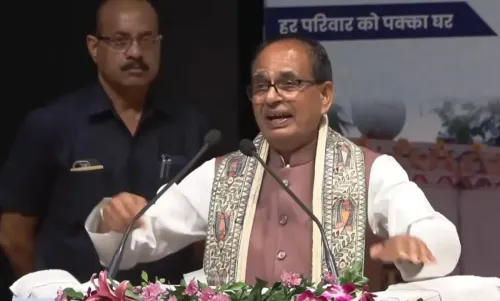
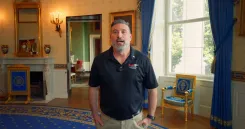
A charge that cuts to the heart of national identity: Union Agriculture Minister Shivraj Singh Chouhan on Thursday, 20 August 2026, accused the Indian National Congress of holding an unconstitutional position on the national song Vande Mataram, calling it a reflection of what he termed a 'League mentality' rooted in pre-Partition politics.
Posting in Hindi on X, Chouhan declared: 'Congress's decision not to sing the full Vande Mataram is unconstitutional. Is Congress above Parliament and the Constitution?' He went further, asserting that the decision to not sing the song in full was originally taken under pressure from the All-India Muslim League — and that adhering to that position today exposes the party's ideological inheritance. 'An insult to Vande Mataram is an insult to Bharat Mata. The country will never forgive this,' he wrote.
The 1950 decision and its long shadow
The dispute has roots that go back to the founding of the republic. During the Constituent Assembly debates of 1949–1950, only the first two stanzas of Vande Mataram — the song composed by Bankim Chandra Chatterjee and a rallying cry of the independence movement — were adopted as the national song. The decision followed internal debates over the song's later stanzas, which some members argued carried religious imagery that could be exclusionary. The All-India Muslim League, which had historically objected to the song, was a significant voice in that broader political climate, though the Constituent Assembly's final call was its own. Chouhan's post frames that foundational compromise not as a considered constitutional settlement but as a capitulation — one he argues Congress continues to honour at the cost of national sentiment.BJP's cultural nationalism versus Congress's secular framing
This is not the first time Vande Mataram has become a flashpoint. The song sits at the intersection of culture, religion, and constitutional symbolism — a combination that guarantees periodic political combustion. The BJP has long positioned itself as the defender of undiluted cultural nationalism, and disputes over national symbols — the anthem, the song, the flag — recur as markers of that identity contest. Congress has historically defended its position on Vande Mataram as consistent with the Constituent Assembly's own consensus, arguing that the partial adoption was itself a constitutional act, not a betrayal of one. Chouhan's framing inverts that logic entirely: if Parliament and the Constitution are supreme, he argues, then a decision shaped by communal pressure undermines both. The attack also lands in a specific political register — the suggestion that Congress remains ideologically tethered to the Muslim League is a recurring BJP argument designed to question the party's nationalist credentials before a broad Hindu-majority electorate.What the charge means heading into Parliament
With Parliament sessions providing a natural stage for exactly this kind of symbolic confrontation, Chouhan's post signals that national symbols could again become a live legislative flashpoint. State governments have previously issued directives on mandatory Vande Mataram singing in schools and offices — and any fresh push at the Centre would sharpen the political lines considerably. The question Chouhan leaves hanging — 'Is Congress above Parliament and the Constitution?' — is less a legal inquiry than a political gauntlet. Whether Congress responds, and how, will determine whether this remains a social-media salvo or the opening move of a larger culture-war campaign.Point of View
Not unity. What makes this moment notable is the constitutional framing: by calling Congress's position 'unconstitutional' rather than merely unpatriotic, Chouhan elevates the charge from sentiment to legality, potentially setting up a parliamentary confrontation. The move fits a broader BJP pattern of keeping cultural-nationalist issues alive between election cycles to sustain base mobilisation.
NationPress
5 Oct 2026
Frequently Asked Questions
What did Shivraj Singh Chouhan say about Vande Mataram?
On 20 August 2026, Chouhan posted on X calling Congress's position of not singing the full Vande Mataram unconstitutional, and linked the original decision to pressure from the All-India Muslim League.
Why is only part of Vande Mataram sung as the national song?
The Constituent Assembly in 1949–1950 adopted only the first two stanzas of Vande Mataram as the national song following internal debates about the religious imagery in the later stanzas and concerns about inclusivity.
What is the history of Vande Mataram and the Muslim League?
The All-India Muslim League historically objected to Vande Mataram, arguing its later stanzas contained Hindu religious imagery. This objection influenced the political climate in which the Constituent Assembly debated the song's adoption.
Is not singing the full Vande Mataram unconstitutional?
The Constituent Assembly itself decided to adopt only the first two stanzas, so that partial rendition has been the official national song since 1950. Chouhan's claim of unconstitutionality refers to Congress's political stance, not a court ruling.
Has Vande Mataram been a political controversy before?
Yes. Disputes over the full rendition of Vande Mataram have surfaced repeatedly in parliamentary debates and public discourse since independence, often as part of broader BJP-Congress clashes over cultural nationalism and secularism.