White House Links Virginia Killing to Biden-Era Border Release
Synopsis
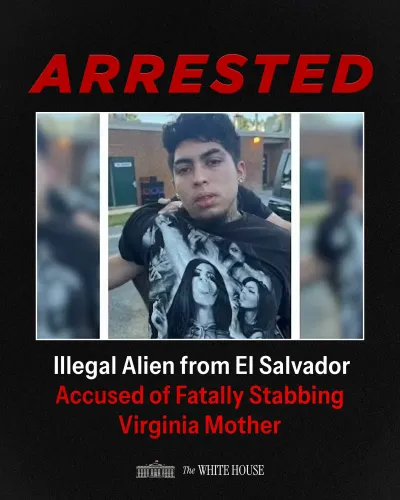
The White House named Alexis Cedillos-Campos — arrested by CBP in 2024 and released under Biden-era border policy — as the suspect in a Virginia woman's murder, using the case to defend President Trump's immigration enforcement campaign.
Key Takeaways
Alexis Cedillos-Campos was arrested by CBP in 2024 after illegally crossing the border and was subsequently released into the United States.
The White House says Cedillos-Campos killed a mother in Virginia this past week.
The post directly blames the Biden administration's border policies for the release that preceded the killing.
The White House framed the case as justification for President Trump's ongoing campaign to remove 'dangerous criminal illegals' from American communities.
U.S. administrations have used individual criminal cases involving noncitizens to argue for tougher immigration enforcement since at least the 1990s .
The specific details of the incident — the suspect, the victim, and the homicide — are drawn from the White House post and cannot be independently verified from prior reporting.
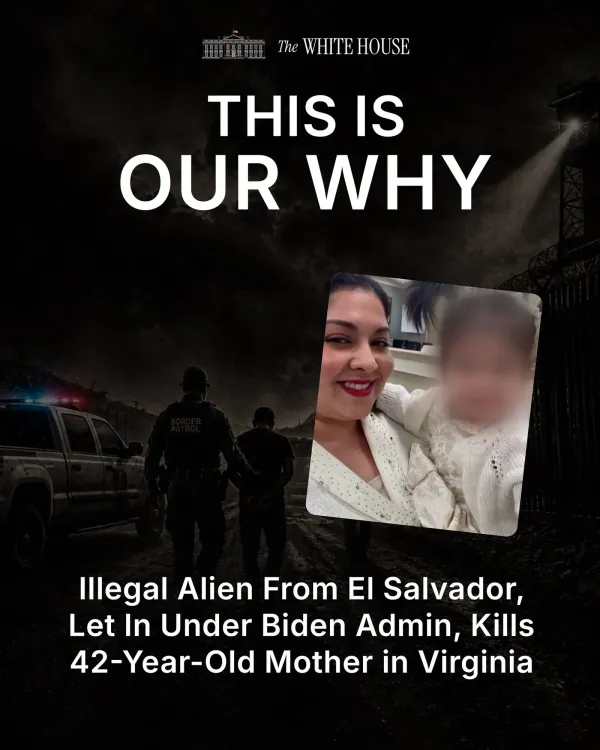
A mother is dead in Virginia, and the White House is making sure the country knows exactly who it blames. On Thursday, August 20, 2026, the official White House account on X named Alexis Cedillos-Campos — described as a 'criminal illegal' arrested by U.S. Customs and Border Protection (CBP) in 2024 after crossing the border during the Biden administration — as the suspect in a brutal homicide, arguing the case is proof that the current administration's immigration crackdown is not optional, but essential.
A Name, an Arrest, a Release — and Then a Murder
The White House's post lays out a stark sequence: Cedillos-Campos was apprehended by CBP in 2024, then released back into the United States. That release, the White House argues, happened under what it calls the Biden administration's 'open border.' This past week, it says, the same individual allegedly killed a woman in Virginia. The post does not name the victim.
The framing is deliberate and pointed — not a policy statement, but a cause-and-effect narrative built around a single human tragedy. 'THIS IS OUR WHY,' the post opens, in all capitals, before naming the suspect and the crime.
Biden-Era Border Policy in the Crosshairs
The Biden administration (2021–2025) overhauled interior enforcement priorities through a series of executive actions, expanded parole programs for certain migrant groups, and revised asylum processing rules at the southwest border. Critics — including the current administration — have argued those changes led to the release of individuals who should have been detained or deported.
CBP, the primary federal agency for border security and immigration enforcement, operates at ports of entry and in the corridors between them. Arrests at the border do not automatically result in detention; release on parole or supervision has been a longstanding tool used by administrations of both parties, though the scale and criteria shifted significantly under Biden-era directives.
A Familiar Playbook, a Real Victim
U.S. administrations have used individual criminal cases involving noncitizens to anchor broader immigration arguments since at least the 1990s. The pattern is consistent: a name, a crime, a policy failure — and a call for tougher enforcement. What the White House is doing here is not new in form. But the political temperature around border enforcement in 2026, following years of record crossings and sustained legislative gridlock on immigration reform, makes the stakes sharper than they have been in decades.
The post closes with a direct defence of President Trump's ongoing deportation and interior enforcement campaign: '@POTUS is taking dangerous criminal illegals off our streets and protecting American communities.' It is as much a political argument as it is a law-enforcement statement — and the White House is not hiding that.
The unnamed Virginia mother is the human anchor of a policy war that has no end in sight — and her death is now the administration's most powerful argument for why it will not stop.
Point of View
The prior arrest, and the Biden-era release in a single breath, the administration short-circuits the usual policy debate and reframes it as a moral failure with a body count. This tactic has historically proven effective at shifting public sentiment on immigration, regardless of whether the broader statistical relationship between immigration status and crime rates supports the implied narrative. With congressional immigration reform stalled and the 2026 political calendar heating up, expect this kind of case-specific messaging to intensify.
NationPress
21 Aug 2026
Frequently Asked Questions
Who is Alexis Cedillos-Campos?
According to the White House, Alexis Cedillos-Campos is a foreign national with a criminal record who was arrested by U.S. Customs and Border Protection in 2024 after illegally crossing the southern border, then released into the United States under Biden-era border policies.
What happened in Virginia that the White House is talking about?
The White House says Cedillos-Campos brutally killed a mother in Virginia during the week of August 20, 2026, and is using the case to argue for stricter immigration enforcement under President Trump.
Why did CBP release Cedillos-Campos after arresting him in 2024?
The White House attributes the release to the Biden administration's border policies. Release on parole or supervision after a border arrest has been used by administrations of both parties, but the criteria and scale shifted significantly under Biden-era executive actions between 2021 and 2025.
What is the Trump administration doing about criminal illegal immigrants?
The White House states that President Trump is actively removing 'dangerous criminal illegals' from American communities as part of a broader interior enforcement and deportation campaign that has been a central policy priority since he returned to office.
Is it common for the White House to highlight individual crimes by undocumented immigrants?
Yes. U.S. administrations have used individual criminal cases involving noncitizens to argue for tougher immigration enforcement since at least the 1990s. Such messaging typically accompanies announcements of increased interior removals or new enforcement directives.