Is the Village Relocation Process in Satkosia Tiger Reserve Under Investigation?

Synopsis
The Odisha Human Rights Commission has called for a high-level inquiry into the village relocation process in Satkosia Tiger Reserve, highlighting significant procedural violations and human rights concerns. This investigation aims to ensure accountability and uphold the rights of affected residents.
Key Takeaways
OHRC mandates investigation into village relocations.
Concerns raised over procedural violations.
Accountability for officials involved in the process.
Importance of legal compliance under the Wildlife Act and FRA.
Need for proper compensation and recognition of rights.
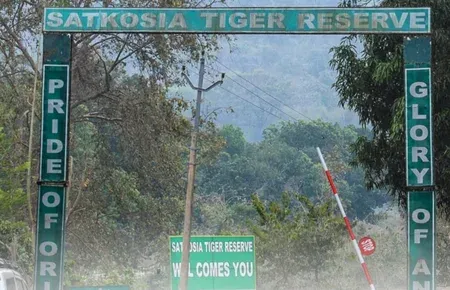
Bhubaneswar, Feb 10 (NationPress) The Odisha Human Rights Commission (OHRC) has mandated the state government to form a high-level inquiry committee within four weeks. This committee, consisting of officials from various departments, will investigate the problematic village relocation process in the Satkosia Tiger Reserve located in Angul district.
Expressing serious concerns regarding numerous procedural violations during the relocation, the OHRC has instructed the committee to pinpoint accountable officers and recommend both departmental and criminal actions where necessary.
The directions were issued following complaints from residents of Bhurukundi, Asanbahal, Kataranga, Tuluka, Tikarapada, Gopalpur, and surrounding villages, who claimed their basic human rights were infringed upon due to irregularities in the relocation process.
The OHRC highlighted that the relocation from a core or critical tiger habitat is governed by Section 38V of the Wildlife (Protection) Act, 1972, as amended, along with guidelines issued by the NTCA. It emphasized that the relocation must comply with legal requirements, including habitat assessment, rights settlement under the Forest Rights Act (FRA), 2006, and informed consent from the Gram Sabha. Furthermore, relocations should be genuinely voluntary and based on a mutually agreed rehabilitation package.
However, the OHRC's investigation revealed that many relocations occurred without prior recognition and settlement of individual and community forest rights under the FRA, 2006.
Additionally, the Commission discovered that Gram Sabha meetings were often not held or were conducted without proper notice, lacking quorum, and executed hastily.
It was noted that enumeration lists were published incorrectly, arbitrary cut-off dates were set, and objections were ignored, resulting in the exclusion of eligible individuals while including ineligible ones without adequate verification.
Moreover, the Commission pointed out that compensation and ex-gratia payments were frequently disbursed without accurate assessments of houses, land, trees, livestock, etc., leading to significant hardships for the displaced families.
While acknowledging that tiger conservation benefits society and ecology, the OHRC stressed that neglecting legal safeguards and human dignity violates rights and hampers appropriate compensation.
The Commission reaffirmed that its inquiry revealed that the procedures outlined by the NTCA, along with additional benefits provided by the State Government for villages outside the core or critical tiger habitat, were not adequately followed.
Furthermore, the Commission observed that many affected areas are revenue villages or have revenue settlements; thus, displacements in these cases cannot be treated equivalently to those in forest villages alone.
“The Commission recommends the Government of Odisha to establish a High-Level Inquiry Committee within four weeks, consisting of the Secretary of the Forest and Environment Department, along with Secretaries from the ST & SC Development Department, Revenue & Disaster Management Department, Law Department, and one independent expert knowledgeable about wildlife law, the Forest Rights Act, 2006, and rehabilitation policy, to be appointed by the government,” the OHRC directed.
It also instructed the Chief Secretary to determine the head of the multi-party inquiry committee and submit a compliance report regarding its formation within six weeks.
Point of View
It is our responsibility to ensure that the rights of the marginalized are protected. The OHRC's inquiry into the village relocation process at Satkosia Tiger Reserve is a crucial step towards accountability and justice, reaffirming our commitment to uphold human dignity in conservation efforts.
NationPress
27 Sept 2026
Frequently Asked Questions
What is the role of the OHRC in this inquiry?
The Odisha Human Rights Commission (OHRC) is responsible for investigating human rights violations and ensuring accountability in the village relocation process in the Satkosia Tiger Reserve.
What specific issues are being addressed in the inquiry?
The inquiry addresses procedural violations, inadequate compensation, and the lack of recognition of forest rights for displaced residents.
Who will be part of the inquiry committee?
The inquiry committee will consist of officials from various government departments, including secretaries from the Forest, Revenue, and Law Departments, along with an independent expert.
What is the significance of the Forest Rights Act?
The Forest Rights Act (FRA) recognizes the rights of forest-dwelling communities and mandates proper procedures for relocation and compensation.
How does this situation affect the local communities?
The situation has caused significant hardships for local communities due to inadequate compensation, loss of livelihoods, and violations of their basic human rights.