NHRC Demands Investigation into TCS Nashik's Alleged Conversion and Exploitation Case

Synopsis
The NHRC has taken significant action against TCS, demanding inquiries into claims of organized religious conversion and sexual exploitation at their Nashik office, raising serious concerns about corporate governance and the safety of employees.
Key Takeaways
NHRC demands investigation into TCS's Nashik office allegations.
Claims involve organized religious conversion and sexual exploitation.
Concerns raised about corporate governance and employee safety.
Compliance with Vishaka Guidelines questioned.
Supreme Court application seeks stricter laws on religious conversions.
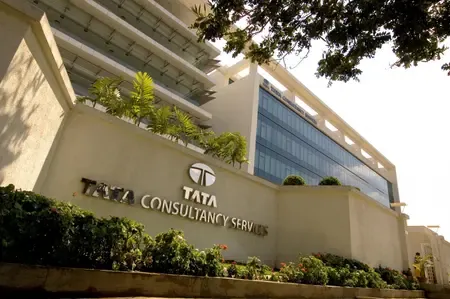
New Delhi, April 17 (NationPress) The National Human Rights Commission (NHRC) has sent formal notices to the Maharashtra authorities and the management of Tata Consultancy Services (TCS) regarding allegations of a coordinated scheme involving supposed religious conversion and sexual exploitation occurring at the company's office in Nashik.
A bench led by NHRC Member Priyank Kanoongo took note of a complaint lodged by the Legal Rights Observatory, which claims these activities are taking place at the TCS branch in Nashik, allegedly with the involvement or protection of senior HR officials.
The complaint asserts that high-ranking executives were purportedly aware of these actions yet failed to implement corrective measures, indicating a significant failure in corporate governance.
Additionally, it is claimed that adherence to the Vishaka Guidelines was not maintained at the Nashik office, leaving employees without a functional Internal Complaints Committee (ICC) or a secure channel to report their concerns.
The NHRC noted that if the allegations are substantiated, they could signify violations of the victims' human rights, prompting the commission to issue notices under Section 12 of the Protection of Human Rights Act, 1993.
The commission has instructed the Director General of Police (DGP) in Maharashtra, the Commissioner of Police in Nashik, the Labour Commissioner of Maharashtra, and the CEO & MD of TCS to carry out a comprehensive investigation into these claims.
The DGP has been asked to provide details regarding any FIRs filed in connection with the case, including the names of those accused and whether any senior officials or operational leaders within the company have been implicated.
The NHRC has also called for the Labour Commissioner to supply detailed information about all TCS locations nationwide, including their registration and licensing status under relevant labor laws.
Moreover, TCS management has been directed to present detailed information concerning its POSH (Prevention of Sexual Harassment) protocols, such as the structure and operations of internal committees, membership criteria, records of complaints lodged over the past three years, and reports on actions taken.
The apex human rights organization has requested copies of statements from employees, former workers, and committee members mentioned in the complaint, alongside documentation of any measures implemented to resolve workplace issues.
The NHRC has demanded an Action Taken Report from all involved authorities within a week and has directed that a copy of the report be emailed for its review.
Meanwhile, the matter has escalated to the Supreme Court, where a new application has been submitted in the ongoing case titled, “In Re: The Issue of Religious Conversion,” citing the Nashik incident as evidence of alleged organized religious conversion.
The application, filed by advocate Ashwini Kumar Upadhyay, argues that the allegations concerning TCS's Nashik office underscore the necessity for stricter legal frameworks to prevent conversions conducted through force, deception, coercion, or inducement.
“The organized religious conversion in Nashik has disturbed the conscience of citizens nationwide,” the plea stated, emphasizing that such actions threaten fundamental constitutional values, including secularism, equality, and national unity.
Furthermore, the application contends that Article 25 of the Constitution does not safeguard forced conversions and that the right to propagate religion does not extend to converting others against their free will.
The applicant has urged the Supreme Court to contemplate establishing more stringent legal provisions to regulate unlawful religious conversions and to assess whether organized forced conversions could be classified as serious criminal offenses under current laws.
The applicant has requested that the Union government create more rigorous laws to govern and prevent unlawful religious conversions throughout the country.
Frequently Asked Questions
What allegations have been made against TCS in Nashik?
TCS faces allegations of involvement in an organized racket related to religious conversion and sexual exploitation at its Nashik office.
What actions has the NHRC taken regarding these allegations?
The NHRC has issued notices to TCS and Maharashtra authorities, demanding a comprehensive inquiry and details about FIRs related to the case.
What is the significance of the Vishaka Guidelines in this context?
The Vishaka Guidelines are crucial for ensuring workplace safety and establishing mechanisms for addressing complaints of sexual harassment.
How has the Supreme Court reacted to the Nashik incident?
A new application has been filed in the Supreme Court, referencing the Nashik incident as evidence of organized religious conversion, seeking stricter legal measures.
What are POSH mechanisms and why are they important?
POSH mechanisms are designed to prevent sexual harassment in the workplace, ensuring a safe environment for employees to report grievances.