Supreme Court Petition Highlights TCS Nashik Case as Evidence of Organized Religious Conversion

Synopsis
A new petition filed in the Supreme Court connects the TCS Nashik incident to organized religious conversion, urging stronger legal measures against unlawful conversions across India. This case raises significant concerns about the integrity of religious freedom in the country.
Key Takeaways
New petition filed in Supreme Court regarding TCS Nashik incident.
Allegations include organized religious conversion and coercive practices.
Legal measures sought to combat unlawful conversions.
Political response includes demands for investigations.
Case highlights concerns over religious freedom and individual rights.
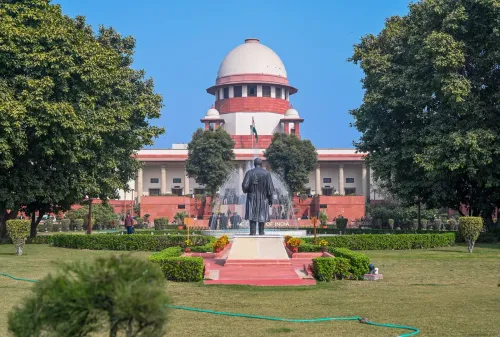
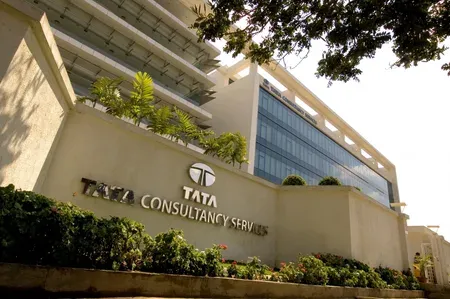
New Delhi, April 16 (NationPress) In the midst of a political uproar surrounding claims of coercive religious conversion and sexual misconduct at the Tata Consultancy Services' (TCS) Nashik branch, a new petition was filed on Thursday with the Supreme Court in the ongoing religious conversion case. This petition highlights the incident as proof of "organised religious conversion" and calls for more robust judicial action against illegal conversions nationwide.
The petition, submitted in the ongoing case titled "In Re: The Issue of Religious Conversion", argues that the alleged events at TCS's Nashik office underscore the urgent need for enhanced legal protections against conversions executed through force, fraud, coercion, or inducement.
This development follows allegations from multiple female employees of TCS's Nashik branch, who have reported harassment by senior personnel from 2022 to 2026, including claims of being pressured to adopt specific religious practices or convert.
"The organised religious conversion in Nashik has disturbed the moral fabric of society across the nation," the petition stated, asserting that such actions represent a "serious threat to sovereignty, secularism, democracy, equality, justice, liberty, fraternity, unity, and national integration".
The petitioner, advocate Ashwini Kumar Upadhyay, pointed out that Article 25 of the Constitution does not protect conversions achieved through deceit, coercion, or manipulation. He emphasized that the right to propagate a religion does not encompass the right to convert someone against their will.
Referring to previous Supreme Court rulings, the petition clarified that Article 25 only provides the right to "transmit or spread" one’s faith and does not bestow a fundamental right to convert others.
The petition further argued that forced conversions, especially when conducted in a systematic and organized manner, should be classified as a type of organised crime, as these acts frequently involve coercion, fraud, intimidation, psychological pressure, and the exploitation of vulnerable individuals.
Additionally, the petition urged the Supreme Court to categorize organized campaigns for forced conversion as potentially qualifying as "terrorist acts" under Section 113 of the Bharatiya Nyaya Sanhita (BNS) if they are carried out through systematic violence or coercion aimed at threatening public order or national unity.
The petitioner has requested the Union government to establish stricter legal frameworks to address and prevent unlawful religious conversions.
In the meantime, the TCS Nashik incident has sparked demands for a thorough investigation from various political factions, with leaders diverging on whether the company should be held institutionally accountable.
Shiv Sena spokesperson Sanjay Nirupam referred to the allegations as "serious and alarming", suggesting that Hindu female employees at the Nashik office were reportedly coerced into converting and suffering exploitation.
"We want to question TCS — as a globally recognized company, how could such misconduct occur right under your supervision without your knowledge?" Nirupam remarked.
The Bharatiya Janata Party has also called for strict measures, with MLC Chitra Wagh accusing the company of coercive practices in the alleged conversions, while Union Minister Ramdas Athawale asserted that while voluntary conversion is lawful, coercive conversion must be addressed with severity.
Reports indicate that the controversy erupted in March when a woman accused a TCS colleague of engaging in a physical relationship under false pretenses of marriage, leading to multiple additional complaints and several FIRs being filed.
So far, law enforcement has apprehended at least six employees related to the case, and the Maharashtra authorities are investigating whether any organized coercion or misconduct transpired within the company.
Point of View
It is essential to recognize the serious nature of the allegations surrounding the TCS Nashik incident. The ongoing Supreme Court case raises significant questions about religious freedom, individual rights, and the potential for organized coercion in matters of faith. It is crucial to approach this issue with a focus on legal and ethical accountability.
NationPress
19 Sept 2026
Frequently Asked Questions
What evidence is presented in the TCS Nashik case?
The petition filed in the Supreme Court cites the Nashik incident as evidence of organized religious conversion, highlighting claims of coercion, harassment, and pressure to convert among employees.
What legal measures are being sought in the petition?
The petition requests stronger legal frameworks to address and prevent unlawful religious conversions, including categorizing organized coercion as a form of organized crime.
Who filed the petition in the Supreme Court?
The petition was filed by advocate Ashwini Kumar Upadhyay in the ongoing case concerning religious conversion.
What has been the political response to the TCS Nashik incident?
Political leaders from various parties have called for a thorough investigation into the allegations, with some demanding institutional accountability from TCS.
What are the broader implications of this case?
This case raises significant concerns regarding the protection of religious freedoms and the potential misuse of power in religious conversion practices.