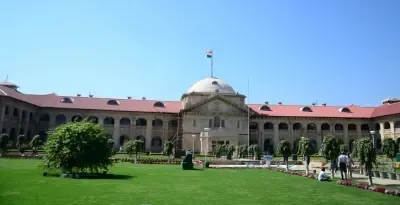
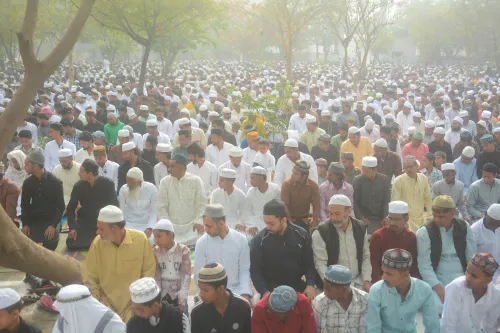
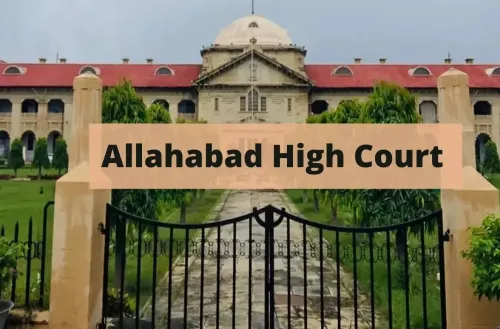
Allahabad HC dismisses Sambhal Namaz plea, bars private land as congregational space
Synopsis
The Allahabad High Court has drawn a firm constitutional line: private land used for organised, recurring Namaz gatherings loses its private character and becomes subject to state regulation. The ruling in the Sambhal case clarifies that Articles 25 and 26 protect personal faith — not the right to convert contested land into an unregulated congregational venue.
Key Takeaways
The Allahabad High Court dismissed a petition by one Aseen seeking police protection for regular Namaz at a site in village Ikona, Sambhal .
The Division Bench of Justice Saral Srivastava and Justice Garima Prashad ruled that religious rights under Articles 25 and 26 do not extend to converting private premises into an unregulated congregational space.
The Uttar Pradesh government submitted that the land is recorded as Abadi public land under Category Shreni-6(2), and Namaz had only been offered there on occasions like Eid .
The court held that the State can act preemptively where an activity is likely to affect public order, without waiting for an actual disturbance.
The petitioner's title claim based on a gift deed dated 16 June 2023 was held insufficient to override official revenue records.
The Allahabad High Court has dismissed a writ petition seeking permission and police protection for regular Namaz at an alleged private property in Sambhal district, Uttar Pradesh, ruling that the constitutional right to practise religion does not extend to converting private premises into an "unregulated congregational space". The order was passed on 2 May by a Division Bench of Justice Saral Srivastava and Justice Garima Prashad.
Background of the Petition
The petition was filed by one Aseen, who claimed ownership of a parcel of land in village Ikona, Sambhal, on the basis of a registered gift deed dated 16 June 2023. He contended that local authorities, allegedly acting in collusion with certain social elements, were illegally restraining him and other worshippers from offering Namaz on the premises. The petitioner invoked fundamental rights under Articles 19, 25, 26, 27, and 28 of the Constitution, arguing the obstruction was arbitrary and unconstitutional.
State Government's Opposition
The Uttar Pradesh government firmly opposed the plea, submitting that the land in question — Khata No. 613, Gata No. 629 — is recorded as Abadi land under Category Shreni-6(2), designated for public use. The state argued that the petitioner had failed to establish valid ownership and that Namaz had historically been offered at the site only on specific occasions such as Eid. Authorities contended that the petitioner was now seeking to introduce regular congregational prayers involving outsiders, which could disturb communal harmony in the village.
Key Observations of the Court
After hearing rival submissions, the Bench framed the central issue as the extent to which rights under Articles 25 and 26 extend to congregational religious activities on public or private land. The court drew a clear distinction between personal, occasional religious use and organised, recurring congregational activity.
"Private property may be used for personal and limited religious activity so long as it remains genuinely private, occasional and non-disruptive; however, once such use extends to regular or organised congregational activity involving persons beyond a limited private sphere, it falls outside the protected domain and may attract regulatory control," the Justice Srivastava-led Bench observed.
The court further held that no individual or group can claim recurring religious use of public land as a matter of right. "Public land is meant for common use, and no individual or group can claim a right to use it as an exclusive or recurring religious space," it stated. It also underscored that the right to practise religion is not absolute and remains subject to public order, morality, and health.
On Preemptive State Action
Notably, the Bench held that authorities are not required to wait for an actual disturbance before intervening. "Where an activity is likely to affect public order, the State is entitled to act in advance. The test is not the religious nature of the activity, but its public consequences," the court said. This marks a significant articulation of the state's preventive powers in matters touching communal harmony.
Why the Petition Failed
The court found the pleadings vague and unsupported by material particulars, with no specific incident, date, time, or identifiable act attributed to any authority. Revenue records showed the land to be public land, and the petitioner's title claim based on the gift deed was held insufficient to displace official records. The Bench also rejected the petitioner's reliance on prior judgments protecting prayers on private premises, clarifying that such protections are limited to bona fide private worship and do not extend to converting private land into an unregulated public religious venue.
"This Court cannot grant relief on such a basis, particularly where the matter has implications for public order and social harmony," the court concluded, dismissing the petition. The ruling is expected to set a precedent for similar disputes involving congregational religious activity on contested land across Uttar Pradesh.
Point of View
The Bench effectively expands preventive regulatory authority over congregational gatherings. Critics may argue this standard, if applied unevenly, could chill legitimate religious assembly. The real test will be whether courts apply this doctrine with equal rigour regardless of which faith is involved — because the precedent, as written, is religion-neutral in text but will be scrutinised for consistency in application.
NationPress
22 Sept 2026
Frequently Asked Questions
What did the Allahabad High Court rule in the Sambhal Namaz case?
The Allahabad High Court dismissed a petition seeking police protection for regular Namaz at a site in village Ikona, Sambhal, ruling that the right to practise religion does not extend to converting private or public land into an unregulated congregational space. The court held that such activity falls outside the protection of Articles 25 and 26 of the Constitution.
Who filed the petition and what was the claim?
The petition was filed by one Aseen, who claimed ownership of the land based on a registered gift deed dated 16 June 2023. He alleged that authorities were illegally restraining him and other worshippers from offering Namaz on the premises, in violation of his fundamental rights.
What was the Uttar Pradesh government's position?
The Uttar Pradesh government submitted that the land is recorded as Abadi public land under Category Shreni-6(2) and that Namaz had traditionally been offered there only on specific occasions like Eid. It argued that introducing regular congregational prayers involving outsiders could disturb communal harmony.
Can the state act before a disturbance actually occurs?
Yes, according to this ruling. The Allahabad High Court held that where an activity is likely to affect public order, the state is entitled to act in advance. The court stated that the test is not the religious nature of the activity, but its public consequences.
Does this ruling affect all religious congregations on private land?
The court clarified that private property may be used for personal and limited religious activity as long as it remains genuinely private, occasional, and non-disruptive. Once the activity extends to regular or organised congregational gatherings involving outsiders, it can attract state regulatory control, irrespective of the religion involved.