Allahabad HC namaz verdict welcomed by Muslim leaders in Sambhal case
Synopsis
In a notable show of cross-community consensus, senior Muslim leaders — including an All India Muslim Jamaat national president and a former Babri Masjid litigant — have openly welcomed the Allahabad High Court's ruling that religious practice cannot extend to converting private or public spaces into unregulated congregational venues, citing both Islamic principles and the need for communal harmony.
Key Takeaways
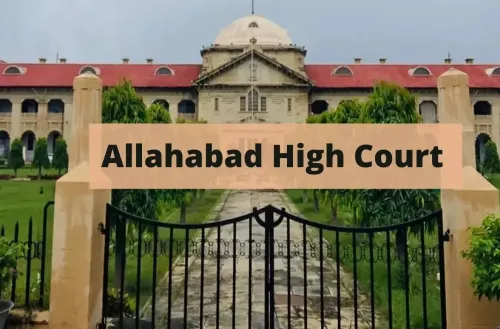
The Allahabad High Court dismissed a plea seeking permission for regular namaz at a private property in Sambhal, Uttar Pradesh .
The court held that the right to religious practice does not include converting private premises into an "unregulated congregational space." Maulana Chaudhary Ibrahim Hussain called the ruling "a good decision according to Islam as well as according to the law." All India Muslim Jamaat National President Maulana Mufti Shahabuddin Razvi Barelvi cited Islamic law ( Shariat-e-Islamia ) in support of the verdict.
Former Babri Masjid litigant Iqbal Ansari said the decision "should be followed." The ruling is expected to be referenced in similar disputes over public and private space namaz across India.
Senior members of the Muslim community on Saturday, 2 May welcomed the Allahabad High Court's judgment holding that the right to practise religion does not extend to converting private premises into an "unregulated congregational space." The court dismissed a plea seeking permission and police protection for offering regular namaz at an alleged private property in Sambhal district, Uttar Pradesh.
What the Court Ruled
The Allahabad High Court rejected the petition that sought both permission and police protection for congregational prayers at a private property in Sambhal. The court's ruling drew a clear line between individual religious practice and the use of private or public spaces as unregulated congregational venues — a distinction that Muslim community leaders found aligned with Islamic principles as well.
What Muslim Leaders Said
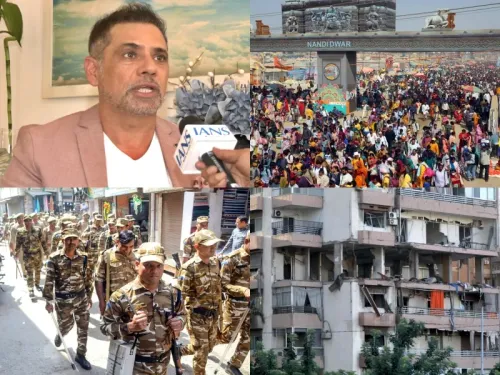
Muslim religious leader Maulana Chaudhary Ibrahim Hussain commended the High Court's decision, stating: "In Islam, prayers should not be offered at places where disputes may arise. Also, there should be a particular place to offer namaz." He added, "Therefore, it is a good decision according to Islam as well as according to the law."
Hussain further noted that since people of different religions coexist in India, maintaining communal harmony is essential. "If people of any one particular community start following their religious practises at public places, then it may hurt the sentiments of others," he told IANS.
All India Muslim Jamaat National President Maulana Mufti Shahabuddin Razvi Barelvi also backed the court's ruling. He stated: "The 'Shariat-e-Islamia' also says that namaz should not be offered in places of dispute. Also, namaz should not be offered at places which may be objectionable for anyone." Barelvi noted that public places are prone to noise and congestion and are therefore unsuitable for religious practice. He also flagged a practical concern — that namaz offered on roads could obstruct emergency vehicles such as ambulances. "It is better to offer namaz at peaceful and secured places like mosques or own homes," he told IANS.
However, Barelvi expressed concern that some people, particularly what he described as "mindless youth", have turned the act of offering namaz in public into a "matter of joke."
Former Babri Litigant Weighs In
Former Babri Masjid litigant Iqbal Ansari also endorsed the verdict, emphasising that rules and laws apply to everyone equally. "We believe that mosques are meant for offering namaz. People sometimes offer namaz at public places, but it should be offered in mosques," he said, adding: "This is a good decision which should be followed."
Broader Context
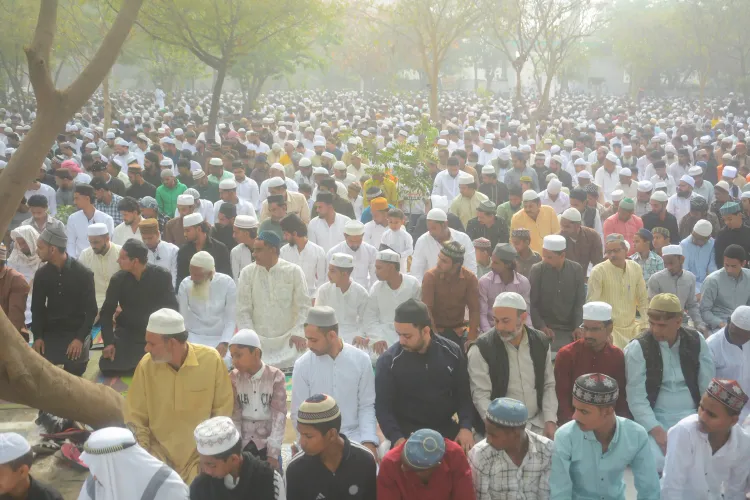
The ruling comes amid recurring debates across several Indian states over the offering of Friday prayers and other congregational namaz at public spaces, roads, and disputed private properties. This is not the first time courts have been approached on this issue — similar disputes have arisen in Gurugram, Noida, and other cities in recent years. The Allahabad High Court's latest ruling adds judicial weight to the view that congregational religious practice must be confined to designated, undisputed spaces. The verdict is expected to be cited in similar matters pending before other courts.
Point of View
It signals a strand of Muslim opinion that rarely gets amplified — one that prioritises communal peace over performative assertion of space. The harder question mainstream coverage skips is why the original plea was filed at all: the Sambhal district has been a flashpoint since the mosque-temple dispute of late 2024, and seeking police protection for namaz at a contested private property in that context was always more political than devotional. Courts are increasingly being asked to referee space disputes that are really about identity. The Allahabad HC has, at least for now, declined to play along.
NationPress
24 Sept 2026
Frequently Asked Questions
What did the Allahabad High Court rule on namaz at private property?
The Allahabad High Court dismissed a plea seeking permission and police protection for regular namaz at an alleged private property in Sambhal, Uttar Pradesh. The court held that the right to practise religion does not extend to converting private premises into an unregulated congregational space.
Why did Muslim leaders welcome the Allahabad HC verdict?
Senior Muslim leaders said the ruling aligns with Islamic principles, noting that namaz should not be offered at disputed or objectionable places. They also cited concerns about communal harmony, public inconvenience, and obstruction of emergency services as reasons to support the judgment.
Who is Maulana Mufti Shahabuddin Razvi Barelvi?
Maulana Mufti Shahabuddin Razvi Barelvi is the National President of the All India Muslim Jamaat. He supported the Allahabad HC verdict, citing the Shariat-e-Islamia, which he said also prohibits offering namaz at disputed or objectionable locations.
What is the significance of Iqbal Ansari's support for the verdict?
Iqbal Ansari is a former litigant in the Babri Masjid case, making his endorsement of the ruling particularly notable. He stated that rules and laws apply to everyone and that namaz should be offered in mosques, not public places.
How does this ruling fit into the broader debate over namaz in public spaces in India?
The ruling adds judicial weight to a recurring debate in India over congregational namaz on roads, public spaces, and disputed properties. Similar disputes have previously surfaced in Gurugram, Noida, and other cities, and the Allahabad HC's judgment is expected to be cited in related cases before other courts.