Allahabad HC Critiques UP Officials Over Namaz Restrictions in Sambhal: Resign If Incompetent

Synopsis
The Allahabad High Court has strongly criticized UP officials for limiting the number of worshippers during Ramzan in Sambhal, insisting that if they can't maintain order, they should resign. This ruling underscores the importance of religious freedom and the state's responsibility to uphold it.
Key Takeaways
Allahabad HC rebukes UP officials for namaz restrictions.
Emphasis on the right to religious freedom.
Officials urged to resign if incapable of maintaining order.
Next hearing set for March 16.
Security measures implemented for a homeowner in Bareilly.
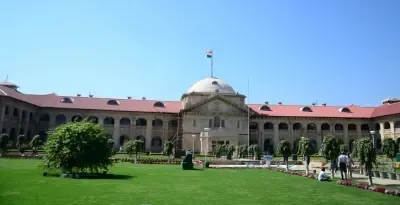
Prayagraj, March 14 (NationPress) The Allahabad High Court has issued a stern warning to the officials of Uttar Pradesh regarding their decision to limit the number of individuals allowed to perform namaz during Ramzan in the Sambhal district. The court remarked that if officials believe they are incapable of ensuring law and order, they should either resign or request a transfer.
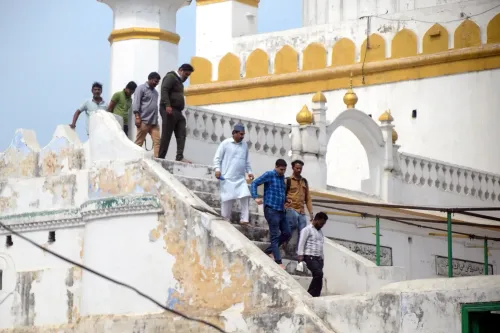
A Division Bench comprising Justices Atul Sreedharan and Siddharth Nandan made this comment while examining a writ petition submitted by Munazir Khan. The petitioner accused the local authorities of obstructing individuals from praying on land that is claimed to be a mosque's location.
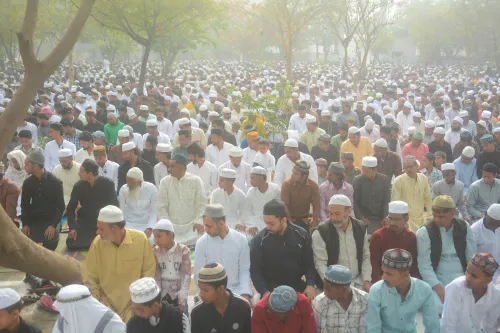
The petitioner argued that the local government had restricted the number of worshippers to just 20 at the site, despite a higher turnout expected throughout the Ramzan period.
In contrast, the Uttar Pradesh government challenged the claim regarding the mosque's existence, asserting that the land in question, Gata No. 291, is registered under the names of Mohan Singh and Bhooraj Singh, sons of Sukhi Singh, according to revenue records.
The state further justified the imposed limitations on worshippers by citing potential law and order issues.
However, the court, led by Justice Sreedharan, dismissed this reasoning, emphasizing that it is the government's duty to maintain law and order and that such concerns cannot serve as justification for restricting religious practices.
"We categorically reject the argument presented by the State's counsel. It is the responsibility of the State to uphold the rule of law in all circumstances," the Allahabad High Court stated.
The court issued a strong admonition to the local administration, suggesting that if officials are unable to manage the situation, they should step back from their roles.
"If local authorities, such as the Superintendent of Police (SSP) and the Collector, feel that limiting the number of worshippers is necessary due to potential law and order issues, they should either resign or transfer away from Sambhal if they believe they lack the capability to enforce the rule of law," the Bench remarked.
The Allahabad High Court underscored the principle that every community has the right to practice its religion peacefully at designated sites.
"It is the State's obligation to ensure that every community can worship peacefully in its designated places of worship and, in private properties, to perform religious activities without State permission," the court noted. Permission from authorities is only required when religious activities occur on public land or extend into public spaces.
During the proceedings, the court acknowledged that the petitioner had not provided photographs or other evidence to verify the existence of a mosque or a place of worship at the site.
The court granted time for both parties to present their cases, allowing the petitioner to submit a supplementary affidavit with photographs and relevant revenue records to back up the claim regarding the site for Namaz.
The case is scheduled for further hearing on March 16.
In a related matter concerning alleged police actions regarding Namaz offered inside a private residence in Bareilly, the same Bench directed the District Magistrate and SSP of Bareilly to appear in court for the next hearing, when a ruling will be made.
During these proceedings, the Allahabad High Court recorded the testimony of Haseen Khan, the homeowner, who claimed police took him while he was praying at home and later coerced him to sign a document.
Expressing concern for his safety, the Justice Sreedharan-led Bench ordered the deployment of two armed guards to provide round-the-clock protection and accompany him wherever he goes until further notice.
The court also remarked that any acts of violence against him or damage to his property would be presumed to have occurred at the instigation of the state government, unless proven otherwise.
Point of View
The Allahabad High Court has highlighted the critical balance between maintaining law and order and ensuring the freedom of religious practice. The court's strong admonishment of state officials reflects the judiciary's commitment to uphold constitutional rights, emphasizing that the state must facilitate peaceful worship rather than impose restrictions.
NationPress
1 Oct 2026
Frequently Asked Questions
What did the Allahabad High Court say regarding UP officials?
The court criticized UP officials for restricting worshippers during Ramzan in Sambhal and suggested they resign if they cannot maintain law and order.
What was the basis for limiting the number of worshippers?
The Uttar Pradesh government claimed the restrictions were necessary due to potential law and order concerns.
What did the court emphasize about religious practices?
The court emphasized that every community has the right to worship peacefully at designated places without state interference, except on public land.
When is the next hearing for this case?
The next hearing is scheduled for March 16.
What additional measures were taken for the homeowner in Bareilly?
The court ordered armed guards to protect Haseen Khan, who was allegedly coerced by police while praying at home.