Sambhal demolishes 'illegal' mosque, Eidgah; 10.5 bighas worth ₹5 crore reclaimed
Synopsis
Sambhal's district administration razed an allegedly illegal mosque and Eidgah on government cemetery land, recovering 10.5 bighas of highway-facing property worth ₹5 crore — drawing condemnation from the All India Shia Personal Law Board and raising fresh questions about due process in UP's ongoing encroachment-removal drives.
Key Takeaways
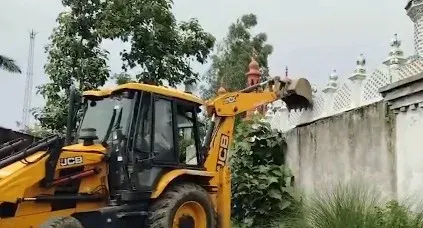
The Sambhal district administration demolished an allegedly illegal mosque and Eidgah on 14 July in the Asmoli police station area of Uttar Pradesh .
The action was carried out under Section 67 of the Uttar Pradesh Revenue Code following a Tehsildar's Court order.
Approximately 10.5 bighas of government cemetery land — valued at least ₹5 crore — was reclaimed, according to District Magistrate Ankit Khandelwal .
More than 100 personnel from UP Police, PAC, and RAF were deployed to maintain order during the demolition.
The All India Shia Personal Law Board condemned the demolition, with General Secretary Maulana Yasoob Abbas calling it 'wrong' and demanding judicial determination.
The recovered land is to be used for government and public welfare purposes, though specific plans have not been announced.
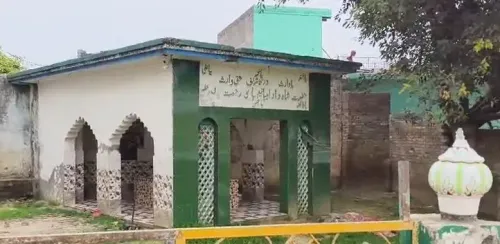
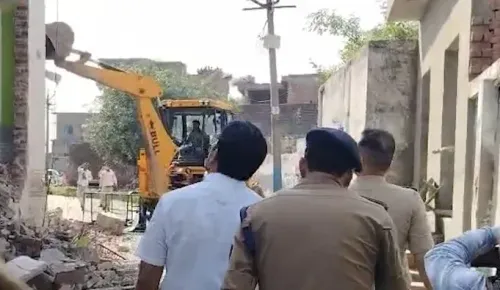
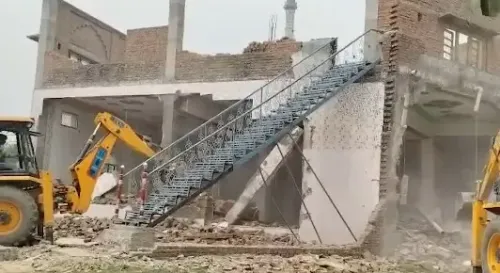
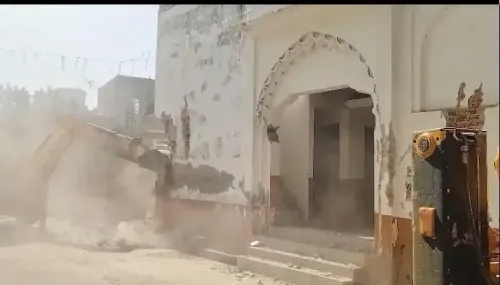
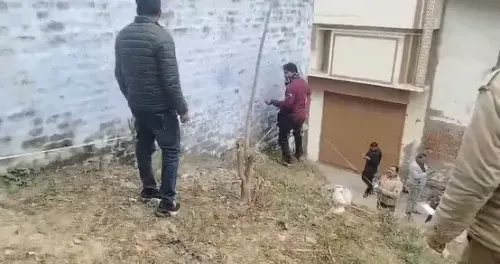
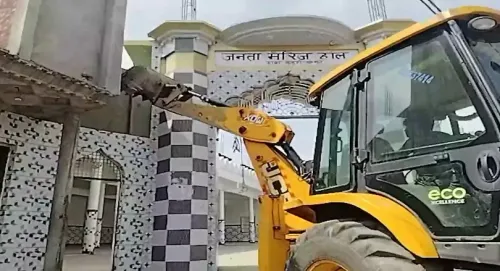
The Sambhal district administration in Uttar Pradesh on Tuesday, 14 July demolished an allegedly illegal mosque and Eidgah, both reportedly constructed on government cemetery land in the Asmoli police station area, acting on an order from the Tehsildar's Court. The action freed approximately 10.5 bighas of land estimated to be worth at least ₹5 crore, according to district officials.
How the Demolition Unfolded
The operation began with the razing of the Eidgah's 25-foot-tall minaret, with demolition of the remaining structures continuing through the afternoon. More than 100 personnel from the Uttar Pradesh Police, Provincial Armed Constabulary (PAC), and Rapid Action Force (RAF) were deployed at the site to maintain law and order and prevent residents from gathering.
Officials said a complaint had previously been submitted to the then District Magistrate alleging that the mosque and Eidgah had been constructed on land reserved as a government graveyard. A subsequent land measurement exercise confirmed the structures were built without legal sanction.
What the Administration Said
Sambhal District Magistrate Ankit Khandelwal explained the legal basis for the action: 'An attempt was being made to illegally encroach upon government land reserved as a graveyard in the village. The matter was heard in the Tehsildar's court under Section 67 of the Uttar Pradesh Revenue Code. Following the hearing, the occupation was declared illegal. There were also indications that attempts were being made to develop plots on the land. Around 10.5 bighas of land have been freed from encroachment. It is valuable roadside land along the highway, estimated to be worth at least ₹5 crore. The administration has now taken possession of the land and will use it for government and public welfare purposes.'
Legal Proceedings Behind the Action
The demolition was carried out under the provisions of the Uttar Pradesh Revenue Code, following a hearing in the Tehsildar's Court. Officials maintained that all due legal process was observed before the structures were brought down. The recovered land, described as prime highway-facing property, is now in government possession and earmarked for public welfare use.
Criticism and Condemnation
The action drew sharp condemnation from the All India Shia Personal Law Board. Its General Secretary, Maulana Yasoob Abbas, said: 'The demolition of the Eidgah built on Gram Sabha land in Sambhal is wrong. It is for the court to decide whether it is legal or illegal. An application was submitted to the District Collector, who said that it was entirely illegal. Eid prayers are not offered every day. I strongly condemn its demolition...'
Critics argue the demolition raises questions about due process and the rights of communities to contest such orders through higher judicial forums before physical action is taken. This comes amid a broader pattern of encroachment-removal drives across Uttar Pradesh that have periodically drawn legal and political scrutiny.
What Happens Next
The district administration has stated it will deploy the reclaimed land for government and public welfare purposes, though specific plans have not yet been announced. The All India Shia Personal Law Board's condemnation signals the possibility of legal challenges ahead. With Sambhal already under close watch following communal tensions in late 2024, authorities are likely to maintain heightened security in the area in the near term.
Point of View
A swift physical action, and condemnation arriving after the bulldozers have left. What the official narrative elides is whether the affected parties had meaningful opportunity to challenge the Tehsildar's ruling in a higher forum before structures were razed — a procedural question that courts have flagged in similar cases nationally. The All India Shia Personal Law Board's pushback is unlikely to reverse the action, but it could form the basis of a legal challenge that tests how far state administrations can move from order to demolition without appellate pause. With Sambhal's communal sensitivities still raw from 2024, the administration's heavy security deployment reflects an awareness that the optics here extend well beyond a routine encroachment drive.
NationPress
13 Oct 2026
Frequently Asked Questions
Why were the mosque and Eidgah in Sambhal demolished?
The mosque and Eidgah were demolished on 14 July after the Tehsildar's Court ruled that both structures had been illegally built on government-reserved cemetery land in Sambhal's Asmoli area. The action was carried out under Section 67 of the Uttar Pradesh Revenue Code following a land measurement exercise that confirmed the encroachment.
How much land was reclaimed and what is it worth?
According to District Magistrate Ankit Khandelwal, approximately 10.5 bighas of highway-facing government land were freed from encroachment, with an estimated value of at least ₹5 crore. The administration has taken possession of the land for government and public welfare use.
Who condemned the demolition and why?
The All India Shia Personal Law Board condemned the action, with General Secretary Maulana Yasoob Abbas calling it 'wrong' and arguing that it should be for a court — not the district administration — to determine legality. He also noted that Eid prayers are not held daily, questioning the urgency of the demolition.
What security arrangements were made during the demolition?
More than 100 personnel from the Uttar Pradesh Police, Provincial Armed Constabulary (PAC), and Rapid Action Force (RAF) were deployed at the site to maintain law and order and prevent residents from nearby areas from gathering during the operation.
What will happen to the reclaimed land?
The Sambhal district administration has stated the recovered land will be used for government and public welfare purposes. Specific plans have not yet been announced, and the possibility of legal challenges from affected parties remains open following the All India Shia Personal Law Board's condemnation.