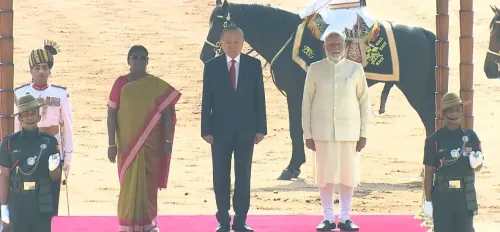
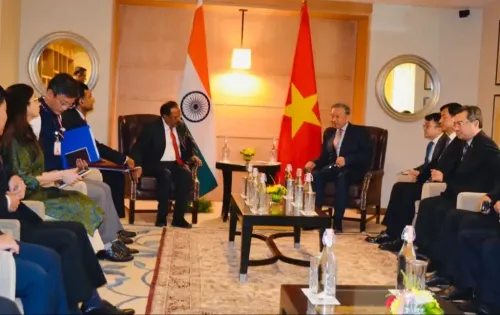
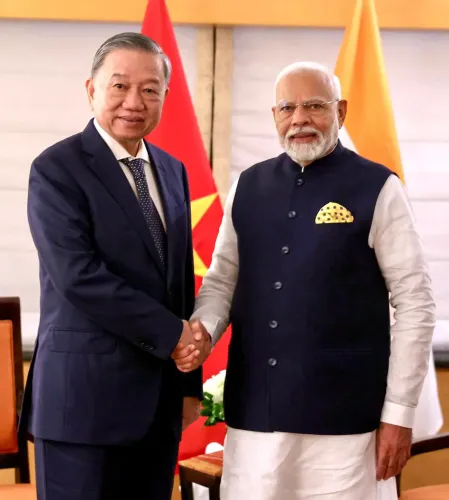
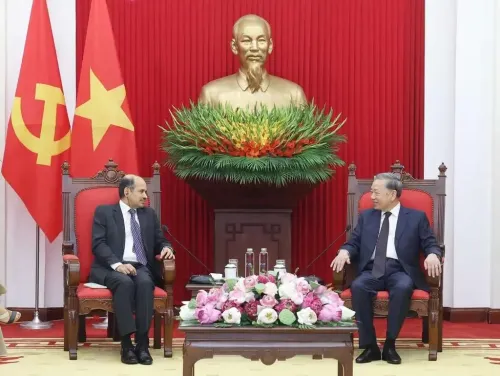
Vietnam President To Lam hails India as global innovation hub after Modi talks
Synopsis
Vietnam's President To Lam didn't just praise India — he committed to a structural upgrade. After talks with PM Modi in New Delhi, the two nations agreed to elevate their Comprehensive Strategic Partnership, making defence cooperation a 'strategic pillar' and targeting digital transformation as a new economic driver, all while reaffirming UNCLOS principles in a clear South China Sea signal.
Key Takeaways
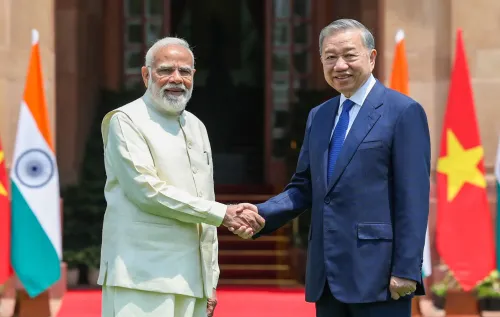
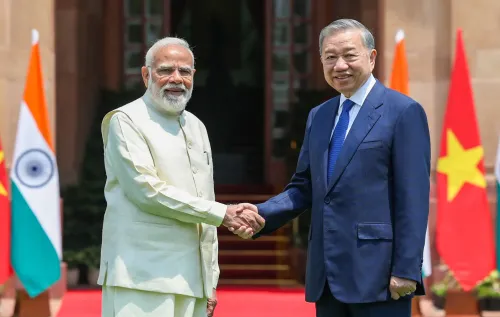
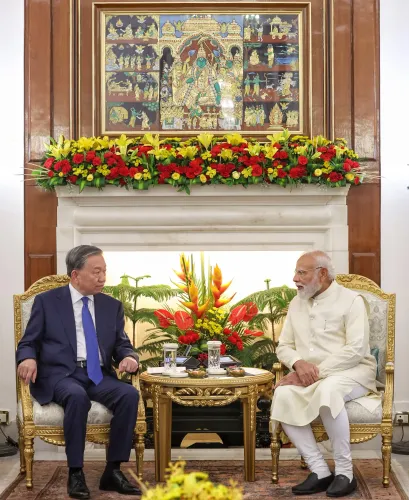
Vietnamese President To Lam met Prime Minister Narendra Modi in New Delhi on 6 May 2025 .
India and Vietnam agreed to upgrade ties to an enhanced Comprehensive Strategic Partnership (CSP) .
Defence and security cooperation will be elevated to a "strategic pillar" of the bilateral relationship.
Science, technology, and digital transformation identified as a new driver for economic cooperation.
Vietnam expressed support for India's greater role at multilateral forums , including the UN.
Both sides reaffirmed commitment to UNCLOS 1982 , freedom of navigation, and peaceful dispute resolution.
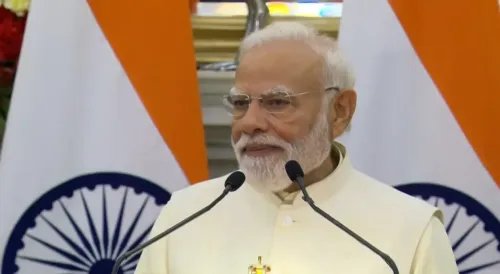
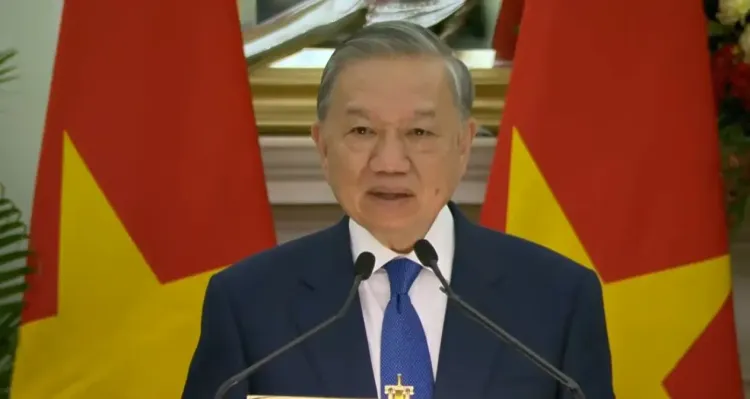
Vietnamese President To Lam on Wednesday, 6 May 2025, described India as a "centre of growth and innovation in the world" following bilateral talks with Prime Minister Narendra Modi in New Delhi. Speaking at a joint press conference, To Lam announced that the two nations agreed to elevate their relationship into an enhanced Comprehensive Strategic Partnership (CSP), with defence and security cooperation designated as a "strategic pillar".
Key Outcomes of the Modi–To Lam Summit
The two leaders reviewed 50 years of bilateral relations and a decade of the existing Comprehensive Strategic Partnership. President To Lam said both sides reached a "high level of mutual understanding" on the importance of the relationship and committed to linking their respective strategic visions and development strategies. "We would link together our strategic vision and development strategies to better address the turmoil of the situation in the world today," To Lam stated.
The summit produced agreement on deepening political trust, stepping up high-level engagement, and improving the effectiveness of existing cooperation mechanisms — the first of several pillars outlined by the Vietnamese President.
Defence and Security Elevated to Strategic Pillar
In a significant upgrade, the two nations agreed to elevate defence and security cooperation to the status of a strategic pillar, aimed at contributing to peace and stability in the region. This move signals a qualitative shift in the bilateral relationship beyond trade and diplomacy, reflecting shared concerns about regional security dynamics.
To Lam also reaffirmed Vietnam's commitment to the principles of freedom of navigation and overflight, the peaceful resolution of disputes, and adherence to international law, including UNCLOS 1982 — language widely understood to reference tensions in the South China Sea.
Technology, Trade and Digital Transformation
President To Lam identified science, technology, innovation, and digital transformation as a new driver for bilateral cooperation. The two sides agreed to reshape economic, trade, and investment cooperation through value chain connectivity, the removal of trade barriers, and expanded market access. No specific financial figures were announced at the press conference.
This comes amid India's broader push to deepen ties with Southeast Asian nations under its Act East Policy, with Vietnam — one of ASEAN's fastest-growing economies — emerging as a key partner in supply chain diversification.
People-to-People and Multilateral Cooperation
The two leaders also committed to strengthening people-to-people, cultural, educational, and religious ties to build a stronger social foundation for bilateral relations. Vietnam expressed explicit support for India's bid for a greater role at multilateral forums, including the United Nations, signalling alignment on global governance reform.
To Lam said both countries would work closely at regional and international forums to maintain peace, stability, and development, grounded in respect for the UN Charter and fundamental principles of international law. He also thanked Prime Minister Modi and the people of India for extending a warm welcome to his delegation.
What Comes Next
The upgraded partnership framework is expected to translate into specific sectoral agreements in the coming months, particularly in defence procurement, digital infrastructure, and manufacturing supply chains. With both nations navigating a turbulent global trade environment shaped by US tariff shifts and regional security pressures, the enhanced CSP provides a structured platform for deeper coordination.
Point of View
Vietnam is not merely an ASEAN partner; it is a front-line state in the region's most contested waterway. The elevated CSP, if backed by concrete defence deals and supply chain integration, could become one of India's most consequential Act East partnerships. The test, as always, will be in the implementation details that rarely make it into joint press conferences.
NationPress
22 Sept 2026
Frequently Asked Questions
What did Vietnamese President To Lam say about India?
President To Lam described India as a 'centre of growth and innovation in the world' and congratulated India on its progress during a joint press conference with PM Modi in New Delhi on 6 May 2025.
What is the enhanced Comprehensive Strategic Partnership between India and Vietnam?
It is an upgraded framework for bilateral relations agreed upon during the Modi–To Lam summit, building on 50 years of ties and a decade of the existing Comprehensive Strategic Partnership. It designates defence and security cooperation as a strategic pillar and targets digital transformation and trade as new growth areas.
Why is defence cooperation being elevated in India-Vietnam ties?
Both nations agreed to make defence and security cooperation a 'strategic pillar' to contribute to peace and stability in the region. The move reflects shared concerns about regional security, with both sides also reaffirming UNCLOS 1982 principles related to freedom of navigation.
How will India and Vietnam cooperate on trade and technology?
The two nations agreed to strengthen economic cooperation through value chain connectivity, removal of trade barriers, and expanded market access. Science, technology, innovation, and digital transformation were identified as new drivers of bilateral cooperation.
Does Vietnam support India's bid for a greater UN role?
Yes, President To Lam explicitly stated that Vietnam supports India assuming a greater position and role at multilateral forums, and committed to working closely with New Delhi on common regional and global challenges.