India-Vietnam set $25 bn trade target by 2030 after Modi-To Lam talks
Synopsis
India and Vietnam have set a $25 billion trade target by 2030 — but the real story is the scope: from rare earths and 6G to QR-code payments and oil exploration under UNCLOS, the Modi-To Lam summit has reframed a traditional trade relationship into a multi-sector Indo-Pacific partnership.
Key Takeaways
India and Vietnam agreed on a bilateral trade target of $25 billion by 2030 , announced via joint statement on 6 May 2025 .
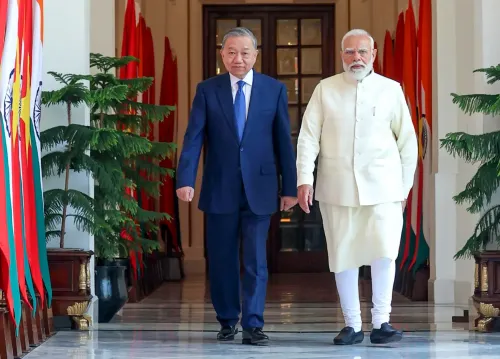
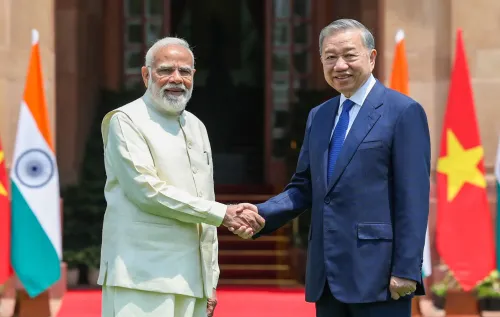
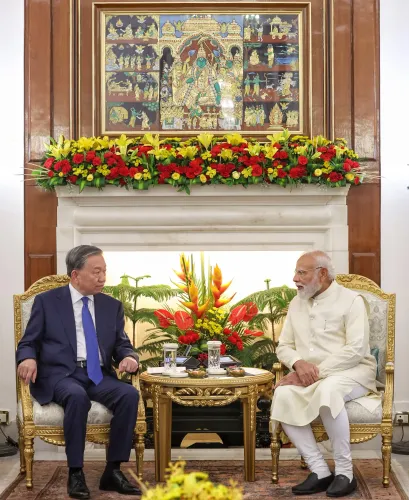
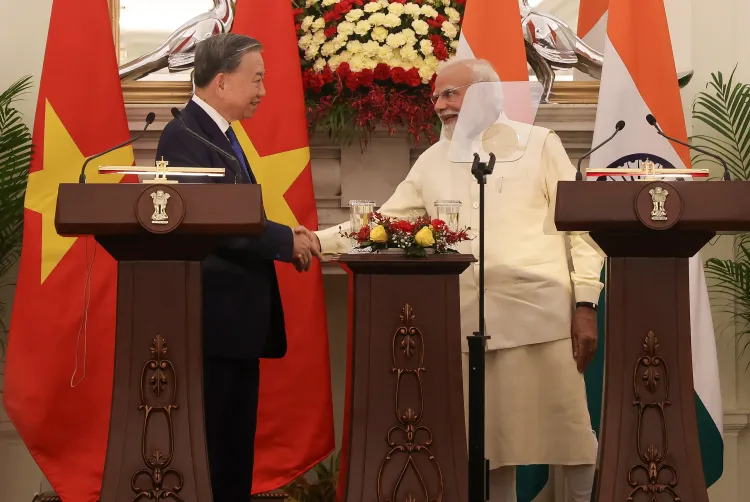
PM Narendra Modi and Vietnamese President To Lam held summit-level talks in New Delhi .
An MoU was signed between the Reserve Bank of India and the State Bank of Vietnam on digital payments and financial innovation.
IREL (India) Ltd and VINATOM signed an MoU on rare earths cooperation .
Both sides agreed to expedite the AITIGA review and expand investment in sectors including EVs, renewable energy, 6G, and AI .
Cooperation in oil and gas exploration will proceed in accordance with the 1982 UNCLOS .
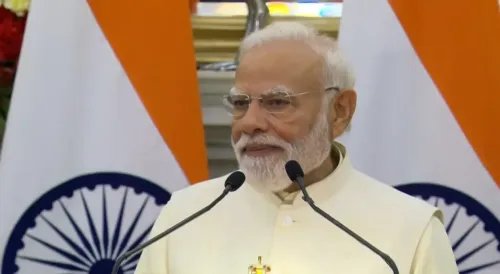
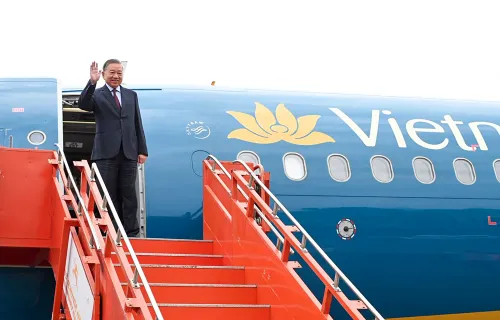
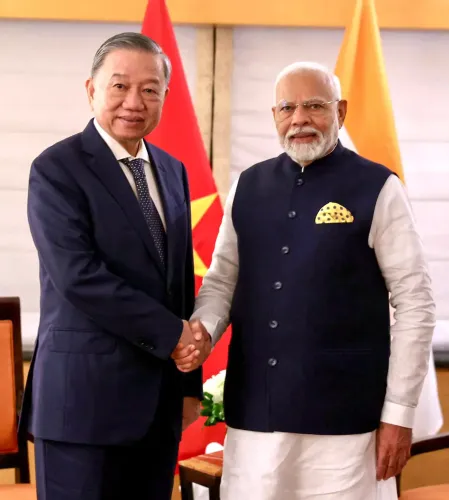
India and Vietnam have agreed to work towards a bilateral trade target of $25 billion by 2030, according to a joint statement issued by both countries on Wednesday, 6 May 2025, following summit-level talks in New Delhi. The agreement came after Prime Minister Narendra Modi held discussions with visiting Vietnamese President To Lam, who is on an official visit to India.
Key Economic Commitments
The joint statement underscored both nations' intent to reinforce cooperation "at the level of governments and businesses for increasing two-way trade, investment, and their technological partnership." Vietnam affirmed its commitment to diversify supply sources and import more products from India to serve its domestic production and export needs.
Both sides agreed to facilitate market access for agricultural products — including Indian grapes and pomegranates as well as Vietnamese durians and pomelos. They also agreed to explore a more conducive regulatory environment to ease doing business, including in standards compliance certification.
Trade Agreement and Investment Push
The leaders agreed that the ongoing review of the ASEAN-India Trade in Goods Agreement (AITIGA) should be concluded at the earliest, with the resulting agreement expected to be mutually beneficial and aligned with current global trading practices. Both sides also agreed to encourage greater two-way investments in sectors including high technology, transport, manufacturing, logistics, renewable energy, smart agriculture, electric vehicles, information technology, healthcare, agro-processing, aquaculture, tourism, and hospitality.
Notably, both governments agreed to strengthen linkages between the two countries' startup ecosystems and encourage substantive cooperation among innovation centres — a signal that the partnership is being positioned beyond traditional trade corridors.
Digital Economy and Financial Cooperation
Recognising the growing importance of e-commerce, the leaders agreed to strengthen cooperation through enhanced sharing of regulatory experience, particularly to support MSMEs in integrating into regional and global value chains. They welcomed the signing of a Memorandum of Understanding (MoU) between the Reserve Bank of India (RBI) and the State Bank of Vietnam on financial innovation and digital payments, and agreed to promote linkages for retail payment platforms via QR Codes to facilitate tourism and business.
Cooperation in critical and emerging technology areas was also outlined, covering Digital Public Infrastructure, 6G, Artificial Intelligence, space and nuclear technology, marine sciences, biotechnology, pharmaceuticals, advanced materials, and critical minerals.
Energy, Space, and Strategic Sectors
The two countries agreed to step up cooperation in oil and gas exploration, including development of new wells where Indian companies are interested in participating, in accordance with Vietnamese law and international law, particularly the 1982 UNCLOS. Both sides also acknowledged climate and sustainable development priorities, agreeing to enhance cooperation in clean and renewable energy as well as climate and disaster-resilient technologies.
The leaders welcomed the signing of an MoU between IREL (India) Ltd and Vietnam's Institute for Technology of Radioactive and Rare Elements (VINATOM) on cooperation in the field of rare earths, emphasising its early and full implementation. They also noted progress towards the establishment of an ASEAN-India tracking, data reception, and data processing facility in Vietnam, with Vietnam agreeing to expedite the remaining processes on its side.
What Comes Next
With the AITIGA review targeted for early conclusion and sectoral MoUs already signed, the India-Vietnam economic partnership is entering a more structured phase. The breadth of sectors covered — from rare earths to QR-code-linked payments — suggests both sides are positioning this relationship as a long-term strategic and economic anchor in the Indo-Pacific.
Point of View
Reflecting India's broader Indo-Pacific calculus. The rare earths MoU is equally strategic; as global supply chains decouple from China, Vietnam's rare earth reserves and India's processing capacity make this a partnership with real geopolitical weight. Whether the AITIGA review delivers on its promise, however, remains the critical unknown — it has been in negotiation for years without resolution.
NationPress
24 Sept 2026
Frequently Asked Questions
What is the India-Vietnam $25 billion trade target?
India and Vietnam have agreed to work towards bilateral trade of $25 billion by 2030, as outlined in a joint statement issued on 6 May 2025 following talks between PM Narendra Modi and Vietnamese President To Lam in New Delhi. The target is backed by commitments on market access, investment facilitation, and an AITIGA review.
What MoUs were signed during the India-Vietnam summit?
Two key MoUs were signed: one between the Reserve Bank of India and the State Bank of Vietnam on financial innovation and digital payments, and another between IREL (India) Ltd and Vietnam's VINATOM on rare earths cooperation. Both sides also agreed to promote QR-code-linked retail payment platforms.
What is the AITIGA and why does it matter for India-Vietnam trade?
The ASEAN-India Trade in Goods Agreement (AITIGA) governs trade between India and the 10-member ASEAN bloc, which includes Vietnam. Both leaders agreed that the ongoing review should be concluded at the earliest, with the revised agreement expected to be more trade-facilitative and aligned with current global practices.
How does the India-Vietnam oil and gas cooperation work?
Both countries agreed to step up cooperation in oil and gas exploration, including development of new wells where Indian companies wish to participate, in accordance with Vietnamese law and international law — specifically the 1982 UNCLOS. The UNCLOS reference is seen as significant given ongoing South China Sea disputes.
Which sectors are prioritised for India-Vietnam investment?
The two sides agreed to encourage investment in high technology, transport, manufacturing, logistics, renewable energy, smart agriculture, electric vehicles, IT, healthcare, agro-processing, aquaculture, and tourism, among others. Cooperation in 6G, AI, space, nuclear technology, and critical minerals was also agreed upon.