Vietnam President To Lam's India Visit to Boost Trade, Supply Chain Ties
Synopsis
Vietnam President To Lam's India visit arrives as bilateral trade hits a record $16.46 billion — triple what it was in 2016 — and Q1 2026 already clocking a 28% surge. With Vingroup eyeing an EV plant in Tamil Nadu and supply chains being redrawn globally, this visit could mark the next leap in one of Asia's quietly consequential economic partnerships.
Key Takeaways
Vietnam President To Lam is visiting India to deepen ties under the Comprehensive Strategic Partnership established in 2016 .
Bilateral trade tripled from $5.4 billion in 2016 to a record $16.46 billion in 2025 , per Vietnam's Ministry of Industry and Trade .
Trade hit $4.8 billion in Q1 2026 alone, a 28% year-on-year increase.
Indian businesses operate projects across 20 provinces and cities in Vietnam.
Vingroup has reportedly proposed an EV manufacturing facility in Tamil Nadu .
Textiles, footwear, digital technology, and clean energy are emerging as new areas of bilateral cooperation.
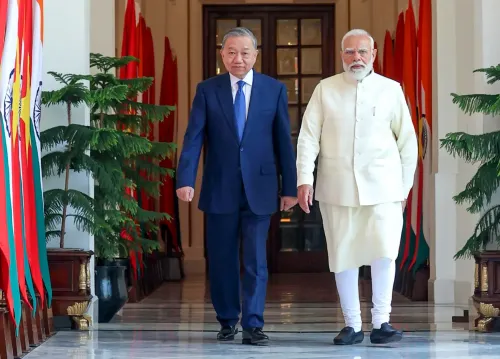
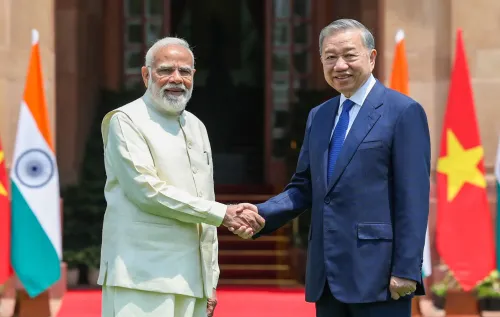
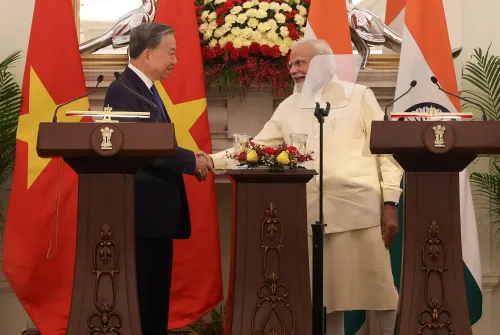
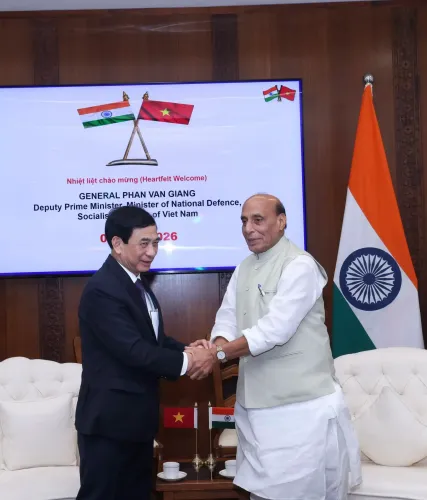
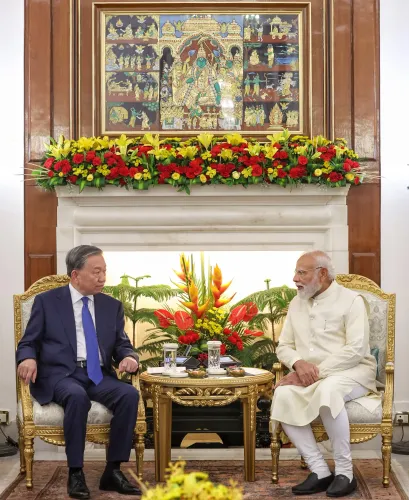
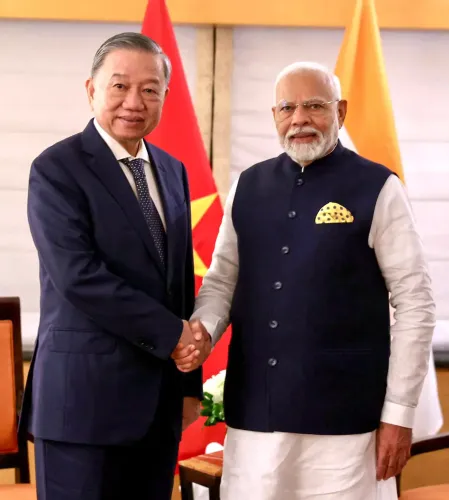
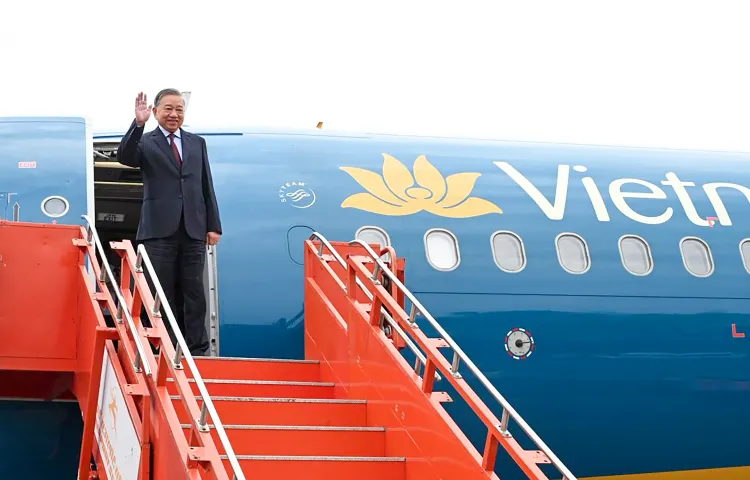
Vietnam President To Lam is set to visit India, with the trip expected to inject fresh momentum into bilateral relations as both nations look to deepen cooperation and shape a new growth framework under their Comprehensive Strategic Partnership. The visit comes at a time of strong economic expansion between the two countries across sectors including trade, investment, digital technology, manufacturing, and energy, according to a Vietnam News report.
Bilateral Trade at Record Highs
Trade between India and Vietnam has emerged as a cornerstone of the partnership, with total bilateral trade tripling from $5.4 billion in 2016 — the year the Comprehensive Strategic Partnership was established — to a record $16.46 billion in 2025, according to Vietnam's Ministry of Industry and Trade. The growth momentum has carried into 2026, with trade reaching $4.8 billion in the first quarter alone, a sharp 28% increase year-on-year.
Vietnam's exports to India have been led by manufactured and processed goods, including electronics, machinery, and agricultural products. India's exports, meanwhile, include textile materials, plastics, pharmaceuticals, and steel — inputs that support Vietnam's production and export ecosystem.
Complementary Economies, Deepening Supply Chains
Experts note that the two economies are increasingly complementary. India's strengths in raw materials, pharmaceuticals, and software align well with Vietnam's manufacturing capabilities and global trade integration, according to the report. This synergy is reportedly helping both nations move beyond direct competition toward deeper supply chain integration and production linkages.
As global companies diversify their manufacturing bases amid ongoing geopolitical shifts, India and Vietnam are positioning themselves as key players in the restructuring of regional supply chains. Notably, this dynamic has gained further urgency as companies seek alternatives to single-country manufacturing dependencies.
Investment Ties Expand Across Sectors
Investment linkages between the two countries are also deepening. Indian businesses are currently operating projects across 20 provinces and cities in Vietnam. Vietnamese companies, in turn, are gradually expanding their footprint in India, with Vingroup reportedly proposing to set up an electric vehicle (EV) manufacturing facility in Tamil Nadu as a major example of this reverse investment trend.
New areas of collaboration are also emerging. Textiles and footwear are becoming important sectors for industrial cooperation, supported by global supply chain shifts and complementary strengths in raw materials and manufacturing, the Vietnam News report stated.
Strategic Context of the Visit
Since the establishment of the Comprehensive Strategic Partnership in 2016, both sides have steadily built political trust while strengthening practical collaboration across multiple domains. President To Lam's visit is expected to provide a high-level impetus to consolidate these gains and potentially unlock new frameworks for cooperation in digital technology and clean energy — sectors where both nations have expressed growing ambitions. The trajectory of this partnership will be closely watched by regional stakeholders and global investors alike.
Point of View
But the real story is structural. India and Vietnam are quietly becoming each other's supply chain insurance — a hedge against over-reliance on China that neither country needs to say out loud. The trade tripling in under a decade is not an accident; it reflects deliberate diversification by global manufacturers. What mainstream coverage misses is the asymmetry: India still exports raw inputs while Vietnam exports finished goods, meaning India's value-add in this relationship remains limited. The Vingroup EV proposal in Tamil Nadu is symbolically significant, but the test of this partnership's maturity is whether India can move up the value chain — not just supply materials, but co-manufacture and co-export.
NationPress
14 Sept 2026
Frequently Asked Questions
Why is Vietnam President To Lam visiting India?
President To Lam is visiting India to deepen bilateral ties under the Comprehensive Strategic Partnership and explore new frameworks for cooperation in trade, investment, digital technology, and energy. The visit is expected to give fresh momentum to a relationship that has seen trade triple since 2016.
What is the current state of India-Vietnam bilateral trade?
Bilateral trade reached a record $16.46 billion in 2025, up from $5.4 billion in 2016, according to Vietnam's Ministry of Industry and Trade. Trade in Q1 2026 alone stood at $4.8 billion, marking a 28% year-on-year increase.
What is Vingroup's proposed investment in India?
Vietnamese conglomerate Vingroup has reportedly proposed setting up an electric vehicle manufacturing facility in Tamil Nadu, marking one of the most significant Vietnamese investment proposals in India to date.
How are India and Vietnam complementary economies?
India's strengths in raw materials, pharmaceuticals, and software align with Vietnam's advanced manufacturing capabilities and global trade integration. This complementarity is driving deeper supply chain linkages rather than direct competition between the two nations.
What sectors are emerging as new areas of India-Vietnam cooperation?
Textiles, footwear, digital technology, clean energy, and electric vehicles are emerging as new areas of bilateral cooperation, supported by global supply chain shifts and the complementary strengths of both economies.