Vietnam President To Lam's India visit marks 10 years of strategic partnership
Synopsis
Vietnamese President To Lam's State Visit to New Delhi coincides with the 10th anniversary of the India-Vietnam Comprehensive Strategic Partnership — a relationship spanning defence credits, IT cooperation, submarine transfers, and civilisational Buddhist ties. Vietnam's state media framed India as a rising Global South leader whose multi-alignment policy makes it an indispensable partner for Hanoi.
Key Takeaways
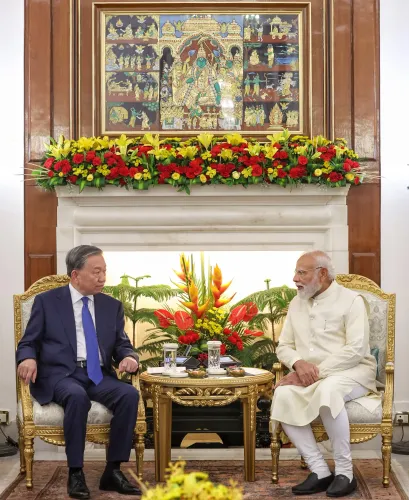
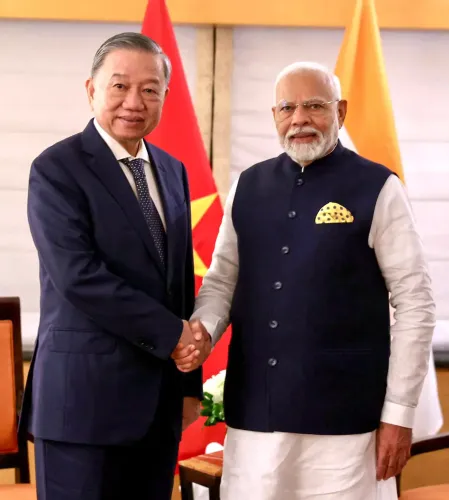
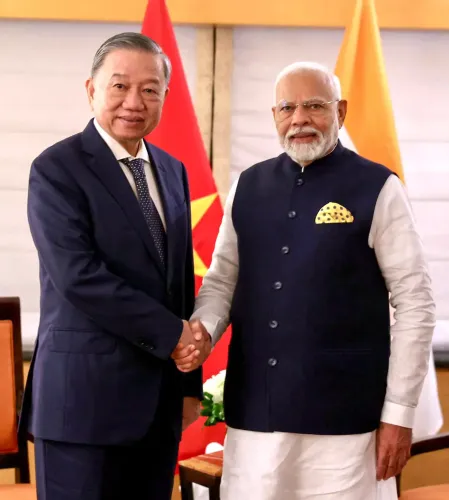
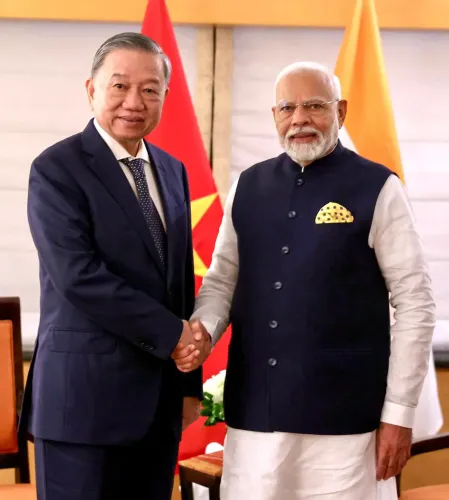
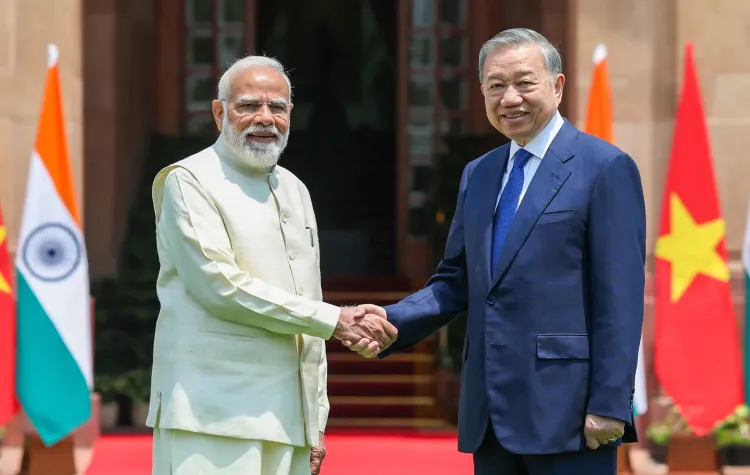
Vietnamese President To Lam is on a State Visit to New Delhi at the invitation of Prime Minister Narendra Modi .
2026 marks the 10th anniversary of the Comprehensive Strategic Partnership between India and Vietnam.
Indian investors are active in 15 economic sectors in Vietnam, with focus on electricity, manufacturing, and mining.
India has supported Vietnam through defence credit packages , submarine transfers , training, and IT centre establishment.
India is also assisting in restoration of the Cham tower groups at the My Son heritage site in Vietnam.
Bilateral ties were upgraded from a Strategic Partnership in 2007 to a Comprehensive Strategic Partnership in 2016 , with a fresh joint declaration in 2024 .
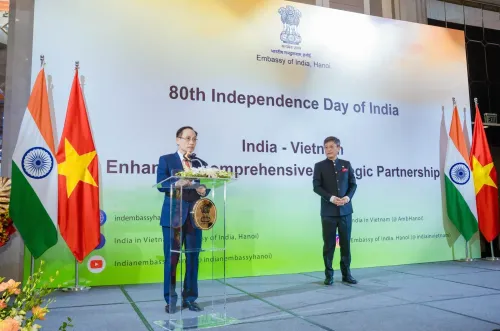
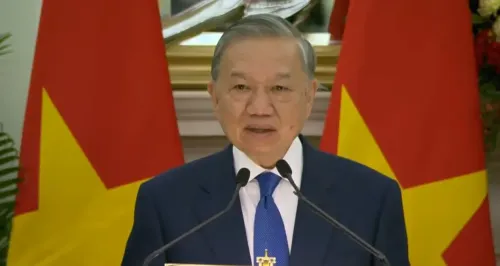
Vietnamese President To Lam is on a State Visit to New Delhi at the invitation of Prime Minister Narendra Modi, signalling Hanoi's strong commitment to deepen bilateral ties with India. The visit carries particular significance as 2026 marks the 10th anniversary of the Comprehensive Strategic Partnership between the two nations — a landmark in the history of their bilateral relations, according to a report by Nhan Dan, the central organ of the Communist Party of Vietnam.
This is also President To Lam's second overseas visit following the National Assembly's approval of key state leadership appointments, underscoring the strategic priority Hanoi places on its relationship with New Delhi.
India's Growing Regional and Global Standing
The Nhan Dan report highlighted India's emergence as a notable success story in regional economic development, crediting its balanced and independent foreign policy for enabling resilience amid an increasingly volatile global environment. India is described as following a multi-alignment foreign policy, maintaining good and balanced ties with countries across geopolitical divides.
According to the report, India is striving to affirm its role as a leader of the Global South, advance its Act East policy, and strengthen its comprehensive strategic partnership with ASEAN — committing to work toward a free, open, and inclusive Indo-Pacific in line with ASEAN's central role in the region.
A Relationship Built Over Decades
India and Vietnam share a traditional friendship rooted in deep historical, cultural, and religious ties, including longstanding Buddhist connections. India extended support to Vietnam during its struggle for national liberation and has since remained a partner in national construction and development.
The bilateral relationship has been progressively formalised over the past two decades. In 2003, both sides signed the Joint Declaration on the Comprehensive Cooperation Framework. Ties were upgraded to a Strategic Partnership in 2007 and further elevated to a Comprehensive Strategic Partnership in 2016. In 2020, the two countries adopted a joint vision statement on peace, prosperity, and people, followed by a joint declaration on strengthening the Comprehensive Strategic Partnership in 2024.
Trade, Technology and Defence Cooperation
Economic cooperation has expanded significantly, with Indian investors active in 15 economic sectors in Vietnam. Capital is primarily concentrated in electricity production, processing and manufacturing, distribution, and mining. India has also supported the establishment of IT centres in Vietnam, reflecting deepening cooperation in information technology and digital services.
Defence and security cooperation is described as an important and strategic pillar of the relationship. The two defence ministries are working on the implementation of defence credit packages and non-refundable aid provided by the Indian government to Vietnam. India has extended support in training, transfer of used submarines, and defence equipment, according to the report.
People-to-People and Cultural Ties
Tourism cooperation and people-to-people exchanges between the two nations have been strengthened in recent years. India is also actively supporting Vietnam in the restoration of Cham tower groups at the My Son heritage site, reinforcing the civilisational depth of the partnership.
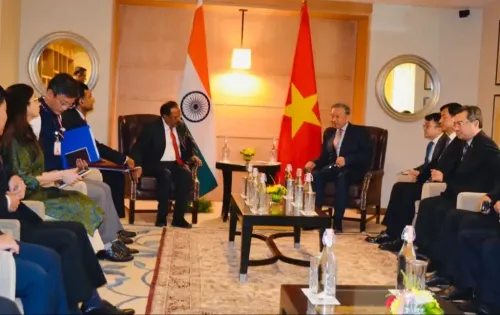
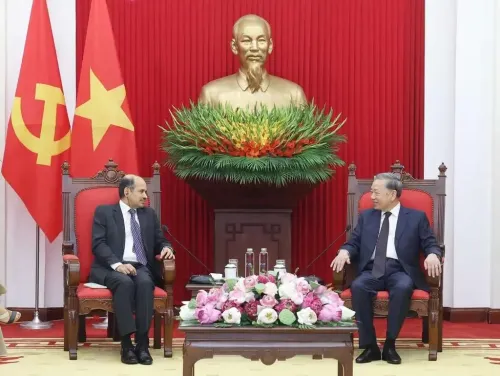
Both sides maintain a robust architecture of bilateral engagement, including the Vietnam-India Joint Commission at the foreign affairs ministerial level, joint sub-commissions on trade, political consultations, strategic dialogues, security dialogue, defence policy dialogue, and a maritime security dialogue — a channel of growing relevance given shared concerns in the Indo-Pacific.
As President To Lam's State Visit unfolds, both governments are expected to review progress across these pillars and potentially announce new cooperation frameworks ahead of the partnership's tenth anniversary milestone.
Point of View
It is hedging against great-power pressure by anchoring ties with a credible non-aligned heavyweight. The submarine transfers and defence credit packages signal a security dimension that goes well beyond ceremonial diplomacy. Yet the real test of this partnership lies in trade numbers: bilateral commerce remains modest relative to the strategic ambition on both sides, and the 10th anniversary of the Comprehensive Strategic Partnership is an opportunity to close that gap.
NationPress
22 Sept 2026
Frequently Asked Questions
Why is Vietnamese President To Lam visiting India in 2026?
President To Lam is on a State Visit to New Delhi at the invitation of Prime Minister Narendra Modi. The visit marks the 10th anniversary of the Comprehensive Strategic Partnership between India and Vietnam, making it a significant diplomatic milestone for both nations.
What is the India-Vietnam Comprehensive Strategic Partnership?
The Comprehensive Strategic Partnership is the highest level of bilateral engagement between India and Vietnam, established in 2016. It covers defence, trade, IT, culture, and maritime security, and has been progressively strengthened through joint declarations in 2020 and 2024.
What defence cooperation exists between India and Vietnam?
India has provided defence credit packages, non-refundable aid, training support, and transfer of used submarines and defence equipment to Vietnam. The two defence ministries are actively working on implementing these packages, according to the Nhan Dan report.
How are India and Vietnam cooperating on trade and technology?
Indian investors are active in 15 economic sectors in Vietnam, with capital concentrated in electricity production, manufacturing, distribution, and mining. India has also supported the establishment of IT centres in Vietnam as part of growing digital cooperation.
What cultural ties exist between India and Vietnam?
India and Vietnam share deep Buddhist connections and historical cultural exchanges. India is also supporting the restoration of Cham tower groups at the My Son UNESCO World Heritage site in Vietnam, reflecting the civilisational dimension of the bilateral relationship.