SEBI Chairman: Tech Reshaping Trading & 140 Million Investors Now Active

Synopsis
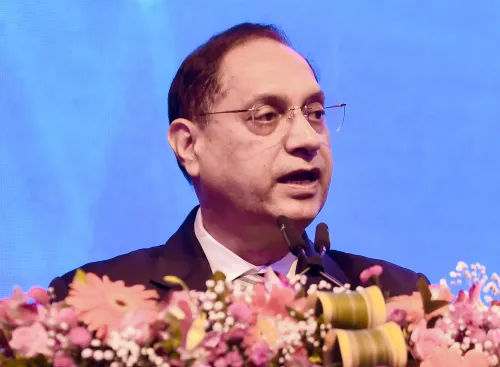
SEBI Chairman Tuhin Kanta Pandey, speaking at the regulator's 38th Foundation Day, revealed India now has 140 million unique investors and market cap growing at 15% CAGR. He warned that as technology reshapes trading and global risks grow, regulation must ensure innovation never outpaces investor safeguards.
Key Takeaways
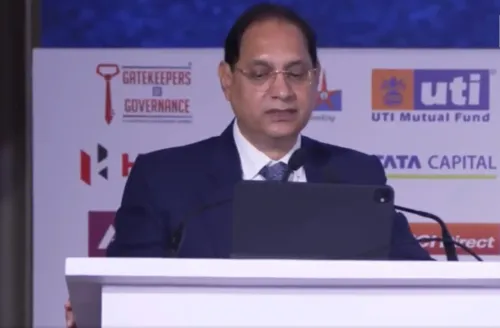
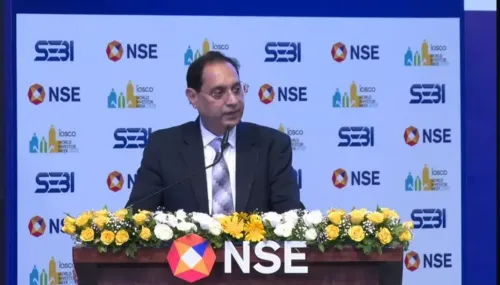
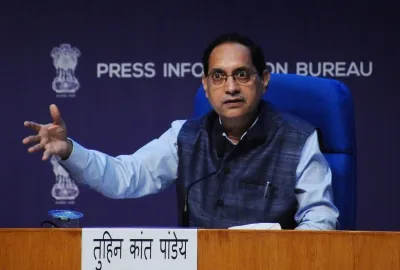
SEBI Chairman Tuhin Kanta Pandey addressed the regulator's 38th Foundation Day in Mumbai on April 25, 2025 , emphasising technology's transformative role in Indian capital markets.
India now has over 140 million unique investors and more than 5,900 listed companies , reflecting massive retail market expansion.
Market capitalisation has grown at approximately 15% CAGR over the last decade, while mutual fund assets have expanded at over 20% annually .
The primary market facilitates capital formation of nearly Rs 10 trillion per year , underscoring its role in India's economic growth.
Pandey warned that innovation must not outpace safeguards , signalling continued regulatory vigilance over finfluencers, algorithmic trading, and AI-driven financial advice.
Indian markets are increasingly exposed to global capital flow risks , making interconnected risk management a top priority for SEBI going forward.
Mumbai, April 25: Tuhin Kanta Pandey, Chairman of the Securities and Exchange Board of India (SEBI), declared on Saturday that technology is fundamentally reshaping trading, distribution, and financial advice in India, as a digitally empowered new generation of investors floods the capital markets. Speaking at SEBI's 38th Foundation Day event in Mumbai, Pandey painted a picture of a securities market that has evolved far beyond raw numbers — into a symbol of national investor confidence.
India's Securities Market: Scale Meets Confidence
Pandey opened his address by framing India's market growth not merely as a statistical achievement but as a testament to deep-rooted investor trust. "It is not just scale. It is not just numbers. It is a reflection of confidence," he stated emphatically.
He highlighted that India currently has more than 5,900 listed companies and over 140 million unique investors — a figure that places India among the fastest-growing retail investor bases globally. Over the last decade, market capitalisation has grown at approximately 15 per cent CAGR, while mutual fund assets have expanded at over 20 per cent annually.
The corporate bond market has also recorded steady growth, and the primary market now facilitates capital formation of nearly Rs 10 trillion every year — underscoring the market's critical role in India's broader economic engine.
Technology Driving a New Generation of Investors
At the heart of Pandey's address was the transformative role of technology. He noted that a new cohort of investors — "digitally connected, informed, and aspirational" — is entering the market at an unprecedented pace, fundamentally altering how trading, distribution, and investment advice are delivered.
This shift is not incidental. The rise of discount brokers, robo-advisory platforms, and mobile-first investment apps has democratised market access, bringing in first-generation investors from Tier-2 and Tier-3 cities who were historically excluded from capital market participation. According to SEBI data, a significant share of new demat account openings in recent years has come from non-metro regions, signalling a structural broadening of India's investor base.
However, this democratisation carries its own risks. Pandey was candid: "Access does not dilute awareness," he cautioned, signalling SEBI's intent to ensure that ease of entry into markets is matched by investor education and protection frameworks.
Global Capital Flows and Interconnected Risks
Pandey acknowledged that Indian markets are becoming increasingly integrated with global capital flows, making them more dynamic but simultaneously exposing them to cross-border contagion risks. Events such as US Federal Reserve rate decisions, geopolitical conflicts, and global commodity shocks now have near-instantaneous ripple effects on Indian equities and bonds.
This interconnectedness, while offering Indian companies access to deeper pools of foreign capital, also means that domestic retail investors — many of whom are new to markets — face volatility driven by factors entirely outside India's control. "Capital flows are more global, and risks more interconnected," Pandey noted, implicitly flagging the need for robust systemic safeguards.
Notably, this comes amid a period when Foreign Portfolio Investor (FPI) activity in Indian markets has seen sharp swings, with outflows exceeding Rs 1.1 lakh crore in certain recent quarters, testing the resilience of India's market infrastructure.
Regulation Must Match Innovation: SEBI's Core Mandate
Pandey stressed that in such a rapidly evolving environment, the role of thoughtful regulation becomes more critical than ever. "Responsibility to ensure that innovation does not outpace safeguards; that access does not dilute awareness; and that growth remains sustainable," he said, articulating SEBI's three-pronged regulatory philosophy.
This statement carries significant weight given recent regulatory actions by SEBI — including tightened norms around index derivatives trading, stricter rules on finfluencers (financial influencers on social media), and enhanced surveillance mechanisms for algorithmic trading. Critics had argued some of these measures were restrictive; Pandey's address signals that SEBI views them as necessary guardrails in a high-growth, high-risk environment.
The regulator has also been actively working on frameworks for AI-driven advisory services and tokenised securities, recognising that the next frontier of market disruption is already at the doorstep.
What Comes Next for Indian Capital Markets
With SEBI's renewed focus on balancing innovation with investor protection, market participants can expect continued regulatory evolution in areas including social media-based investment advice, algorithmic trading oversight, and ESG disclosure norms. The regulator is also expected to push further on corporate governance standards for listed entities as global investors increasingly scrutinise non-financial disclosures.
As India positions itself as a preferred destination for global capital — especially amid geopolitical realignments — the credibility and agility of its securities regulator will be a key determinant of sustained investor confidence. SEBI's 38th Foundation Day marks not just an anniversary, but a reaffirmation of its evolving mandate in a world where the pace of change in financial markets has never been faster.
Point of View
While impressive, carries the seeds of systemic vulnerability if left unchecked. The 140-million-investor milestone sounds triumphant, but a significant portion of these are first-generation retail investors with limited financial literacy, entering markets turbocharged by social media tips and zero-commission apps. SEBI's recent crackdowns on finfluencers and derivatives trading weren't regulatory overreach — they were early warning signals of a regulator watching retail euphoria with one eye on the 2008 playbook. The real test for SEBI isn't managing bull markets; it's whether its frameworks can absorb the next global shock without leaving millions of new investors holding the bag.
NationPress
19 Sept 2026
Frequently Asked Questions
What did SEBI Chairman Tuhin Kanta Pandey say at the 38th Foundation Day?
SEBI Chairman Tuhin Kanta Pandey said technology is reshaping trading, distribution, and financial advice as a new generation of digitally connected investors enters the market. He also highlighted that India now has over 140 million unique investors and market capitalisation has grown at 15% CAGR over the last decade.
How many investors does India's securities market have in 2025?
India's securities market currently has over 140 million unique investors, according to SEBI Chairman Tuhin Kanta Pandey's statement at SEBI's 38th Foundation Day on April 25, 2025. The country also has more than 5,900 listed companies.
What is SEBI's stance on technology and investor protection?
SEBI believes that innovation in financial technology must not outpace investor safeguards. Chairman Pandey stressed that access to markets should not dilute investor awareness, and that sustainable growth requires thoughtful, proactive regulation.
How fast has India's mutual fund industry grown?
India's mutual fund assets have expanded at over 20 per cent annually, according to SEBI Chairman Tuhin Kanta Pandey. This growth reflects rising retail participation and increasing trust in systematic investment products.
Why is SEBI concerned about global capital flows and interconnected risks?
SEBI is concerned because Indian markets are increasingly integrated with global capital flows, meaning international events like US Fed decisions or geopolitical shocks can rapidly impact domestic investors. This interconnectedness makes robust domestic regulation even more critical to protect retail investors.