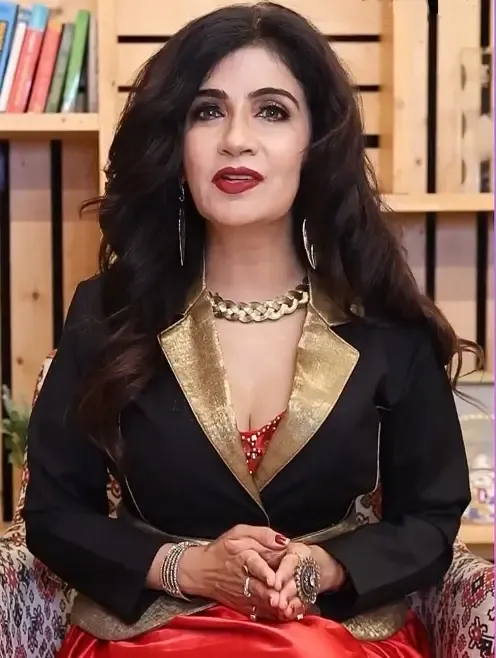
Shibani Kashyap on AI in music: 'Use it as an assistant, not a threat'
Synopsis
Shibani Kashyap isn't afraid of AI — she's prescribing how to use it. At a moment when generative tools are reshaping the music industry, the singer's call to treat AI as an assistant rather than an adversary offers a practical middle ground. But Mujtaba Aziz Naza's pointed question about voice cloning rights signals that the industry's real reckoning is still ahead.
Key Takeaways
Singer Shibani Kashyap said AI can never replace human musicians, as listeners can always tell the difference between AI-generated and real voices.
Kashyap urged artists to use AI as an assistant , referencing discussions at the AI Impact Summit .
Sufi singer Mujtaba Aziz Naza said AI "cannot replicate the soul of music" and that human creativity remains boundless.
Naza raised concerns about AI voice cloning , arguing artists must retain rights if their voices are used by AI systems.
India currently lacks formal legislation on AI voice rights , even as global music bodies push for policy frameworks.
Singer Shibani Kashyap has urged musicians and artists to embrace artificial intelligence as a creative tool rather than fear it as a rival, saying that AI can never truly replace the human element in music. Speaking exclusively to IANS on 1 May, Kashyap offered a measured take on one of the most debated topics in the Indian entertainment industry today.
Kashyap's Take: AI Cannot Replace the Real Thing
When asked whether AI poses a genuine threat to musicians, Kashyap was clear in her response. "So I don't think we should take it as a threat. At the end of the day you might listen to an AI created voice once or twice, but it is not a living person that is just a voice which has been created out of AI, and one can easily make out the difference," she told IANS.
The singer stressed that listeners retain an innate ability to distinguish between an AI-generated voice and an authentic human performance — a distinction she believes will always protect the value of real artistry.
Use AI as a Support System, Not a Substitute
Kashyap went further, advocating for a pragmatic approach to the technology. "AI can be a very good support system. It can be a very good assistant. Use it as an assistant. This is exactly what we even discussed during the AI Impact Summit — that we should use AI for our own benefit, not that we let it take over and become a threat to us," she added.
Her remarks reflect a broader conversation gaining momentum across the Indian music industry, where artists are increasingly being asked to define their relationship with rapidly evolving generative tools.
Sufi Singer Mujtaba Aziz Naza Echoes the Sentiment
Sufi singer Mujtaba Aziz Naza shared a similar perspective in a separate interaction with IANS, underscoring the spiritual and emotional dimensions of music that he believes AI fundamentally cannot replicate. "AI is helpful in many ways, but it cannot replicate the soul of music. Music is deeply emotional and spiritual. AI operates within limitations, while human creativity is boundless. There are certain feelings and inspirations that only a human mind can create," he said.
Naza's framing is notable — he does not dismiss AI outright but draws a firm line at the intangible qualities that define music as a human expression.
The Rights Question: Who Owns a Cloned Voice?
Both artists also weighed in on the increasingly urgent legal question of AI voice cloning and intellectual property rights. Naza argued that if an artist's voice is being used — with or without their consent — they must retain full rights over it. "It's only fair. This is something the industry needs to address seriously," he concluded.
The issue of voice rights is yet to be formally codified in Indian law, even as global music bodies and streaming platforms grapple with policy frameworks. With AI voice synthesis tools becoming more accessible, the Indian music industry faces mounting pressure to establish clear guidelines before disputes escalate. How quickly regulators and industry bodies respond may well determine the terms on which human creativity and artificial intelligence coexist.
Point of View
And the window to set precedent before a major dispute erupts is narrowing. The music industry's embrace of AI as a 'support system' will ring hollow if artists have no enforceable rights over their most distinctive asset.
NationPress
18 Sept 2026
Frequently Asked Questions
What did Shibani Kashyap say about AI in music?
Shibani Kashyap said AI should not be seen as a threat to musicians, arguing that listeners can always distinguish between an AI-generated voice and a real human performance. She urged artists to use AI as an assistant and support system rather than let it take over.
What did Mujtaba Aziz Naza say about AI and music?
Sufi singer Mujtaba Aziz Naza said AI cannot replicate the soul of music, which he described as deeply emotional and spiritual. He acknowledged AI's utility but maintained that certain feelings and inspirations can only come from a human mind.
What is the concern around AI voice cloning in music?
AI voice cloning tools can replicate an artist's voice without their consent, raising serious questions about intellectual property rights. Mujtaba Aziz Naza stated that artists whose voices are used by AI must retain full rights, calling it a matter the industry needs to address seriously.
Does India have laws protecting artists from AI voice cloning?
As of now, India does not have formal legislation specifically addressing AI voice cloning and artists' rights. The issue is part of a broader global debate, with music bodies and streaming platforms still working on policy frameworks.
What is the AI Impact Summit mentioned by Shibani Kashyap?
Shibani Kashyap referenced the AI Impact Summit as a forum where industry stakeholders discussed how AI should be used responsibly — specifically, as a tool that benefits creators rather than one that displaces them.