How Did Shiv Sena UBT’s Victory Make Maharashtra’s Parbhani Stand Out?
Synopsis
Discover how Shiv Sena UBT's unexpected triumph in Parbhani, amidst a statewide BJP success, reshapes the political landscape in Maharashtra. With Uddhav Thackeray's leadership, this victory signals a remarkable shift in local governance, challenging long-standing political dominance.
Key Takeaways
Shiv Sena UBT disrupts BJP's momentum in Maharashtra.
Significant political change in Parbhani after 19 years.
Local leadership plays a crucial role in electoral success.
Alliance strategies can prevent vote splitting.
Uddhav Thackeray's faction remains a contender in regional politics.
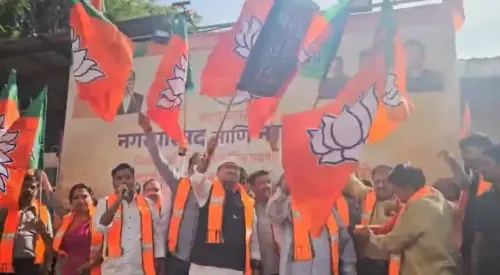
Mumbai, Jan 16 (NationPress) While the BJP-led Mahayuti alliance has achieved considerable success across various municipal corporations in Maharashtra on Friday, Parbhani from the economically challenged Marathwada region has surfaced as a significant outlier.
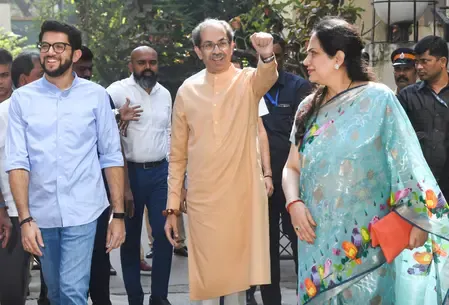
In a notable setback for the ruling coalition, Uddhav Thackeray’s "Sainiks" have effectively disrupted the BJP's progress, marking an unprecedented victory for the Shiv Sena (UBT).
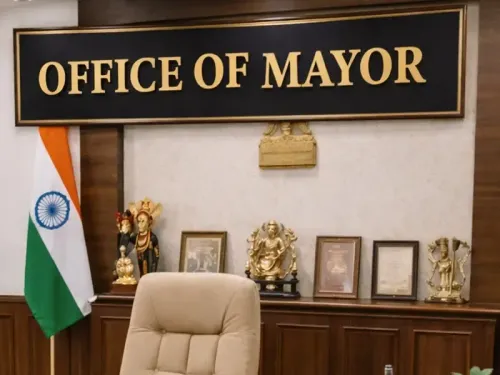
Despite a statewide trend favoring the BJP and Mahayuti alliance, the Shiv Sena (Uddhav Balasaheb Thackeray) has achieved a remarkable win in the Parbhani Municipal Corporation (PMC). This victory signifies the first instance that Uddhav Thackeray’s faction will directly manage the Parbhani civic body, concluding nearly 20 years of dominance by the NCP and Congress.
In a fiercely contested election, the Shiv Sena (UBT) emerged as the predominant party, significantly surpassing the ruling Mahayuti partners.
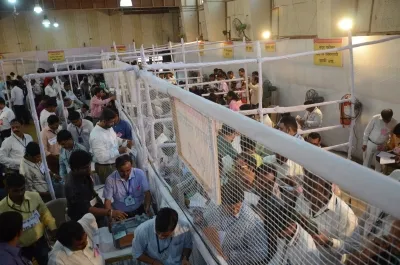
Shiv Sena UBT clinched 25 seats, while Congress secured 12, BJP also got 12, NCP (Ajit Pawar) had 11, Jan Surajya Party got 3, Yashwant Sena 1, and an independent candidate won 1. Shiv Sena UBT and Congress, along with support from other parties, are anticipated to claim the Mayor's position.
The last time the Shiv Sena held the Mayoral position in Parbhani was in 2007 (when it was a Municipal Council). Since the elevation to a Municipal Corporation in 2011, power had remained with the NCP and subsequently the Congress. This victory marks a return for the Shiv Sena UBT to Parbhani after a 19-year hiatus.
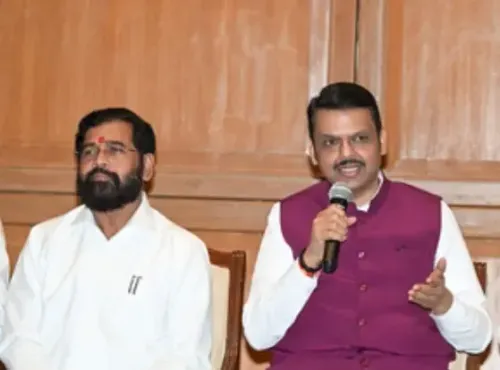
The triumph is attributed to the cohesive leadership of Parbhani MP Sanjay Jadhav and MLA Dr. Rahul Patil. While the BJP brought in prominent figures including CM Devendra Fadnavis, State President Ravindra Chavan, and Minister Chandrashekhar Bawankule, holding over 200 rallies and meetings, the Thackeray faction relied predominantly on the local influence of Jadhav and Patil.
The Shiv Sena (UBT) contested 48 seats and maintained a strategic "friendly fight" or alliance with the Congress in other areas, a strategy that successfully prevented the fragmentation of the anti-Mahayuti vote.
The Mahayuti partners—BJP, Shinde’s Shiv Sena, and Ajit Pawar’s NCP—failed to convert their state-level momentum into local success in this case. Despite an aggressive campaign led by Guardian Minister Meghna Bordikar and Industrial Minister Uday Samant, the alliance could not exceed the 25-seat threshold collectively.
In response to the results, BJP leader Meghna Bordikar remarked, “Although Devendra Fadnavis’s charisma has resonated across the rest of the state, we have underperformed in Parbhani. We will conduct a thorough introspection to analyze the reasons behind this defeat.”
Experts suggest that the strong personal connection of MP Sanjay Jadhav, combined with a prevailing sentiment of "regional pride" over state-led campaigns, empowered the Thackeray faction to retain its ground.
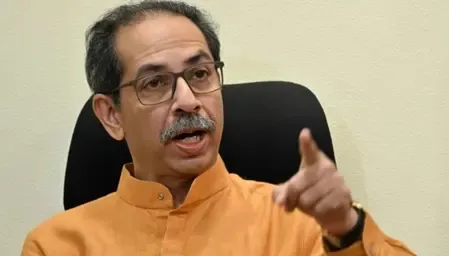
For Uddhav Thackeray, this victory represents a crucial psychological boost, demonstrating that his faction can still overcome the united strength of the BJP-Shinde-Ajit Pawar alliance in specific regional strongholds.
(Sanjay Jog can be contacted at sanjay.j@ians.in)
Point of View
The recent electoral outcome in Parbhani serves as a reminder of the unpredictable nature of local politics in India. Despite the BJP's overarching success across Maharashtra, the Shiv Sena UBT's victory illustrates that regional sentiments and local leadership can significantly influence electoral outcomes. This development warrants close attention as it may reshape alliances and strategies ahead of future elections.
NationPress
1 Oct 2026
Frequently Asked Questions
What is the significance of the Shiv Sena UBT's victory in Parbhani?
The victory signifies a major political shift, ending nearly two decades of dominance by the NCP and Congress, and highlights the potential for local leadership to influence electoral outcomes.
Who are the key figures behind Shiv Sena UBT's success?
The success is attributed to the leadership of Parbhani MP Sanjay Jadhav and MLA Dr. Rahul Patil, who leveraged their local influence effectively.
What were the results of the municipal elections in Parbhani?
Shiv Sena UBT won 25 seats, while Congress and BJP each secured 12, and NCP (Ajit Pawar) got 11, among other parties.
How does this victory impact Uddhav Thackeray's political standing?
This victory provides a crucial psychological boost for Uddhav Thackeray, demonstrating that his faction can still win against formidable opponents.
What strategies did the Shiv Sena UBT employ during the elections?
They maintained a 'friendly fight' alliance with Congress to avoid splitting the anti-Mahayuti vote and focused on local influence over large-scale campaigning.