Shivakumar urges Jaishankar to repatriate 600+ Umrah pilgrims stranded in Saudi Arabia
Synopsis
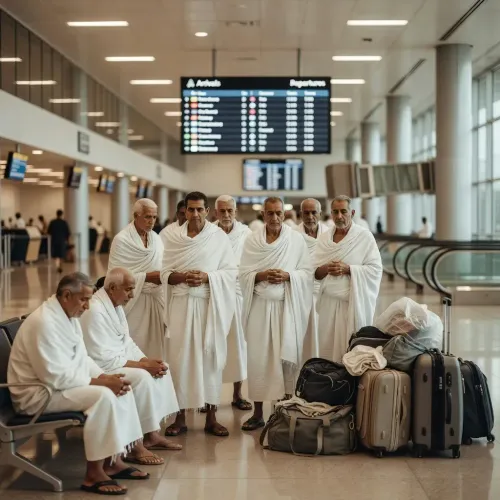
Over 600 Umrah pilgrims from Karnataka are stranded in Makkah and Madina after flight suspensions triggered by the Middle East security crisis — and Karnataka CM Shivakumar has gone directly to EAM Jaishankar, asking for special evacuation flights and emergency relief. With hotels evicting pilgrims and voluntary aid running thin, the humanitarian pressure on New Delhi is mounting.
Key Takeaways
Shivakumar wrote to EAM S.
Jaishankar on 23 October 2026 seeking urgent intervention.
Over 600 Umrah pilgrims from Karnataka are stranded in Makkah and Madina due to suspended return flights.
Pilgrims — including elderly, women, and children — have reportedly run out of funds and are being asked to vacate hotel rooms.
Shivakumar requested the Indian Embassy in Riyadh and Consulate General in Jeddah coordinate with airlines and Saudi authorities for immediate repatriation.
He also sought special flights and adequate interim support — food, shelter — until all pilgrims return.
The Karnataka government has offered full cooperation to the Centre for the repatriation effort.
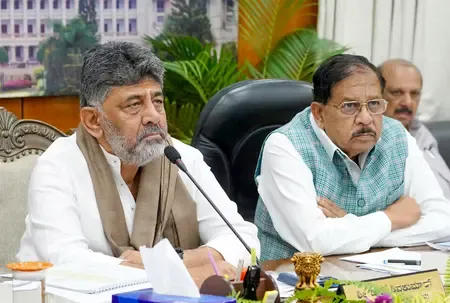
Karnataka Chief Minister D.K. Shivakumar on Friday, 23 October 2026, wrote to External Affairs Minister S. Jaishankar urging immediate intervention to secure the safe return of over 600 Umrah pilgrims from Karnataka who are stranded in the holy cities of Makkah and Madina in Saudi Arabia amid the escalating security situation in the Middle East. The suspension of return flights to Bengaluru and other parts of India has left the pilgrims in increasingly difficult circumstances.
What the Pilgrims Are Facing
According to Shivakumar's letter, many of the stranded pilgrims have exhausted their financial resources and are struggling to meet basic needs, including food and accommodation. Hotels have reportedly begun asking pilgrims to vacate their rooms, leaving several individuals — including elderly persons, women, and children — in a particularly vulnerable situation.
The Chairman of the Karnataka State Haj Committee and his team, who recently visited the holy cities, are said to have personally documented these hardships. Voluntary organisations from India and Karnataka operating in the region are reportedly providing some assistance, but Shivakumar noted that the support is insufficient to address the scale of the crisis.
What Shivakumar Has Asked of Jaishankar
In the letter, the Chief Minister urged the Ministry of External Affairs (MEA) to direct the Indian Embassy in Riyadh and the Consulate General of India in Jeddah to coordinate with Saudi authorities, airlines, and other relevant agencies to assess conditions on the ground and arrange the earliest possible return for all affected pilgrims.
Shivakumar specifically requested that special flights be facilitated wherever regular air services remain suspended, and that adequate interim assistance — covering food, shelter, and essential needs — be extended to the pilgrims until their repatriation is complete.
Why This Matters
The stranding of over 600 pilgrims from a single state underscores the broader humanitarian fallout of the deteriorating security environment in the Middle East on Indian nationals abroad. Umrah pilgrims, unlike Haj travellers, are not under a formal government-managed travel framework, making them more susceptible to disruptions in commercial air services when regional tensions rise.
This is not the first time Indian pilgrims have been caught in the crossfire of Middle East instability — similar evacuation efforts were mounted during earlier regional flare-ups. The difference this time, critics note, is the scale and the reported failure of on-ground support structures to keep pace.
Karnataka Government's Stance
Shivakumar assured the Centre that the Karnataka government is ready to extend all necessary cooperation to facilitate the swift and safe return of the affected pilgrims. He requested that the MEA accord the matter the highest priority and initiate steps without delay, citing the humanitarian urgency and the vulnerability of those stranded.
As the Middle East security situation continues to evolve, the pace of diplomatic and logistical coordination between New Delhi, Riyadh, and Jeddah will determine how quickly these pilgrims can return home.
Point of View
Leaving pilgrims more exposed when commercial air services collapse. Shivakumar's letter to Jaishankar is politically necessary, but the real question is whether the MEA has the pre-positioned logistical capacity — charter flight contracts, emergency fund release mechanisms, on-ground consular staff — to act in hours rather than days. India has evacuated its nationals before, but speed and coordination this time will be the measure.
NationPress
23 Oct 2026
Frequently Asked Questions
Why are Umrah pilgrims from Karnataka stranded in Saudi Arabia?
The pilgrims are stranded because return flights to Bengaluru and other parts of India have been suspended amid the escalating security situation in the Middle East. With commercial air services disrupted, over 600 pilgrims from Karnataka are unable to return from Makkah and Madina.
What has Karnataka CM Shivakumar asked the Centre to do?
Shivakumar has urged EAM Jaishankar to direct the Indian Embassy in Riyadh and the Consulate General of India in Jeddah to coordinate with Saudi authorities and airlines for immediate repatriation. He has also requested special flights where necessary and interim assistance covering food and accommodation.
Who is most affected among the stranded pilgrims?
According to the letter, elderly persons, women, and children are in a particularly vulnerable situation. Many pilgrims have reportedly exhausted their financial resources and are being asked to vacate hotel rooms, with voluntary aid from Indian organisations on the ground proving insufficient.
What role is the Karnataka State Haj Committee playing?
The Chairman of the Karnataka State Haj Committee and his team recently visited Makkah and Madina and have documented the difficulties faced by the stranded pilgrims. Their ground-level reporting formed a key basis for Shivakumar's appeal to the Ministry of External Affairs.
What happens next for the stranded pilgrims?
The next steps depend on coordination between the MEA, the Indian Embassy in Riyadh, the Consulate General in Jeddah, and Saudi Arabian authorities and airlines. If the Centre acts on Shivakumar's request, special repatriation flights could be arranged. The Karnataka government has said it is ready to cooperate fully with the Centre to expedite the process.