CM Shivakumar writes to Jaishankar for 600+ stranded Karnataka pilgrims

Synopsis
Chief Minister D.K. Shivakumar has written to External Affairs Minister S. Jaishankar seeking urgent intervention for over 600 Karnataka Umrah pilgrims stranded in Mecca and Medina due to a flight suspension, requesting special aircraft, diplomatic coordination, and interim welfare support.
Key Takeaways
Over 600 Karnataka Umrah pilgrims are stranded in Mecca and Medina, Saudi Arabia following a suspension of flight operations.
Shivakumar has formally written to External Affairs Minister Dr.
Jaishankar on 23 October 2026 seeking emergency central intervention.
The letter requests coordination with Indian diplomatic missions and Saudi authorities , arrangement of special flights if needed, and provision of accommodation, food, and interim assistance for stranded pilgrims.
Karnataka has offered full state-level cooperation, but diplomatic action with Riyadh must flow through the Ministry of External Affairs .
The Vande Bharat Mission (2020) established the federal template for exactly this kind of emergency repatriation from Saudi Arabia.
The Ministry of External Affairs has yet to publicly respond; a decision on special charter flights is the critical next step.
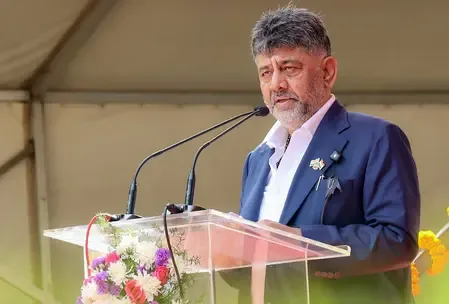
More than 600 Karnataka Umrah pilgrims are stranded in Mecca and Medina, Saudi Arabia, after a suspension of flight operations left them without a way home — and Chief Minister D.K. Shivakumar is now pressing the Centre to act fast. On Friday, 23 October 2026, the Chief Minister's Office of Karnataka announced that Shivakumar has written urgently to External Affairs Minister Dr. S. Jaishankar, demanding emergency intervention to bring the pilgrims back safely and swiftly.
What Shivakumar is asking of New Delhi
The letter is pointed and specific. Shivakumar has urged the Ministry of External Affairs to coordinate immediately with Indian diplomatic missions and Saudi authorities to assess the situation on the ground. Crucially, he has called for the arrangement of special flights if commercial operations remain suspended — a direct ask that signals Karnataka does not expect the crisis to resolve itself through routine channels.
Beyond the logistics of evacuation, the Chief Minister has pressed the Ministry to ensure that stranded pilgrims receive adequate accommodation, food, and interim assistance until they can be repatriated. The Karnataka government, the letter makes clear, is ready to extend 'all necessary cooperation' from its end. As the CMO stated: 'ನಮ್ಮ ಯಾತ್ರಿಕರ ಸುರಕ್ಷತೆ, ಘನತೆ ಮತ್ತು ಯೋಗಕ್ಷೇಮ' — 'the safety, dignity, and welfare of our pilgrims' — is the government's first priority.
Why this falls to the Centre — and what precedent exists
Indian state governments have no independent consular reach abroad; when residents face emergencies overseas, the constitutional machinery routes through the Ministry of External Affairs and its network of missions and embassies. This is standard federal practice — Karnataka can advocate and coordinate, but only New Delhi can move diplomatically with Riyadh.
The precedent for exactly this kind of response already exists. During the Vande Bharat Mission, launched in 2020, India mounted one of its largest-ever evacuation operations to bring back citizens stranded abroad — including from Saudi Arabia — when international aviation froze. The framework for coordinating special repatriation flights, welfare checks through missions, and interim support for pilgrims is not being invented from scratch; it is being invoked again.
Umrah pilgrimages — unlike the annual Hajj, which is government-regulated and quota-bound — are undertaken year-round by individuals and private travel groups, which means stranded pilgrims may lack the institutional support network that Hajj committees provide. That makes the Chief Minister's push for formal central intervention all the more necessary.
The 600-plus pilgrims now waiting
The affected individuals are spread across Mecca and Medina, the two holiest cities in Islam, where they had traveled for the Umrah pilgrimage. With flights suspended, they remain in a foreign country, dependent on local resources while waiting for a resolution. The Karnataka government's intervention is an acknowledgment that these citizens — who undertook a religious journey in good faith — cannot be left to navigate a diplomatic and logistical impasse on their own.
The Ministry of External Affairs has yet to publicly respond to Shivakumar's letter. What happens in the next 24 to 48 hours — whether New Delhi green-lights special charter arrangements or coordinates with Saudi authorities for an expedited commercial resumption — will determine when these pilgrims finally land back home.
Point of View
Karnataka frames inaction by New Delhi as a political liability ahead of any response. The move also underscores the structural asymmetry in India's federal design: states bear electoral accountability for their residents' welfare but hold zero consular authority abroad, forcing them into public advocacy to trigger central machinery. With Umrah travel running year-round on private arrangements rather than a state-managed quota system, this gap in institutional coverage is likely to recur. The speed and nature of the MEA's response will signal how seriously the Centre treats diaspora and pilgrim welfare as a domestic political variable.
NationPress
23 Oct 2026
Frequently Asked Questions
Why are Karnataka Umrah pilgrims stranded in Saudi Arabia?
A suspension of flight operations has left over 600 Karnataka pilgrims unable to return home from Mecca and Medina in Saudi Arabia. The precise cause of the flight suspension has not been officially confirmed.
What has CM D.K. Shivakumar done to help the stranded pilgrims?
Chief Minister D.K. Shivakumar has written a formal letter to External Affairs Minister Dr. S. Jaishankar on 23 October 2026, urging the Centre to coordinate with Indian missions and Saudi authorities, arrange special flights if needed, and provide food, accommodation, and interim support to stranded pilgrims.
Can the Karnataka government directly arrange repatriation flights from Saudi Arabia?
No. Indian state governments have no independent diplomatic presence abroad. Repatriation and coordination with a foreign government like Saudi Arabia must be handled by the Ministry of External Affairs under the Government of India.
What is the Vande Bharat Mission and how is it relevant here?
The Vande Bharat Mission, launched in 2020, was India's emergency evacuation programme that repatriated Indian citizens stranded abroad — including from Saudi Arabia — during major flight disruptions. It established the federal framework now being invoked for the Karnataka pilgrims.
What happens next for the 600+ stranded Karnataka pilgrims?
The critical next step is a response from the Ministry of External Affairs. If approved, special charter flights could be arranged, or Indian missions in Saudi Arabia could coordinate with local authorities for expedited commercial flight resumption and interim welfare measures.