Owaisi demands special Parliament session on China's Arunachal incursions
Synopsis
AIMIM president Asaduddin Owaisi has called for a special Parliament session to debate Chinese intrusions in Arunachal Pradesh, renewing opposition pressure on the government over LAC transparency in the eastern sector.
Key Takeaways
Asaduddin Owaisi , AIMIM president and Hyderabad MP, has demanded a special session of Parliament on Chinese intrusions in Arunachal Pradesh .
China claims Arunachal Pradesh as 'southern Tibet' — a position India categorically rejects; the eastern sector of the LAC remains a persistent flashpoint.
The demand echoes opposition pressure following the Galwan Valley clash of May 2020 , after which limited parliamentary discussions were held in 2020 and 2021.
A special-session demand is a higher-stakes ask than routine question-hour debates, requiring extraordinary legislative convening.
The government's response — whether it tables a statement or refuses — will determine the political and diplomatic fallout of the renewed attention on the eastern border.
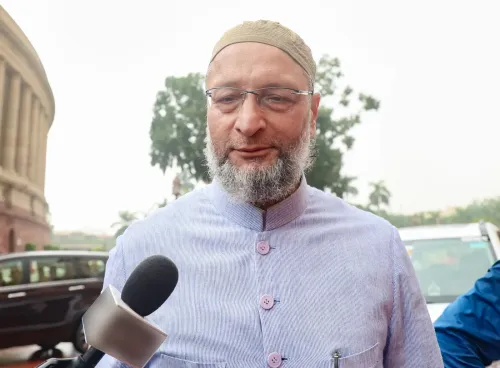
With China's shadow stretching deeper into India's northeast, AIMIM president Asaduddin Owaisi has demanded a special session of Parliament to debate Chinese intrusions in Arunachal Pradesh — putting national security squarely at the centre of opposition politics on Friday, 23 October 2026.
Why Arunachal sits at the heart of the India-China standoff
Arunachal Pradesh is no ordinary flashpoint. Beijing claims the entire state as 'southern Tibet,' a position New Delhi has consistently and firmly rejected. The eastern sector of the Line of Actual Control (LAC) — of which Arunachal forms the most contested stretch — has seen persistent infrastructure build-up and intensified patrolling by Chinese forces, mirroring the pattern that exploded into the Galwan Valley clash of May 2020 in the western sector.
That 2020 confrontation, which claimed lives on both sides, forced a years-long diplomatic and military renegotiation between Asia's two largest armies. Disengagement agreements have been reached at several friction points since — but the eastern sector has remained volatile, with reported incursions drawing periodic alarm from local officials, defence analysts, and opposition lawmakers.
Owaisi's demand and what it signals in Parliament
Owaisi, the Lok Sabha MP from Hyderabad, has a consistent record of raising minority rights and foreign-policy concerns on the floor of Parliament. His call for a special session is calibrated: it forces the government to either convene a dedicated debate — exposing its handling of the border — or defend why the legislature should not scrutinise a live national-security question.
This is not new terrain for Indian opposition politics. After the Galwan clash, opposition parties successfully pressed for limited parliamentary discussions in 2020 and 2021, though the government controlled the terms and depth of those debates. A 'special session' demand raises the stakes — it asks for an extraordinary convening, not just a scheduled question-hour exchange.
The larger pattern: opposition, borders, and political accountability
Demands like Owaisi's reflect a durable tension in Indian democracy: the government controls classified intelligence on border incidents, while the legislature — and the public — relies on sporadic official statements. Each new report of intrusion widens that accountability gap. Opposition MPs from across the spectrum, from the northeast's regional parties to national formations, have repeatedly argued that border transparency should not be a casualty of diplomatic caution.
What the government says next — whether it acknowledges fresh intrusions, dismisses the special-session demand, or tables a statement — will be the real news. Owaisi has fired the opening shot; Parliament and South Block now hold the next move.
Point of View
He forces the government to justify its level of parliamentary transparency on a live security issue. The timing matters — any fresh incursion report in Arunachal, however unverified in public record, becomes a political accelerant. The broader arc here is the post-Galwan 'accountability deficit': India's legislature has never institutionalised a mechanism for regular, structured border-security oversight, leaving opposition parties to use spectacle demands as their primary lever. Until that gap is closed, these calls will keep landing — and keep generating headlines.
NationPress
23 Oct 2026
Frequently Asked Questions
Why is Asaduddin Owaisi demanding a special Parliament session?
Owaisi is demanding a special Parliament session to debate reported Chinese intrusions in Arunachal Pradesh, arguing that lawmakers and the public deserve a dedicated, transparent discussion on the border situation in the eastern sector of the LAC.
What is the India-China dispute over Arunachal Pradesh?
China claims Arunachal Pradesh as 'southern Tibet' and does not recognise Indian sovereignty over the state. India firmly rejects this claim. The area forms part of the disputed eastern sector of the Line of Actual Control between the two countries.
Has Parliament debated India-China border tensions before?
Yes. Following the Galwan Valley clash in May 2020, opposition parties pressed for and received limited parliamentary discussions on the border situation in 2020 and 2021, though the government controlled the scope of those debates.
What is the Line of Actual Control (LAC)?
The Line of Actual Control is the de-facto border between India and China, stretching roughly 3,488 km across three sectors — western (Ladakh), middle (Himachal Pradesh and Uttarakhand), and eastern (Arunachal Pradesh and Sikkim). It has never been formally demarcated and remains a source of recurring tension.
What is AIMIM and who is Owaisi?
AIMIM — All India Majlis-e-Ittehadul Muslimeen — is an Indian political party based in Hyderabad. Asaduddin Owaisi is its president and has served as the Lok Sabha MP from Hyderabad for multiple terms, known for raising minority rights and foreign-policy issues in Parliament.