Owaisi presses Modi govt on PLA patrols in Arunachal

Synopsis
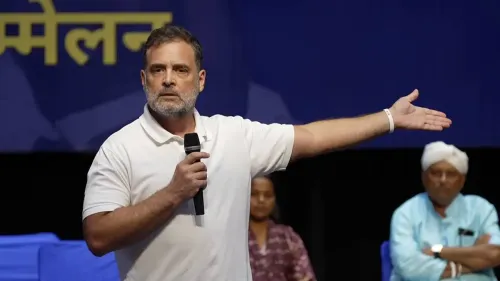
AIMIM president Asaduddin Owaisi on 17 August 2026 publicly repeated three unanswered questions to the Modi government about alleged PLA actions in Arunachal Pradesh — blocked patrols, a destroyed army structure, and new Chinese tent encampments on Indian territory.
Key Takeaways
Owaisi cited the Modi government's 'continued silence' as the reason he is repeating his border questions publicly.
The three specific allegations concern PLA blocking Indian Army patrols, destroying a temporary Indian structure, and pitching tents on territory India claims as its own in Arunachal Pradesh.
Arunachal Pradesh is claimed in full by China as 'South Tibet'; India administers it as a constituent state.
The 1993 India-China LAC agreement prohibits use of force and requires mutual respect for the line — the actions alleged would violate it.
Patrol disputes along the eastern LAC have persisted since the June 2020 Galwan clash, which killed 20 Indian soldiers, though public disclosures remain rare.
No government response to these specific questions has been made public as of the date of the post.
Three pointed questions. Zero answers from the government. AIMIM president Asaduddin Owaisi escalated his challenge to the Narendra Modi administration on Monday, 17 August 2026, demanding public clarity on what he says are active Chinese military incursions along the Arunachal Pradesh border — and citing the government's 'continued silence' as his reason for repeating the questions.
Three questions the government has not answered
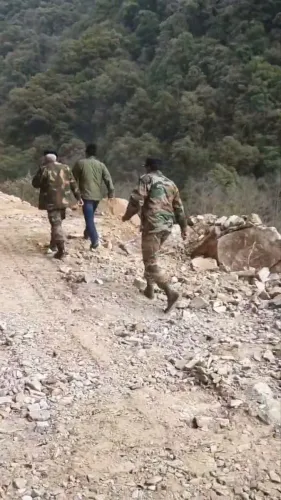
Owaisi's post lays out a specific, three-part allegation about the People's Liberation Army (PLA) along the Line of Actual Control (LAC) in Arunachal Pradesh. First: has the PLA recently blocked Indian Army patrols from reaching areas they had previously accessed? Second: did PLA personnel destroy a temporary structure erected by an Indian patrol inside Indian territory? Third: has the PLA pitched tents in areas that were previously patrolled by Indian forces and are unambiguously Indian territory?
Each question, if answered in the affirmative, would describe a serious violation of the 1993 Agreement on the Maintenance of Peace and Tranquility along the LAC — the foundational bilateral commitment that both sides will respect the line and avoid use of force. Owaisi is not claiming these things happened; he is demanding the government confirm or deny them. The distinction matters — but so does the silence.
Arunachal: the eastern front Beijing refuses to recognise
Arunachal Pradesh sits at the centre of one of Asia's most consequential unresolved disputes. China claims the entire state as 'South Tibet'; India administers it as a full constituent state. Since the June 2020 Galwan Valley clash — which killed 20 Indian soldiers and triggered the most serious bilateral rupture in decades — focus has largely fixed on the western Ladakh sector, where corps commander-level talks produced partial disengagements through 2021–2024. The eastern sector has received far less public attention, even as patrol disputes have persisted.
The pattern Owaisi describes — blocked patrols, demolished structures, new tent encampments on contested ground — mirrors allegations that have surfaced repeatedly along both the western and eastern LAC since 2020. Successive Indian governments have preferred quiet diplomacy over public disclosure of specific incidents, arguing that transparency risks escalation. Critics, including opposition MPs, argue the same silence leaves citizens unable to assess the security situation on their own borders.
A parliament-to-social-media pressure track
Owaisi's use of X (formerly Twitter) to press border questions is a deliberate choice. Parliamentary questions on the LAC have historically been met with guarded, minimal responses from the Defence Ministry. By posting publicly, he forces the issue into the news cycle and onto the government's communications team — a tactic opposition MPs across parties have increasingly adopted since 2020. His framing — 'I again repeat my questions' — signals this is not a first ask, and that no answer has come.
The next test will be whether the Defence Minister addresses any of these specifics in the upcoming parliamentary session, or whether India-China corps commander talks produce any public readout that touches the Arunachal sector. Until then, the questions stand — and the silence speaks.
Point of View
They would represent a significant eastward escalation in Chinese assertiveness at a time when Ladakh disengagements have been publicly celebrated as a diplomatic win. The government's continued silence, rather than a flat denial, is itself a political signal that analysts and security watchers will note.
NationPress
1 Oct 2026
Frequently Asked Questions
What is Owaisi asking about the China border in Arunachal Pradesh?
Owaisi is asking whether the PLA has recently blocked Indian Army patrols, destroyed a temporary Indian structure, and pitched tents on Indian territory along the LAC in Arunachal Pradesh — questions he says the Modi government has not answered.
Has the PLA blocked Indian patrols in Arunachal Pradesh?
Owaisi has raised this as a question to the government; the specific incidents he references have not been confirmed or denied in official public statements as of 17 August 2026.
Why does China claim Arunachal Pradesh?
China refers to Arunachal Pradesh as 'South Tibet' and claims it as part of its territory based on historical and administrative arguments. India rejects this claim and administers the state as a full constituent state.
What happened at Galwan Valley in 2020 and how does it relate?
A clash in Galwan Valley in June 2020 killed 20 Indian soldiers and triggered the most serious India-China border crisis in decades, leading to ongoing corps commander-level disengagement talks — primarily in Ladakh, while eastern sector patrol disputes have received less public attention.
What does the 1993 India-China LAC agreement say?
The 1993 Agreement on the Maintenance of Peace and Tranquility commits both India and China to respect the Line of Actual Control and avoid the use of force — the actions Owaisi describes, if confirmed, would constitute violations of this agreement.