Owaisi Questions Modi Govt on Doklam, Ladakh Border Gaps
Synopsis
AIMIM president Asaduddin Owaisi challenged the Modi government on 12 August 2026 over continued patrolling restrictions in Ladakh and alleged Chinese infrastructure at Doklam, invoking the 2017 standoff and 2020 Galwan clash to argue that border management failures keep repeating.
Key Takeaways
Owaisi posted on 12 August 2026 questioning the Modi government's handling of the Doklam and Ladakh border situations.
He alleged Indian soldiers 'can't still patrol so many areas' in Ladakh despite government claims of no territorial loss.
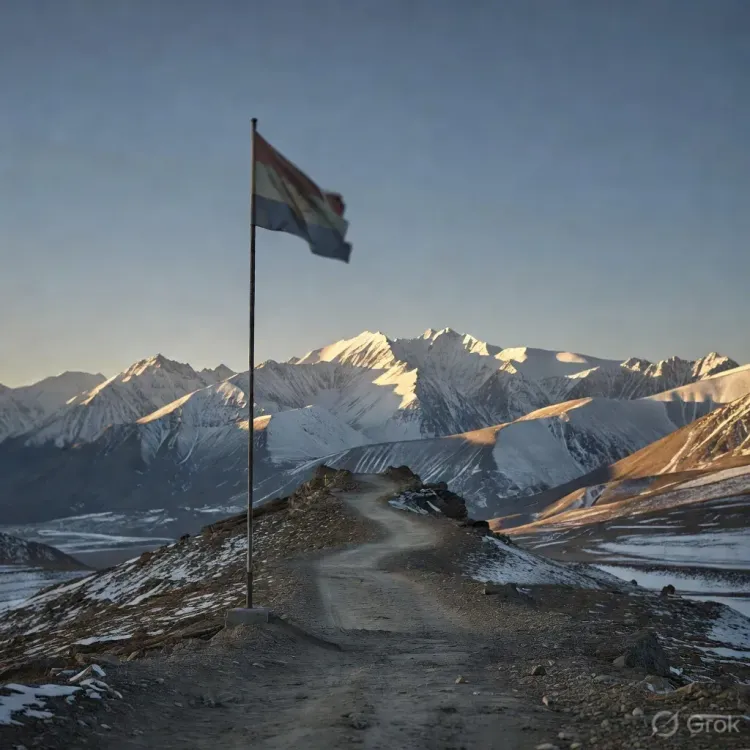
He claimed China has built a permanent base and alternative roads at Doklam since the 2017 standoff.
The 2017 Doklam standoff lasted 73 days ; the 2020 Galwan clash killed 20 Indian soldiers .
Multiple rounds of corps commander talks post-Galwan led to partial disengagements, but several LAC friction points remain unresolved.
Owaisi's post continues a pattern of parliamentary and public opposition pressure on India-China border management.
Nine years after Doklam and six years after Galwan, AIMIM president Asaduddin Owaisi is asking a question the government has never fully answered: why are Indian soldiers still locked out of areas they once freely patrolled?
Posting on Wednesday, 12 August 2026, Owaisi fired a pointed volley at the Narendra Modi administration over what he called an unlearned lesson at two of India's most contested frontiers. 'We have seen what happened in Doklam and Ladakh earlier and do not want a repeat now,' he wrote, adding that despite Prime Minister Modi's assertion that no one had entered Indian territory in Ladakh, Indian soldiers 'can't still patrol so many areas there.' On Doklam, he went further — alleging that China has since constructed a permanent base and alternative roads at the trijunction plateau.
What Doklam and Galwan Left Behind
The two flashpoints Owaisi invokes carry real weight. The 2017 Doklam standoff — a 73-day face-off at the India-Bhutan-China trijunction — ended with a mutual disengagement that both sides called a diplomatic resolution. But critics have long argued the plateau saw continued Chinese infrastructure activity after troops pulled back. Then came June 2020: the Galwan Valley clash in eastern Ladakh, which killed 20 Indian soldiers and triggered multiple rounds of corps commander-level talks. Partial disengagements followed, but several friction points along the Line of Actual Control (LAC) remain unresolved — including patrolling rights in areas that were routinely accessed before the standoff.The Patrol-Gap Charge at the Heart of the Critique
The patrolling-access question is the sharpest edge of Owaisi's post. Government statements have consistently maintained India's territorial integrity is intact. Opposition voices — in Parliament and outside — have pressed back, citing specific buffer zones established during disengagement talks where Indian troops no longer go. The government has not publicly detailed which areas remain off-limits or on what timeline access will be restored. That silence is exactly the opening Owaisi is exploiting.A Pattern of Parliamentary Pressure on the LAC
This is not an isolated outburst. Owaisi, who sits in the Lok Sabha as the Hyderabad MP, has consistently used his parliamentary platform to press the Modi administration on China border management — a domain where the ruling party is politically sensitive and where hard facts are difficult to independently verify. The broader opposition argument: that India-China disengagement has been sold as a win while ground realities tell a more complicated story. With military talks on remaining friction points still ongoing and parliamentary sessions approaching, the pressure is unlikely to ease. The real test is not who wins this exchange on social media — it is whether the next round of military talks produces something Indian soldiers can actually walk through.Point of View
Precisely because it is difficult for the government to rebut without revealing operational details. By linking Doklam and Ladakh in a single post, Owaisi is constructing a narrative of systemic failure rather than isolated incidents — a framing that gains traction every time a new LAC friction point surfaces. The timing, ahead of potential parliamentary sessions, suggests this is as much about legislative pressure as social media optics.
NationPress
26 Sept 2026
Frequently Asked Questions
What is Owaisi saying about Ladakh patrolling?
Owaisi claims that despite Prime Minister Modi's assertion that no one entered Indian territory in Ladakh, Indian soldiers are still unable to patrol several areas there — a reference to buffer zones established during post-Galwan disengagement talks.
What happened at Doklam and why does it matter now?
The Doklam standoff in 2017 was a 73-day military face-off at the India-Bhutan-China trijunction that ended with mutual disengagement. Owaisi alleges China has since built a permanent base and alternative roads there, suggesting the resolution was not as complete as presented.
What was the Galwan Valley clash?
The Galwan Valley clash in June 2020 in eastern Ladakh was a deadly confrontation between Indian and Chinese troops that killed 20 Indian soldiers. It triggered multiple rounds of corps commander-level talks and partial disengagements along the Line of Actual Control.
Has the Indian government responded to patrolling restriction allegations?
The government has maintained that India's territorial integrity is intact, but has not publicly detailed which specific areas may have restricted access or when full patrolling rights will be restored.
Why does Owaisi frequently raise India-China border issues?
As AIMIM president and Hyderabad Lok Sabha MP, Owaisi regularly uses parliamentary and public platforms to press the Modi administration on national security and border management, making the LAC situation a recurring point of political critique.