Did J&K Crime Branch Uncover Fraud in SKIMS Appointment?
Synopsis
In a significant move, the Jammu and Kashmir Crime Branch has filed a charge sheet against a fraudulent appointment at SKIMS, revealing how misrepresentation led to an unlawful selection for a government role. This case highlights the crucial need for vigilance in recruitment processes to avoid similar incidents in the future.
Key Takeaways
Fraudulent recruitment practices can undermine public trust.
Proper verification of citizenship is essential in government appointments.
The Economic Offences Wing plays a crucial role in investigating such cases.
Misrepresentation for personal gain can lead to severe legal consequences.
Transparency in recruitment processes is vital for public service integrity.
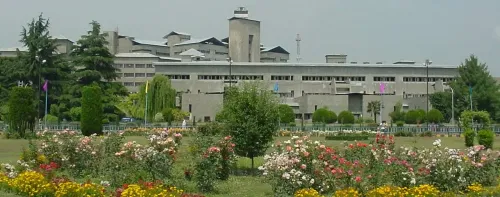
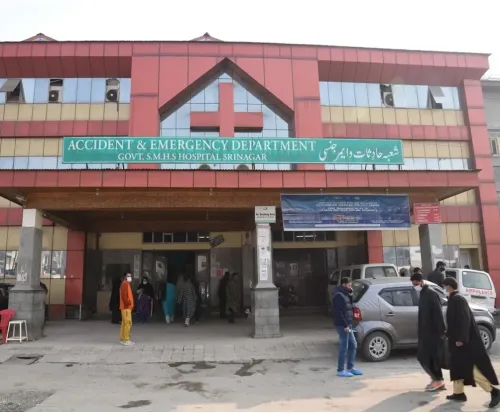
Srinagar, Feb 5 (NationPress) – The Jammu and Kashmir Crime Branch announced on Thursday that a charge sheet has been submitted to the court against an individual who was unlawfully appointed as an Assistant Professor at the Sher-e-Kashmir Institute of Medical Sciences (SKIMS) in Soura, Srinagar.
A statement from the Crime Branch of Kashmir revealed, "This case involves allegations against Ms. Afshan Shabir, who secured her role at SKIMS in 2019 but is a national of the United Kingdom and an Overseas Citizen of India (OCI) holder, making her ineligible for such a Government position."
The investigation disclosed that the accused applied for the position in response to Advertisement Notice No. 04 of 2015 as an in-service candidate, submitting documents that included a State Subject Certificate, falsely declaring herself as an Indian citizen and a permanent resident of Jammu and Kashmir.
Based on these false claims, she was selected and appointed.
Throughout the investigation, official documents, including her service book, personal file, application form, and selection committee minutes, were confiscated and scrutinized.
It was revealed that the accused had obtained British citizenship prior to her government employment and allegedly concealed this information while applying for and continuing in her Government role.
Shabir admitted to possessing a British passport and an OCI card. The investigation confirmed that by misrepresenting her citizenship status, she fraudulently acquired a public post, resulting in personal gain and loss to the Government, as stated.
Shabir's employment was terminated via Government Order No. 23-SKIMS of 2022, dated 20.08.2022, and following the investigation, the charge sheet was presented to the appropriate court for judicial review.
The Jammu and Kashmir Crime Branch and its Economic Offences Wing (EOW) are responsible for investigating economic crimes and those requiring specialized skills and knowledge to unearth frauds perpetrated through technology.
These types of crimes demand focused attention and are labor-intensive for police personnel engaged in maintaining law and order and investigating routine offenses.
Point of View
It is crucial to recognize the importance of integrity in public service roles. The Jammu and Kashmir Crime Branch's actions underscore the necessity for strict scrutiny in recruitment processes to prevent fraudulent activities that undermine trust in governmental institutions.
NationPress
28 Sept 2026
Frequently Asked Questions
What is the main allegation against Afshan Shabir?
Afshan Shabir is accused of fraudulently securing her position as Assistant Professor at SKIMS by misrepresenting her citizenship status.
What actions were taken by the Jammu and Kashmir Crime Branch?
The Crime Branch filed a charge sheet against Shabir after an investigation revealed her ineligibility for the government post.
What was the outcome of the investigation?
The investigation confirmed that Shabir had British citizenship and had concealed this fact while applying for her position.
What is the significance of this case?
This case highlights the need for vigilance in public service recruitment to prevent fraud and maintain integrity.
How did the Crime Branch conduct the investigation?
The investigation involved seizing and examining official records, including Shabir's application and service documents.