South Korea and Australia vow energy cooperation amid Middle East supply crisis
Synopsis
As the Strait of Hormuz remains effectively shut and global energy markets reel from the Middle East conflict, South Korea and Australia have formalised a mutual energy security pact — committing to notify each other of supply disruptions and jointly protect diesel, LNG, and condensate flows. The deal also deepens an already-growing defence manufacturing partnership.
Key Takeaways
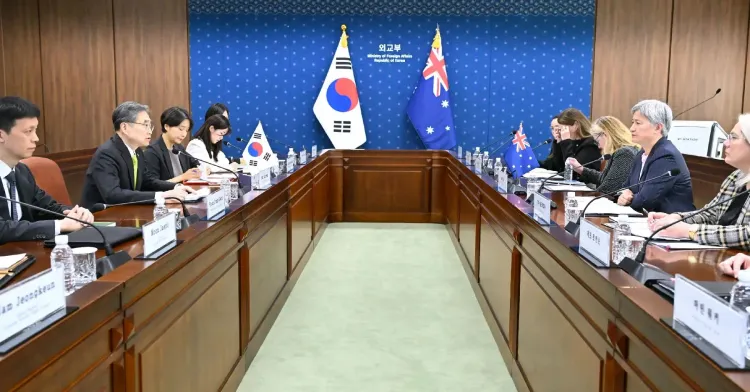
Foreign Minister Cho Hyun and Australian counterpart Penny Wong met in Seoul on 30 April 2025 and adopted a joint statement.
Both nations committed to maintaining stable supplies of diesel , LNG , and condensate amid Middle East disruptions.
Australia is South Korea's largest LNG supplier ; South Korea is a major supplier of diesel and refined petroleum products to Australia.
The Strait of Hormuz has reportedly been effectively shut following escalation of the Middle East conflict since late February .
Hanwha Aerospace Co. has been operating a defence manufacturing facility in Geelong, Australia since 2024 , producing K9 howitzers and K10 vehicles.
Both governments pledged to notify each other of potential supply disruptions and support open trade arrangements for energy resources.
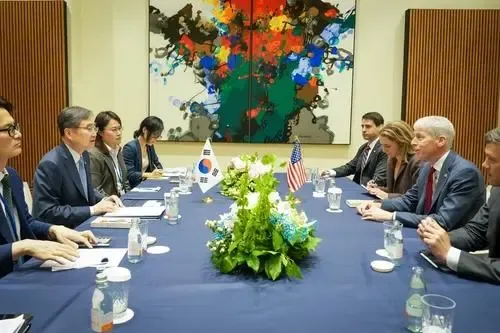
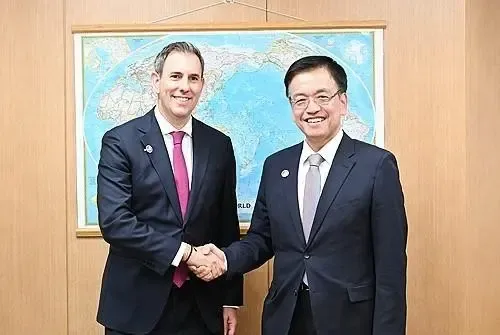
South Korea and Australia agreed on Thursday, 30 April to strengthen bilateral cooperation on securing stable supplies of diesel, liquefied natural gas (LNG), and other critical energy resources, as the ongoing Middle East conflict continues to disrupt global supply chains. The commitment emerged from high-level diplomatic talks held in Seoul between South Korea's Foreign Minister Cho Hyun and his Australian counterpart, Penny Wong.
Key Outcomes of the Seoul Talks
The two ministers adopted a joint statement covering a broad range of issues including high-level exchanges, economic security, defence cooperation, and regional security. The statement explicitly acknowledged shared concern over the Middle East situation and its downstream effects on energy markets. The two governments committed to mutually notifying and consulting each other on any potential supply disruptions "as far as practicable," according to the joint statement.
The two sides also pledged to "work together to strengthen energy resource security, including efforts to maintain a stable, secure and reliable supply of diesel and other liquid fuels, energy resource commodities, including liquefied natural gas (LNG) and condensate," the statement read.
Why This Energy Partnership Matters
Australia is South Korea's largest supplier of LNG and one of its key sources of condensate and critical minerals. In turn, South Korea is one of Australia's major suppliers of diesel and refined petroleum products — making the two nations deeply interdependent on energy trade. The partnership is particularly significant given that South Korea relies heavily on overseas supplies to meet its domestic energy needs, while simultaneously being a major exporter of refined petroleum products.
The broader context is stark: the Strait of Hormuz, a critical energy logistics corridor in the Middle East, has reportedly been effectively shut following the escalation of the conflict that began in late February after US-Israeli strikes on Iran. This has rattled global markets and disrupted energy supply chains worldwide. The two governments vowed to deepen regional cooperation, accelerate energy transition, address unjustified import and export restrictions, and support open trade arrangements to strengthen supply chain resilience.
Defence Industry Cooperation Expands
Beyond energy, Cho and Wong also discussed expanding cooperation in the defence industry. The talks built on existing momentum from Hanwha Aerospace Co.'s establishment of its first overseas manufacturing hub in Geelong, Australia, which has been operational since 2024. The facility produces K9 self-propelled howitzers and K10 armoured ammunition resupply vehicles, marking a significant milestone in South Korea's defence export footprint.
What Comes Next
The joint statement signals a structured framework for ongoing consultations between Seoul and Canberra, particularly around energy disruption scenarios. As the Middle East conflict shows no immediate signs of resolution, both nations are expected to accelerate the implementation of the commitments outlined in Thursday's meeting. Industry observers will be watching whether the two governments formalise a dedicated energy security mechanism in the months ahead.
Point of View
Not merely a market inconvenience. Australia, for its part, is cementing its role as the preferred energy backstop for North Asian economies, a position that carries both commercial and strategic leverage. What is notable here is the explicit mutual notification clause — a mechanism that moves beyond aspirational language toward operational coordination. Whether it translates into a formal energy security mechanism, or remains a statement of intent, will define the real value of Thursday's talks.
NationPress
18 Sept 2026
Frequently Asked Questions
What did South Korea and Australia agree to in their April 2025 talks?
South Korea and Australia agreed to enhance cooperation on securing stable supplies of diesel, LNG, condensate, and other energy resources. They adopted a joint statement in Seoul on 30 April committing to mutual notification of supply disruptions and support for open energy trade arrangements.
Why are South Korea and Australia concerned about Middle East energy disruptions?
The ongoing Middle East conflict, which escalated in late February following US-Israeli strikes on Iran, has reportedly shut the Strait of Hormuz — a critical energy logistics route. South Korea relies heavily on imported energy, while both nations depend on stable global supply chains for diesel, LNG, and refined petroleum products.
What is the energy trade relationship between South Korea and Australia?
Australia is South Korea's largest LNG supplier and a key source of condensate and critical minerals. South Korea, in turn, is one of Australia's major suppliers of diesel and refined petroleum products, making the two nations mutually dependent on energy trade.
What is Hanwha Aerospace's role in Australia?
Hanwha Aerospace Co. has been operating a manufacturing facility in Geelong, Australia since 2024, producing K9 self-propelled howitzers and K10 armoured ammunition resupply vehicles. It is South Korea's first overseas defence manufacturing hub.
What happens next following the Seoul joint statement?
Both governments are expected to accelerate implementation of the energy security commitments outlined in the joint statement. Observers are watching whether Seoul and Canberra formalise a dedicated energy security consultation mechanism in the coming months.