Did the Supreme Court Deny Justice Varma’s Challenge to Impeachment Proceedings?
Synopsis
The Supreme Court has recently ruled against Justice Yashwant Varma's plea to challenge impeachment proceedings stemming from cash discovery allegations, emphasizing the legality of the inquiry committee's formation. This crucial decision underscores the complexities of judicial accountability and political processes in India.
Key Takeaways
The Supreme Court has **dismissed** Justice Varma's plea regarding impeachment proceedings.
The inquiry committee was formed by the Lok Sabha Speaker under the Judges (Inquiry) Act, 1968.
Justice Varma is embroiled in controversy due to cash discovery allegations.
The ruling underscores the importance of judicial accountability.
The case illustrates the complexities of the impeachment process in India.
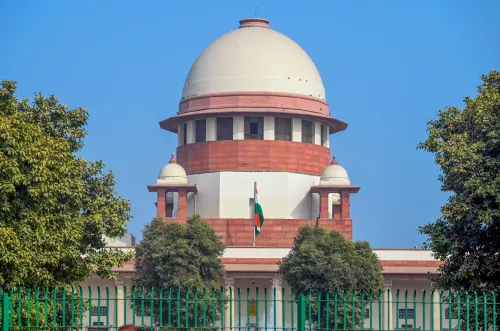
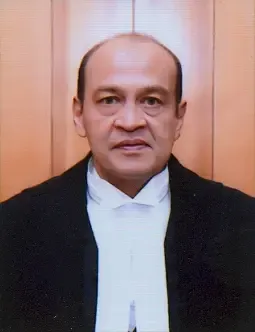
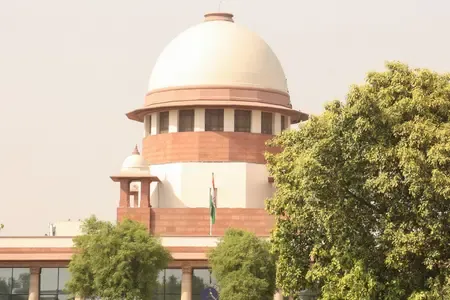
New Delhi, Jan 16 (NationPress) The Supreme Court has dismissed a plea from Allahabad High Court Justice Yashwant Varma, who is currently facing impeachment proceedings linked to allegations regarding a cash discovery. The court challenged the Lok Sabha Speaker's decision to set up a three-member inquiry committee against him under the Judges (Inquiry) Act, 1968.
In delivering the ruling, a Bench led by Justices Dipankar Datta and Satish Chandra Sharma stated, “We hold that the petitioner is not entitled to any relief in the present case.”
Last week, the Justice Datta-led Bench had reserved its judgment on Justice Varma’s writ petition after thoroughly hearing arguments from all parties involved.
Justice Varma's plea contested the Lok Sabha Speaker’s decision on procedural grounds. The argument presented was that even though impeachment notices were submitted in both the Lok Sabha and Rajya Sabha on the same day, Speaker Om Birla unilaterally created the inquiry committee without waiting for the Rajya Sabha Chairman’s decision or conducting the required joint consultation.
It was argued that Section 3(2) of the Judges (Inquiry) Act stipulates that if notices are filed on the same day in both Houses, no committee can be constituted until the motion is approved in both Houses through joint action by the Speaker and the Chairman.
However, the Lok Sabha Secretariat countered this plea, asserting that the Rajya Sabha did not admit the impeachment motion. It was emphasized that the motion was rejected by the Rajya Sabha Deputy Chairman on August 11, 2025, after the previous Chairman and Vice President, Jagdeep Dhankhar, stepped down in July.
The Lok Sabha Speaker’s actions were defended by arguing that the provisions of Section 3(2) did not apply, and he acted within his authority to proceed independently.
Solicitor General Tushar Mehta, representing Lok Sabha and Rajya Sabha officials, stated that the aim of Section 3(2) was to prevent the formation of two distinct inquiry committees for the same allegations.
Justice Varma has been embroiled in controversy since burnt cash was reportedly found in an outhouse of his official residence in March 2025 while he was a judge at the Delhi High Court.
Even though he was not on-site during the incident, a three-member in-house inquiry committee set up by the Supreme Court later found that he exercised “secret or active control” over the cash stash.
Following the inquiry report, then Chief Justice of India (CJI) Sanjiv Khanna suggested initiating removal proceedings. In August of last year, the Supreme Court rejected Justice Varma’s writ petition against the in-house investigation, stating that the process was “fair and just” and did not compromise judicial independence, a fundamental aspect of the Constitution.
Impeachment notices supported by 145 Lok Sabha members and 63 Rajya Sabha members were filed in both Houses of Parliament in July 2025. Subsequently, the Lok Sabha Speaker announced the formation of a three-member inquiry committee, a decision that is now being contested in the Supreme Court.
Point of View
I believe that the Supreme Court's decision reflects the ongoing tension between judicial accountability and political maneuvering. Justice Varma's case is emblematic of the complexities inherent in the legal system, reminding us of the need for transparent procedures in matters of impeachment and inquiry.
NationPress
14 Oct 2026
Frequently Asked Questions
What was the Supreme Court's ruling regarding Justice Varma's plea?
The Supreme Court rejected Justice Yashwant Varma's plea to challenge the impeachment proceedings, stating he is not entitled to any relief in this case.
What are the allegations against Justice Varma?
Justice Varma is facing impeachment proceedings related to allegations of cash discovery in an outhouse of his official residence.
Who constituted the inquiry committee against Justice Varma?
The inquiry committee was constituted by the Lok Sabha Speaker under the Judges (Inquiry) Act, 1968.
What did the in-house inquiry conclude about Justice Varma?
The inquiry concluded that Justice Varma exercised 'secret or active control' over the cash stash found in his residence.
What is the significance of this ruling?
This ruling highlights the complexities of judicial accountability and the procedural requirements for impeachment in India.