Supreme Court's Bold Steps to Enhance Highway Safety and Prevent Illegal Parking
Synopsis
The Supreme Court has issued vital directives to tackle illegal parking and encroachments on national highways, reinforcing the right to safe passage as part of the right to life. This proactive approach aims to enhance road safety and accountability among authorities.
Key Takeaways
Supreme Court issues strong directives to enhance highway safety.
Prohibition on illegal parking of commercial vehicles.
Formation of District Highway Safety Task Forces for accountability.
Mandatory removal of unauthorized roadside structures.
Implementation of advanced traffic management systems across highways.
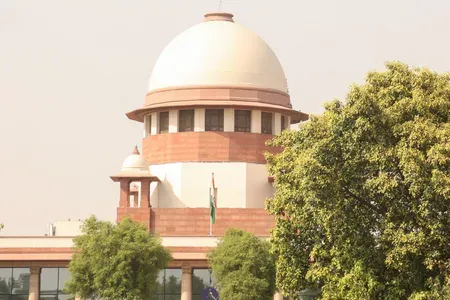
New Delhi, April 18 (NationPress) The Supreme Court has unveiled an extensive series of interim directives aimed at addressing illegal parking, eliminating encroachments, and enhancing safety protocols on national highways. It emphasized that the “right to safe passage” is a fundamental aspect of the right to life as stated in Article 21 of the Constitution.
A panel consisting of Justices J.K. Maheshwari and Atul S. Chandurkar issued this ruling in a suo motu case linked to tragic road accidents in Rajasthan's Phalodi and Telangana's Rangareddy districts, which resulted in the loss of 34 lives in November 2025.
Highlighting the issue of “systemic negligence and catastrophic infrastructure failures,” the apex court remarked that such failures represent a serious violation of the right to safe passage and a failure of statutory responsibilities by authorities.
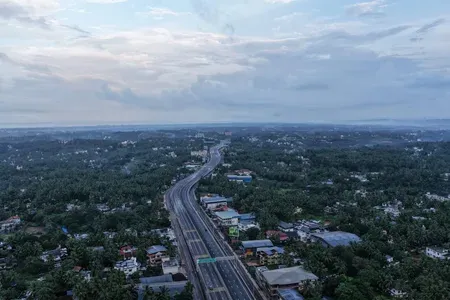
Justice Maheshwari's Bench stated, “A road, especially a high-speed expressway, must not turn into a perilous corridor due to bureaucratic inertia or infrastructural shortcomings.”
It affirmed that the “Right to Life” as enshrined in Article 21 of the Indian Constitution is not solely a safeguard against unlawful deprivation of life, but also imposes a positive obligation on the State to provide a secure environment where human lives are protected and valued.
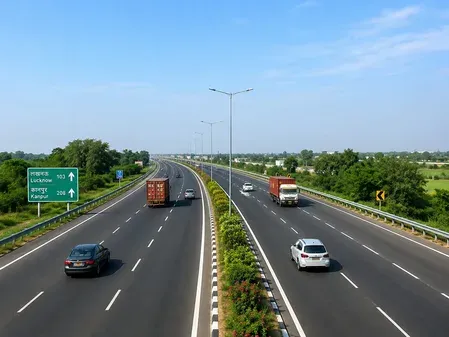
Issuing broad directives, the Bench prohibited the parking of heavy and commercial vehicles on national highway carriageways and paved shoulders, allowing it only at designated rest areas or wayside amenities.
Enforcement is to be executed through Advanced Traffic Management Systems (ATMS), which will include real-time alerts, GPS-tagged photographic evidence, and e-challan systems, with strict compliance deadlines of 60 days.
The apex court also mandated a nationwide audit and survey of highways, instructing authorities such as the National Highways Authority of India (NHAI), NHIDCL, and state public works departments to submit detailed reports on encroachments, inspection teams, and compliance status.
The Justice Maheshwari-led Bench further ordered the immediate removal of unauthorized roadside structures, including dhabas and commercial establishments within the Right of Way of national highways, directing district authorities to complete demolitions within 60 days.
“No department shall issue or renew any license within highway safety zones without prior clearance,” the Supreme Court stated, adding that existing licenses must undergo review within 30 days. To ensure accountability, the court mandated the formation of District Highway Safety Task Forces nationwide, comprising officials from district administration, police, NHAI, PWDs, and local bodies.
“The District Collector and Commissioner of Police/Superintendent of Police will jointly be responsible for timely removal of encroachments,” the order specified.
Additionally, the court directed the establishment of dedicated highway surveillance teams, equipped with vehicle tracking devices to ensure consistent patrolling, alongside full operationalization of ATMS infrastructure, such as speed detection cameras, control centers, and emergency call systems.
Moreover, it directed the deployment of basic life support ambulances and recovery cranes at intervals of 75 km, noting that prompt emergency response is part of the state’s obligation under Article 21.
Additionally, the Supreme Court mandated the construction of truck lay-bye facilities and wayside amenities at regular intervals, ensuring the availability of rest areas, food services, washrooms, safe parking, and first-aid facilities.
Authorities are also to identify and publish a list of accident-prone areas within 45 days and ensure the installation of high-intensity lighting, warning signage, and speed enforcement systems within four months.
Emphasizing the importance of coordinated enforcement, the Justice Maheshwari-led Bench urged the Union Ministry of Road Transport and Highways to create an inter-state highway safety coordination mechanism to standardize enforcement protocols across states. The court warned that all implementing agencies would be “jointly and severally responsible” for adhering to its directives and must submit consolidated compliance reports within 75 days. The matter is scheduled for review in two months to monitor compliance.
Point of View
I recognize the Supreme Court's latest directives as a significant move towards ensuring road safety in India. By addressing illegal parking and encroachments, these measures are poised to protect lives and enhance the overall integrity of our highway systems.
NationPress
19 Sept 2026
Frequently Asked Questions
What are the key directives from the Supreme Court regarding highway safety?
The Supreme Court has directed the prohibition of illegal parking, removal of encroachments, establishment of safety task forces, and implementation of advanced traffic management systems to ensure compliance.
How does the Supreme Court define the right to safe passage?
The right to safe passage is recognized as an integral part of the right to life under Article 21 of the Constitution, highlighting the State's obligation to ensure road safety.
What is the timeline for compliance with the new directives?
Authorities have been given strict compliance timelines of 60 days to implement the new measures, with additional reports due in 75 days.
What measures are being taken against unauthorized roadside structures?
District authorities are mandated to remove unauthorized roadside structures within 60 days as part of the Supreme Court's directives.
What role will District Highway Safety Task Forces play?
These task forces will be responsible for ensuring compliance with safety measures and the timely removal of encroachments involving multiple local agencies.