Taiwan accuses China of 'origin washing' vegetables via Vietnam
Synopsis
Taiwan says China is exploiting Vietnam as a backdoor to smuggle banned vegetables — including Napa cabbage and shiitake mushrooms — into the island by fraudulently relabelling them as Vietnamese produce. With fake certificates available for as little as USD 410 and per-container profits reaching NT$500,000, officials are now pushing aerial surveys and isotope testing to close the loophole.
Key Takeaways
Taiwan has accused China of smuggling vegetables through Vietnam using a practice called "origin washing" .
Products reportedly rerouted include Napa cabbage and shiitake mushrooms , repackaged as Vietnamese goods.
A fraudulent Vietnamese certificate of origin reportedly costs as little as NT$13,000 (USD 410) , with importer profits of up to NT$500,000 per container .
Agriculture Minister Chen Junne-jih announced aerial surveys in Vietnam and strict penalties for violators.
DPP legislator Chiu Yi-ying called for mandatory third-party isotope testing to verify produce origin.
The row is part of broader cross-strait trade tensions dating back to China's 2021 pineapple ban and a 2024 WTO complaint by Taiwan.
Taiwan has accused China of smuggling vegetables into the self-ruled island through Vietnam to circumvent strict import restrictions, with Taipei officials pledging a crackdown on what they are calling "origin washing" — a practice where Chinese produce is rerouted, repackaged, and relabelled as Vietnamese goods before entering Taiwan.
How the Smuggling Works
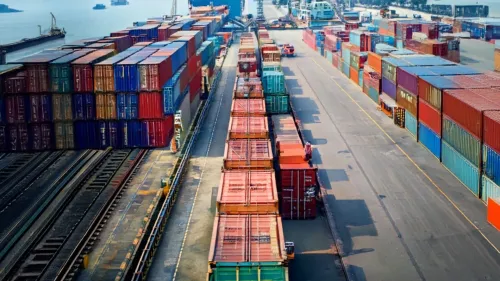
Taiwan currently prohibits the import of over 1,000 Chinese agricultural and fishery products. According to officials, companies in China have been rerouting vegetables — including Napa cabbage and shiitake mushrooms — through Vietnam, where the produce is repackaged as Vietnamese in origin before being exported to Taiwan, as reported by The Guardian.
The scheme reportedly allows importers to sidestep Taiwan's restrictions entirely, exploiting Vietnam's position as a trusted trade partner.
What Taiwan's Agriculture Minister Said
Addressing lawmakers at a legislative meeting, Taiwan's Agriculture Minister Chen Junne-jih said his ministry is actively taking steps to combat origin laundering, including enforcing strict penalties on violators. He announced that the ministry would conduct aerial surveys in Vietnam to map agricultural output and determine how much produce could feasibly originate from specific areas.
Chen stated, "If the volume exported to Taiwan exceeds that, there should be a mechanism to address it."
Fraudulent Certificates and Profit Margins
During a legislative meeting on Wednesday, Democratic Progressive Party (DPP) legislator Chiu Yi-ying alleged that a fraudulent official Vietnamese certificate of origin could be purchased for as little as NT$13,000 (approximately USD 410). She noted that importers could then earn profits of between NT$200,000 and NT$500,000 per container — making the scheme highly lucrative.
Chiu urged the agriculture ministry to mandate third-party isotope testing to scientifically determine the true origin of imported produce, a method increasingly used in international food fraud investigations.
Broader Context: Cross-Strait Trade Tensions
The accusation is the latest flashpoint in an escalating pattern of economic friction between Taipei and Beijing. China, which considers Taiwan part of its territory and has not ruled out the use of force for what it terms "reunification", has steadily increased military, political, and economic pressure on Taiwan's ruling DPP and President Lai Ching-te in recent years.
The two sides signed a landmark free trade agreement in 2010, a product of a brief period of cross-strait cooperation in the early 2000s. However, that relationship has since deteriorated sharply. China suspended imports of Taiwanese pineapples in 2021, citing pest control concerns — a move Taipei described as politically motivated. In 2024, Taiwan accused China of violating World Trade Organisation (WTO) rules after Beijing imposed a ban on several Taiwanese fruits, vegetables, and seafood. Taiwan labelled the ban "economic coercion", arguing it "harms the interests of farmers" on both sides of the Taiwan Strait.
China, in turn, accused Taiwan of breaching the 2010 free trade agreement by banning the import of 2,509 Chinese products. With aerial surveys, isotope testing, and tighter customs enforcement now on the table, the dispute over agricultural trade is set to deepen further.
Point of View
And their effectiveness will depend entirely on Vietnam's cooperation, which is far from guaranteed given Hanoi's delicate balancing act between Beijing and Taipei. The deeper structural problem is that the 2010 free trade agreement, signed in a very different geopolitical climate, now serves as a rhetorical weapon for both sides rather than a functioning framework.
NationPress
18 Sept 2026
Frequently Asked Questions
What is 'origin washing' in the Taiwan-China vegetable dispute?
'Origin washing' refers to the practice of rerouting Chinese vegetables through Vietnam, repackaging them as Vietnamese produce, and importing them into Taiwan to bypass Taipei's ban on over 1,000 Chinese agricultural products. Taiwan officials say items like Napa cabbage and shiitake mushrooms are among those being smuggled this way.
How are importers allegedly faking the origin of Chinese vegetables?
According to DPP legislator Chiu Yi-ying, fraudulent Vietnamese certificates of origin can reportedly be purchased for as little as NT$13,000 (about USD 410), allowing importers to pass off Chinese produce as Vietnamese. Profits per container can reach between NT$200,000 and NT$500,000.
What action is Taiwan taking against origin washing?
Agriculture Minister Chen Junne-jih announced aerial surveys in Vietnam to assess actual agricultural output and determine if export volumes to Taiwan are plausible. His ministry is also enforcing stricter penalties, and legislators have called for mandatory third-party isotope testing to verify the true origin of imported produce.
Why does Taiwan ban Chinese agricultural products?
Taiwan prohibits the import of over 1,000 Chinese agricultural and fishery products as part of longstanding trade restrictions rooted in cross-strait political tensions. China, which considers Taiwan part of its territory, has also imposed counter-bans on Taiwanese produce, including a 2021 pineapple suspension and a broader 2024 ban on several Taiwanese fruits, vegetables, and seafood.
How does this fit into broader Taiwan-China tensions?
The smuggling accusation is the latest episode in escalating cross-strait economic friction. China has increased military, political, and economic pressure on Taiwan's DPP government and President Lai Ching-te. Taiwan accused China of WTO violations in 2024, while China alleges Taiwan breached the terms of their 2010 free trade agreement by banning 2,509 Chinese products.