How Have Monsoon Showers Enhanced Water Storage in Tamil Nadu?
Synopsis
Northeast monsoon rains have positively impacted Tamil Nadu's water storage, enhancing both drinking water supplies and agricultural support. With numerous reservoirs reaching high capacities, the state is well-prepared for future demands.
Key Takeaways
Northeast monsoon significantly boosts water storage.
Reservoirs show improved levels compared to last year.
Precautionary alerts are issued for several reservoirs.
Enhanced water availability supports agricultural cycles.
Chennai's vital reservoirs are under active management.
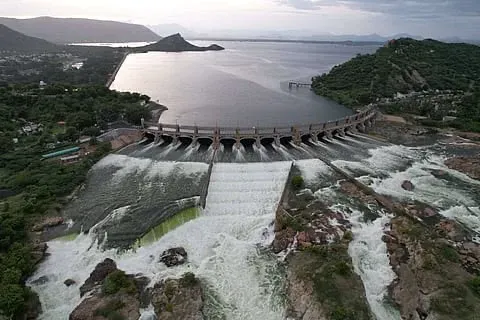
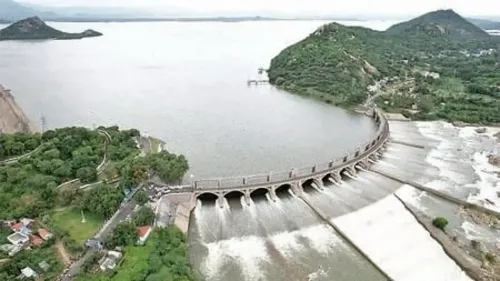
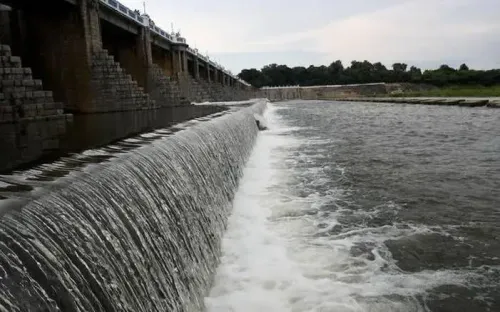
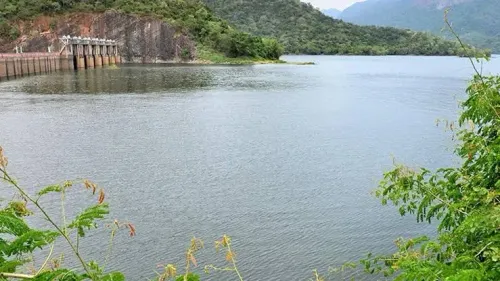
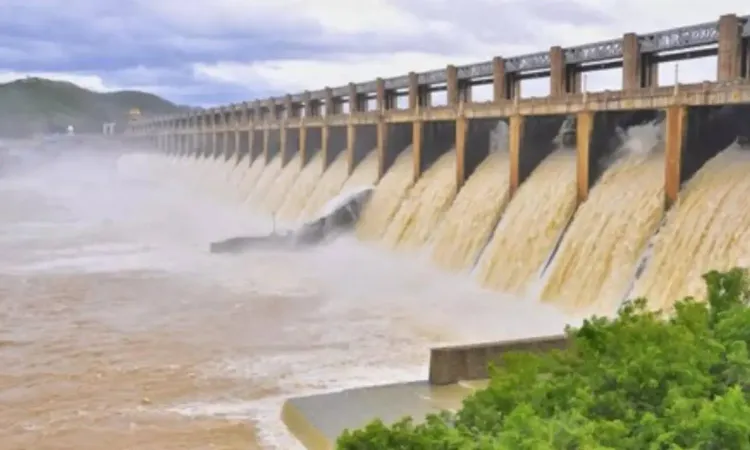
Chennai, Dec 6 (NationPress) The recent northeast monsoon rains over the last two months have significantly increased water storage levels throughout Tamil Nadu, providing the state with a robust buffer for both drinking water supplies and agricultural requirements in the forthcoming months.
Reservoirs across nearly every region have experienced consistent inflows, with officials characterizing this year’s storage as among the strongest seen in recent years.
According to the latest data from the Water Resources Department (WRD), Tamil Nadu's 90 reservoirs currently hold 195.835 TMC ft of water as of December 5 — representing 87.29% of their total capacity of 224.343 TMC ft. This marks a significant increase from October 5, when storage was merely 78.55% prior to the onset of the monsoon.
Storage levels are also considerably higher than they were at this time last year, which recorded only 80.43% capacity.
"The improvement in storage levels is evident, and this year's monsoon has yielded better outcomes for most basins," noted a senior WRD official.
Among the 90 monitored reservoirs, nine, including Gundar in Tenkasi and Sothuparai in Theni, have reached full capacity.
Additionally, 34 reservoirs are near their maximum, with storage levels at 99.76%.
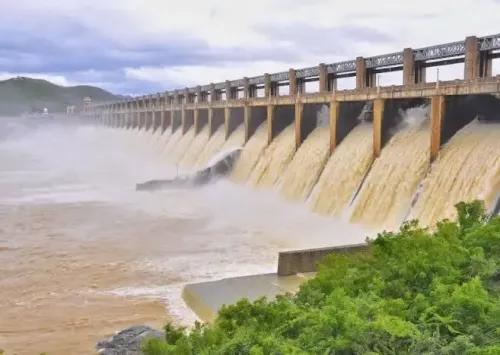
Authorities have issued a red alert for 18 reservoirs that have exceeded 95% capacity and an orange alert for another 10 reservoirs with levels between 90% and 95%.
Engineers have indicated that these alerts are precautionary measures aligned with standard reservoir management practices during active monsoon periods.
In the Chennai region, the Red Hills reservoir in Tiruvallur district, a vital source of drinking water for the city, is currently under red alert.
Officials have stated that there is no immediate cause for alarm, as these alerts are intended to facilitate effective inflow and outflow management.
The reservoir presently contains 3.144 TMC ft of water, which is 95.27% of its total capacity of 3.300 TMC ft. Its catchment area also recorded 40 mm of rainfall in the 24 hours leading up to 6 a.m. Thursday, the second-highest in the state.
The Cholavaram reservoir experienced the most rainfall, with a total of 51 mm.
On the agricultural front, 15 major reservoirs, including Mettur, Bhavanisagar, and Amaravathi, have shown improved storage compared to last year, providing much-needed relief to farmers in the delta and western districts.
Officials mentioned that this enhanced water availability will support ongoing and future agricultural cycles.
With the northeast monsoon still active in several parts of the state, WRD engineers anticipate further inflows in the coming days, reinforcing Tamil Nadu’s water security for the upcoming season.
Point of View
The recent increase in water storage levels in Tamil Nadu demonstrates effective management and the benefits of favorable weather patterns. This development not only alleviates immediate concerns regarding water scarcity but also positions the state for stronger agricultural outcomes. It is crucial for the nation's future that similar patterns and proactive measures are observed across other regions.
NationPress
1 Oct 2026
Frequently Asked Questions
What are the current water storage levels in Tamil Nadu?
As of December 5, Tamil Nadu's reservoirs hold 195.835 TMC ft of water, which is 87.29% of their total capacity.
How do the current levels compare to last year?
Currently, the storage levels are significantly higher than last year, which was at 80.43%.
Are any reservoirs on alert status?
Yes, 18 reservoirs are on red alert for exceeding 95% capacity, and another 10 are on orange alert.
What is the impact of this water storage on agriculture?
Increased water availability will support ongoing and upcoming agricultural cycles, providing much-needed relief to farmers.
Is there any cause for concern with the current reservoir levels?
Officials have stated there is no immediate cause for concern; the alerts are precautionary measures.