Should the Bhagavad Gita Be Taught to Children?
Synopsis
Union Minister H.D. Kumaraswamy advocates for the teaching of the Bhagavad Gita in schools, emphasizing its importance for moral education in today's society. He argues that the Gita's teachings can provide guidance and integrity in an age of declining values, urging a shift in educational policy that respects its profound contributions.
Key Takeaways
The Bhagavad Gita should be taught from an early age.
Its teachings are increasingly relevant in today's society.
The initiative aims to improve moral values.
Kumaraswamy stresses the importance of integrity.
Political motives do not drive this advocacy.
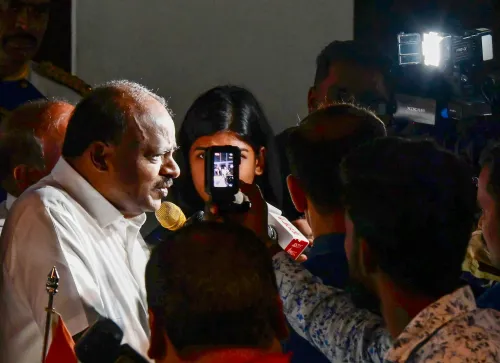
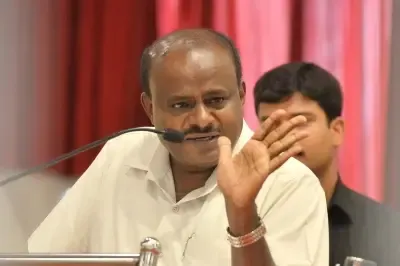
New Delhi, Dec 17 (NationPress) The Bhagavad Gita ought to be introduced to children starting from their early education years, as this would represent a highly beneficial shift in educational policy, emphasized Union Minister for Heavy Industries and Steel, H.D. Kumaraswamy.
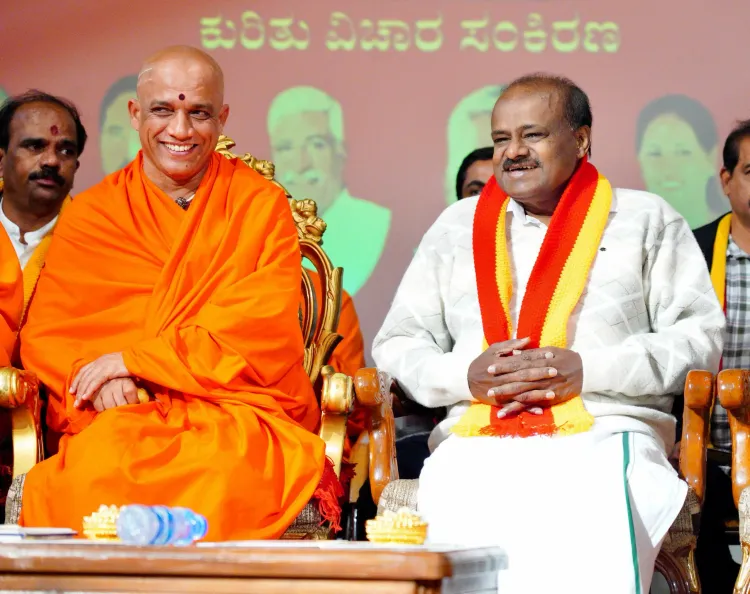
During his address at the concluding session of a seminar celebrating the legacy of Rashtrakavi Kuvempu, held in New Delhi by the Kuvempu Vishwa Manava Kshemaabhivrudhi Trust of Mysuru and the Delhi Karnataka Sangha on Wednesday, he reiterated this viewpoint.
The minister clarified that his push for incorporating the Bhagavad Gita into the school curriculum is devoid of any political agenda or intent to stir up religious discord; rather, it stems from a genuine desire to cultivate a more virtuous society.
“There’s no requirement for a new interpretation of the profound and noble principles found in the Bhagavad Gita. Yet, as societal morals decline, the teachings of the Gita resonate even more. Krishna’s wisdom serves as a beacon for humanity. This is why I advocate for its inclusion in education. I have also reached out to the Union Education Minister to formally propose this addition. It’s inappropriate for certain individuals to politicize this matter,” he stated.
“Today, we have made strides in technology and economy. However, we are witnessing a decline in moral integrity. Everyone should reflect on the reasons behind this situation.
Currently, peace of mind seems elusive. A lack of integrity prevails. Parents must consider what values they wish to pass down to future generations,” the minister pointed out.
He further urged the importance of human values and a nurturing spirit, encouraging individuals to adopt these principles in their lives.
Kumaraswamy expressed that Kuvempu was not just a national figure but a universal literary icon, whose works serve the greater good of humanity. Such an extraordinary individual merits the Bharat Ratna, he affirmed.
“I have engaged deeply with Kuvempu’s literature. Particularly, alongside his two novels, I found his autobiography, ‘Nenapina Doniyalli’ (In the Boat of Memories), to be profoundly unique, as if it were penned directly from his heart,” he remarked.
Notable attendees included Nirmalanandanatha Mahaswamiji, Peethadhipathi of Adichunchanagiri Mahasamsthana; Muktidananda Ji Maharaj, President of Ramakrishna Ashrama, Mysuru; and other esteemed personalities.
Also present were T.B. Jayachandra, Special Representative of the State in Delhi; C.N. Manjunath, BJP Member of Parliament; C. M. Nagaraj, President of the Delhi Karnataka Sangha; H.K. Ramu, President of the Kuvempu Vishwa Manava Kshemaabhivrudhi Trust, among others.
Point of View
The call to incorporate the Bhagavad Gita into school curriculums by Union Minister H.D. Kumaraswamy presents a compelling argument for enhancing educational standards. This initiative, devoid of political motives, aims to foster a society grounded in integrity and ethics, addressing the urgent need for introspection among parents and educators alike.
NationPress
11 Oct 2026
Frequently Asked Questions
Why does H.D. Kumaraswamy advocate teaching the Bhagavad Gita?
He believes it can instill moral values and guidance in children, addressing the decline of integrity in society.
Is the push for teaching the Bhagavad Gita politically motivated?
No, Kumaraswamy emphasizes that his advocacy is purely for societal improvement, not for political gain.
What impact could the Bhagavad Gita have on today's youth?
Its teachings can serve as a guiding light, helping to instill values and integrity in the younger generation.