Telangana Congress slams ECI over 73 lakh voter deletions in SIR
Synopsis
Over 73 lakh voters have been removed from Telangana's draft electoral rolls under the ECI's Special Intensive Revision — with nearly 43 lakh deletions concentrated in Hyderabad and its adjoining districts. The TPCC chief is now demanding a deadline extension and an independent inquiry, alleging BLOs never visited homes and that the worst-hit are poor and migrant workers least able to fight back.
Key Takeaways
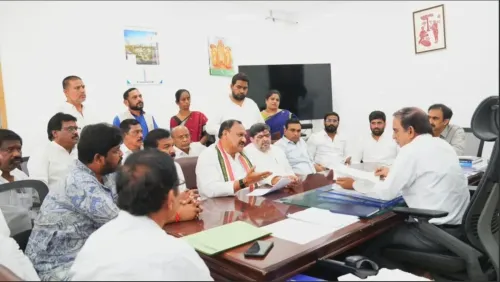
TPCC president Mahesh Kumar Goud on 18 August accused the Election Commission of India of arbitrarily deleting 73.3 lakh names from Telangana's draft voter list under the Special Intensive Revision (SIR) .
An additional 92.8 lakh electors in the draft rolls have been flagged for enumeration anomalies or non-mapping.
Around 43 lakh of the removed voters are from Hyderabad and the districts of Rangareddy and Medchal-Malkajgiri .
Goud alleged Booth Level Officers did not visit homes to distribute forms, and that the majority deleted were poor and migrant workers .
The TPCC has demanded an extension of the SIR deadline and a proper inquiry to restore voting rights of all eligible citizens.
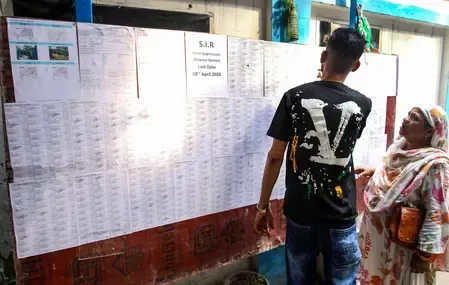
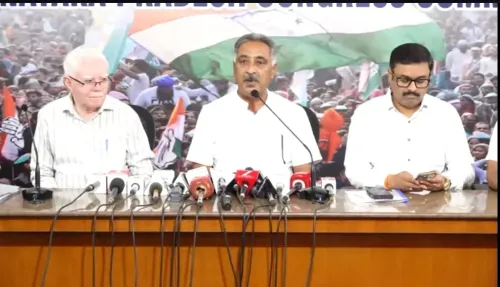
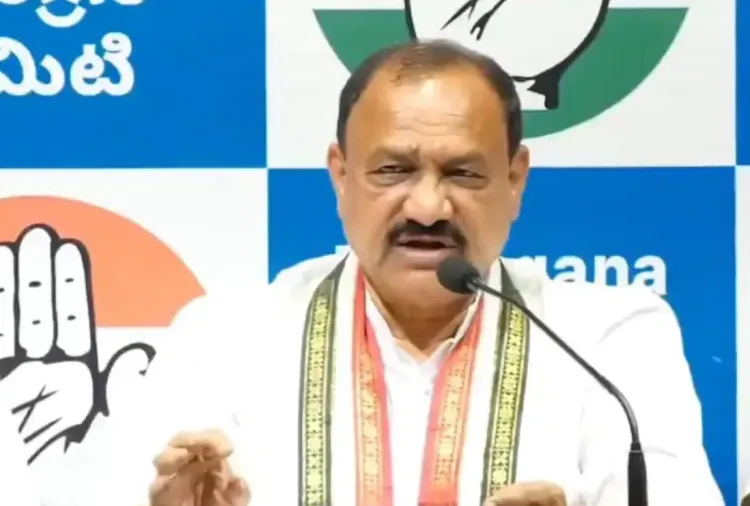
Telangana Pradesh Congress Committee (TPCC) president Mahesh Kumar Goud on Tuesday, 18 August launched a sharp attack on the Election Commission of India (ECI), accusing it of arbitrarily deleting more than 73 lakh names from the draft voter list under the Special Intensive Revision (SIR). The criticism follows the ECI's publication of the draft electoral rolls on Monday, which removed 73.3 lakh electors marked as absent, shifted, dead, or duplicate.
Key Allegations by TPCC Chief
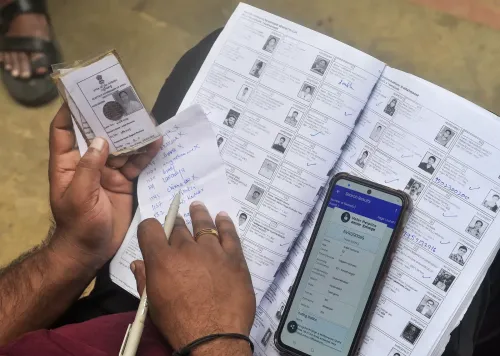
Goud alleged that the deletions were not the result of a fair or thorough process, charging that Booth Level Officers (BLOs) failed to visit households to distribute enumeration forms. He argued that the majority of those struck off the rolls were poor and migrant workers — groups least equipped to navigate bureaucratic documentation requirements.
He questioned the ECI's reliance on 2002 SIR details as a benchmark, pointing out that many families lack those records due to delimitation exercises and changes in polling station assignments over the years. 'Who has given you the right to delete the votes of citizens born in this country?' he asked, demanding that every eligible voter be given an opportunity to establish their credentials regardless of whether they possess older SIR documents.
Scale of Deletions and Flagged Voters
According to the draft rolls published by the ECI, 73.3 lakh electors have been removed, while an additional 92.8 lakh electors included in the draft have been flagged for anomalies in enumeration details or for not being mapped to a polling station. Together, the two categories account for a significant share of Telangana's registered voter base.
Notably, around 43 lakh of the 73.3 lakh removed voters were from Hyderabad and the adjoining districts of Rangareddy and Medchal-Malkajgiri — the state's most densely populated urban belt, home to large concentrations of migrant and informal-sector workers.
Congress Targets BJP and Constitutional Institutions
Goud broadened his attack beyond the voter list, alleging that the Bharatiya Janata Party (BJP) government at the Centre has systematically weakened constitutional institutions since 2014. He claimed that the ECI, like the Central Bureau of Investigation (CBI) and the Enforcement Directorate (ED), has effectively become an affiliate of the BJP — a charge the ruling party has consistently denied.
This is not the first time opposition parties have raised concerns about the ECI's independence. Critics have, over the past decade, repeatedly questioned the timing and methodology of electoral roll revisions, particularly ahead of state elections.
Demands: Deadline Extension and Independent Inquiry
The TPCC president demanded that the ECI extend the SIR deadline to allow a thorough, case-by-case inquiry into all deletions. He also called for a proper inquiry to ensure the voting rights of every eligible citizen are protected, stressing that birth in India and a history of voting should be considered sufficient grounds for reinstatement pending verification.
With assembly elections in Telangana on the horizon, the controversy over the draft rolls is likely to intensify. How the ECI responds to demands for a deadline extension and independent review will be closely watched by opposition parties and civil society groups across the state.
Point of View
Where migrant and informal workers are most numerous, raises a structural question: does the SIR methodology systematically disadvantage mobile, low-income populations who are least likely to have stable address records? The ECI's silence on BLO ground-level compliance is telling. If officers did not complete household visits, the integrity of the entire revision exercise is compromised — and that is an accountability issue regardless of which party benefits.
NationPress
3 Oct 2026
Frequently Asked Questions
What is the Special Intensive Revision (SIR) of voter rolls in Telangana?
The Special Intensive Revision (SIR) is an exercise conducted by the Election Commission of India to update and clean electoral rolls by identifying and removing entries marked as absent, shifted, dead, or duplicate. In Telangana, the ECI published the draft rolls on Monday, 17 August, removing 73.3 lakh electors and flagging a further 92.8 lakh for anomalies.
Why is the TPCC opposing the voter deletions?
TPCC president Mahesh Kumar Goud alleges the deletions were arbitrary, that Booth Level Officers did not visit homes to distribute enumeration forms, and that the worst-affected are poor and migrant workers. He argues that many families lack 2002 SIR records due to delimitation changes, and that this should not disqualify citizens who have voted multiple times.
How many voters were removed from Hyderabad and surrounding districts?
According to available data, around 43 lakh of the 73.3 lakh removed voters were from Hyderabad and the adjoining districts of Rangareddy and Medchal-Malkajgiri, making the state capital's urban belt the single largest source of deletions.
What has the TPCC demanded from the Election Commission?
The TPCC has demanded that the ECI extend the SIR deadline, conduct a thorough case-by-case inquiry into all deletions, and ensure that the voting rights of every eligible citizen are protected — including those who cannot produce 2002 SIR documentation.
What happens to the 92.8 lakh electors flagged for anomalies?
The 92.8 lakh electors flagged in the draft rolls have been identified for anomalies in enumeration details or for not being mapped to a polling station. Their status is subject to further verification before the final electoral roll is published; they have not yet been formally removed.