Is Language Identity a Disease or Our Right? Raj Thackeray Responds
Synopsis
In a fierce response to RSS chief Mohan Bhagwat's remarks, Raj Thackeray of the MNS asserts that linguistic pride is a fundamental right of citizens, challenging the notion of it being a 'disease'. He emphasizes the importance of regional identity and critiques the behavior of migrants in host states, calling for a robust defense of culture.
Key Takeaways
Linguistic pride is a fundamental right according to Raj Thackeray.
Thackeray challenges the RSS chief's comments on linguistic identity.
The behavior of migrants is highlighted as a source of linguistic conflict.
Thackeray emphasizes the importance of regional identity in Maharashtra.
Criticism of RSS involvement in linguistic politics is evident in Thackeray's statements.
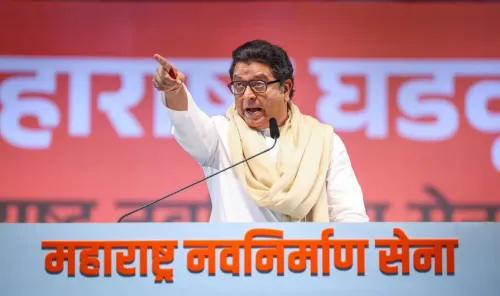
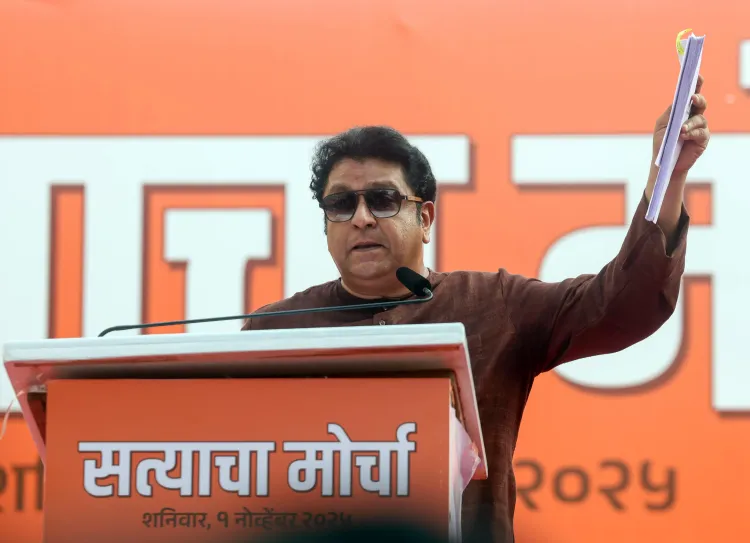
Mumbai, Feb 10 (NationPress) In a pointed response to the recent comments made by Rashtriya Swayamsevak Sangh (RSS) chief Mohan Bhagwat, the Maharashtra Navnirman Sena (MNS) asserted on Tuesday that linguistic and regional pride is a basic right of every citizen, rather than a "disease" as implied by Bhagwat.
Referring to Bhagwat's remarks during his address in Mumbai on February 8, where he allegedly labeled persistent linguistic demonstrations as a "disease", Raj Thackeray took to X to challenge Bhagwat’s grasp of India's linguistic legacy and the evolution of states, stating that if regional identity is a "disease", it represents a widespread issue across India, from Karnataka and Tamil Nadu to West Bengal, Punjab, and Gujarat.
“The primary source of linguistic conflict is not the locals' affection for their language, but the behavior of migrants who display arrogance in their adopted states, dismiss local culture and traditions, and aim to establish separate vote banks. When thousands were expelled from Gujarat, why didn’t you advocate for harmony there?” Raj Thackeray questioned, criticizing the RSS for its selective silence.
Thackeray was clear that for them, the Marathi language and the Marathi people hold utmost importance. “Linguistic and regional identities will endure in this nation and in Maharashtra. It is our right. Whenever our identity is threatened, Maharashtra will respond with full force. Take this as a definitive statement,” he declared.
He also pointed to a recent assertion by RSS leader Bhaiyaji Joshi, who claimed that Mumbai’s linguistic identity is equally Gujarati as it is Marathi, suggesting it was a deliberate move to appeal to Gujarati voters ahead of elections to benefit the BJP. “Why is an 'apolitical' organization like the RSS engaging in linguistic matters? The RSS should instead confront the government about its perceived imposition of Hindi before lecturing Maharashtrians on unity,” he stated.
Raj Thackeray reaffirmed his dedication to Hindutva, yet differentiated its "action-oriented" nature from that of RSS rhetoric.
Highlighting their protests against the Raza Academy riots and the misuse of loudspeakers, the party questioned Bhagwat's silence on the "barbaric" actions during Kanwar Yatras in North India, India’s rise as the world’s second-largest beef exporter, and the 'circus' of cow slaughter politics used to stir public sentiment.
Thackeray further asserted that the presence of prominent figures at Bhagwat’s lecture indicated personal backing for the RSS chief. “Do not be under the misconception that people came out of admiration for you,” he remarked.
“The assembly of dignitaries was a reflection of the 'governmental fear' instilled by the Narendra Modi administration. If these 'rambling sermons' were so impactful, why has no one attended them until now?” he queried.
Point of View
Raj Thackeray's statements reflect a broader sentiment about the importance of regional identity in India's diverse cultural landscape. His critique of the RSS emphasizes the need for respectful dialogue regarding linguistic matters and highlights the ongoing challenges that arise from migration and cultural integration. The emphasis on linguistic pride as a right resonates with many, advocating for a balance between unity and diversity in a pluralistic society.
NationPress
19 Sept 2026
Frequently Asked Questions
What did Raj Thackeray say about linguistic pride?
Raj Thackeray stated that linguistic pride is a fundamental right of every citizen, countering RSS chief Mohan Bhagwat's remarks that labeled it a 'disease'.
How did Thackeray respond to Bhagwat's comments?
Thackeray challenged Bhagwat's understanding of India's linguistic history, asserting that regional identity is widespread across India.
What is the main argument presented by Thackeray?
Thackeray argues that the true source of linguistic conflict lies in the behavior of arrogant migrants, not the love of locals for their language.
What did Thackeray say about the RSS and its involvement in politics?
He criticized the RSS for engaging in linguistic politics and urged them to focus on government issues rather than lecturing Maharashtrians.
What was the significance of the dignitaries at Bhagwat's lecture?
Thackeray suggested that their presence was a sign of 'governmental fear' rather than genuine support for Bhagwat.