Thailand cabinet makes school safety national priority after Bangkok shooting kills 9
Synopsis
A 14-year-old student allegedly shot dead nine people — including his own grandparents — at a Bangkok-area school on 7 August, and Thailand's cabinet has now responded by making school safety a national agenda item. Every school in the country is immediately designated a Safety Zone, with mandatory weapons screening, emergency drills, and a government-backed mental health programme. The question is whether this becomes lasting policy or fades like similar post-tragedy pledges.
Key Takeaways
Thailand's cabinet approved a national school safety agenda on 12 August , following the 7 August mass shooting at Debsirin Nonthaburi School .
The shooting killed nine people and injured more than 30 , with the alleged attacker identified as a 14-year-old student .
All schools have been immediately designated 'School Safety Zones' with mandatory weapons screening and emergency response plans.
The Education Ministry is partnering with Chulalongkorn University psychologists and the Mental Health Department to set up 'Safe Rooms' for affected individuals.
PTSD screening will be conducted at one, three, and six months for those affected by the attack.
Prime Minister Anutin Charnvirakul has pledged stricter gun control and a ban on carrying firearms in public places outside official duties.
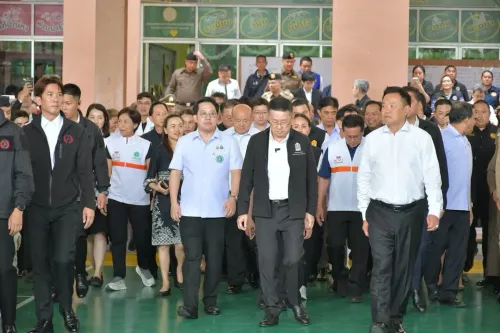
Thailand's cabinet on Tuesday, 12 August approved an Education Ministry proposal to elevate school safety to a national policy priority, weeks after a mass shooting at Debsirin Nonthaburi School in Nonthaburi province — on the northwestern outskirts of Bangkok — left nine people dead and more than 30 injured. The cabinet decision signals a systemic overhaul of how Thailand's educational institutions handle security threats.
Key Developments
Deputy government spokesperson Patdarasm Thongsaluaykorn confirmed that, under a ministry directive effective immediately, all schools across Thailand have been designated 'School Safety Zones'. Each institution must now establish on-premises centres for the protection of rights, liberties, and safety; draw up and rehearse emergency response plans; and coordinate directly with police and other relevant agencies.
Strict screening and searches for weapons, illegal items, and dangerous objects at school entry points are now mandatory. Alongside physical security, the ministry has introduced mental health support systems covering the psychological welfare of students, teachers, and staff.
Mental Health Response and Safe Rooms
The Education Ministry is working with psychologists from Chulalongkorn University and crisis teams from the Mental Health Department to care for those affected by the 7 August attack. Authorities are setting up dedicated 'Safe Rooms' for psychological recovery on school premises.
For the longer term, the ministry is drafting framework legislation on school safety and will monitor the mental condition of those affected — screening for post-traumatic stress disorder at one, three, and six months after the incident.
What Happened on 7 August
Local police were alerted around 10 am local time on 7 August after a gunman opened fire at Debsirin Nonthaburi School in the Bang Kruai district of Nonthaburi province. The alleged attacker, identified as a 14-year-old student, reportedly lived with his grandparents, whose bodies were found at their home — investigators believe they were shot dead before the school attack.
A witness described the gunman as wearing a purple tracksuit and firing dozens of rounds across the campus. Video footage circulated by media showed continuous gunfire throughout the school grounds. Authorities recovered a handgun at the scene, which initial reports suggest belonged to the shooter's grandfather, along with a large quantity of ammunition from the suspect's bag.
Motive and Background
Thai Prime Minister Anutin Charnvirakul, who visited the scene, said the motive may have been excessive academic pressure, noting that the alleged shooter's grandparents were reportedly very strict about his studies. A friend of the suspect confirmed he had been under significant stress recently and had made deliberate preparations before the attack, including posting photographs of the firearm on social media.
According to Thai media reports, investigators found evidence on the suspect's computer that he had researched an American school shooting case. Prime Minister Anutin stated that such an incident must not be allowed to recur, pledging stricter gun control measures and tighter supervision of gun ownership. He also declared that no one may carry firearms into public places unless performing official duties.
What Comes Next
The cabinet's school safety framework now awaits formal legislative drafting, with the ministry expected to table a dedicated school safety bill. Industry observers and child rights groups will be watching whether the new screening protocols and mental health infrastructure are implemented uniformly across Thailand's estimated 30,000-plus schools. The psychological monitoring programme — with check-ins at one, three, and six months — will serve as an early indicator of whether the government's response moves beyond policy declarations into sustained action.
Point of View
Not a ceiling — without ring-fenced budgets, trained personnel, and independent compliance audits, the directive risks becoming a circular on a noticeboard. The shooter's alleged motive — crushing academic pressure — also points to a systemic failure that weapons screening alone cannot fix. Thailand's education system has long been criticised for high-stakes exam culture; if the government addresses only the gun and not the pressure cooker, it will have treated the symptom and ignored the disease. The six-month PTSD monitoring plan is genuinely forward-looking, but its credibility depends entirely on whether the Mental Health Department has the staffing to execute it across thousands of schools.
NationPress
26 Sept 2026
Frequently Asked Questions
What happened in the Thailand school shooting on 7 August?
A 14-year-old student allegedly opened fire at Debsirin Nonthaburi School in Bang Kruai district, Nonthaburi province, on 7 August, killing nine people — including his own grandparents — and injuring more than 30. The gunman was also killed, and a handgun believed to belong to his grandfather was recovered at the scene.
What has Thailand's cabinet decided in response to the school shooting?
Thailand's cabinet approved an Education Ministry proposal on 12 August to make school safety a national agenda item. All schools are immediately designated 'School Safety Zones' with mandatory weapons screening, emergency response plans, and coordination with police.
What is the suspected motive behind the Nonthaburi school shooting?
Prime Minister Anutin Charnvirakul suggested the motive may have been excessive academic pressure, as the alleged shooter's grandparents were reportedly very strict about his studies. A friend confirmed the suspect had been under significant stress and made deliberate preparations before the attack.
What mental health support is being provided after the Thailand school shooting?
The Education Ministry is working with psychologists from Chulalongkorn University and crisis teams from the Mental Health Department to provide care. 'Safe Rooms' for psychological recovery are being set up, and PTSD screening will be conducted at one, three, and six months after the incident.
What gun control measures has Thailand announced after the shooting?
Prime Minister Anutin Charnvirakul announced stricter gun control measures, including a ban on carrying firearms in public places for anyone not performing official duties. The government has also directed relevant departments to strengthen supervision of gun ownership across the country.