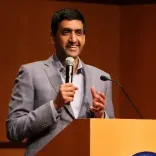
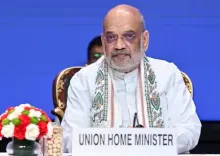
Tharoor, Raj Kumar address Japan's National Diet as India-Japan ties deepen
Synopsis
On the eve of Japanese PM Sanae Takaichi's visit to India, MP Shashi Tharoor and JGU's Prof Raj Kumar took the India-Japan relationship beyond government corridors — addressing Japan's National Diet to argue that universities, parliaments, and people, not just summits, are what make strategic partnerships last. JGU's ties with 27 Japanese institutions and 200 student exchanges are the proof of concept.
Key Takeaways
Shashi Tharoor and Prof C.
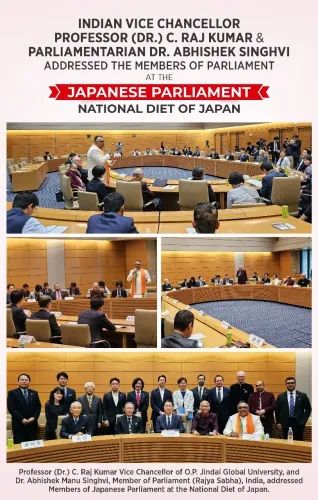
Jindal Global University addressed Japan's National Diet in Tokyo on 1 July .
The session was chaired by Fukushiro Nukaga , the 80th Speaker of Japan's House of Representatives.
The event coincided with Japanese PM Sanae Takaichi 's official visit to India and the India-Japan Annual Summit with PM Narendra Modi .
JGU has academic partnerships with 27 Japanese institutions and has sent nearly 200 students on study-abroad programmes in Japan.
Tharoor argued that people — students, scholars, and parliamentarians — ultimately sustain what governments initiate through strategic agreements.
Japanese Diet members reaffirmed commitment to strengthening parliamentary exchanges, educational cooperation, and people-to-people ties with India.
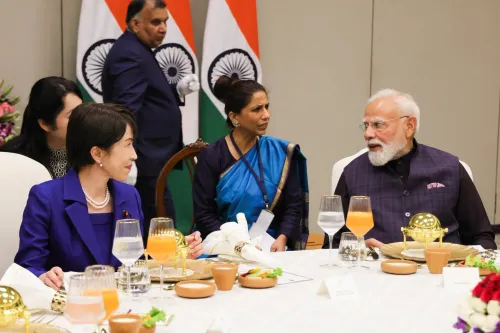
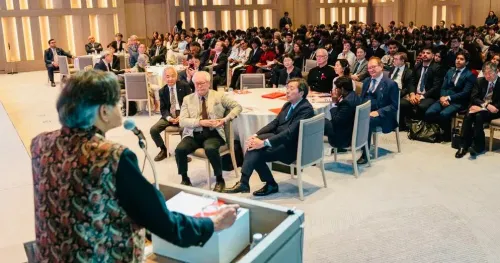
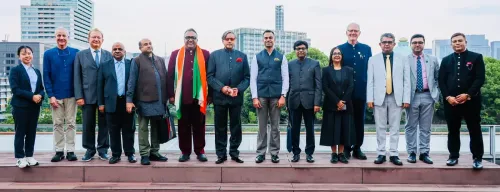
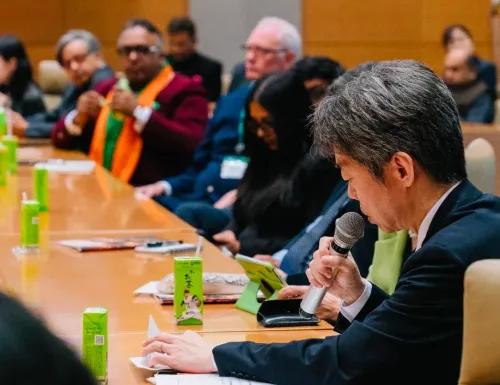
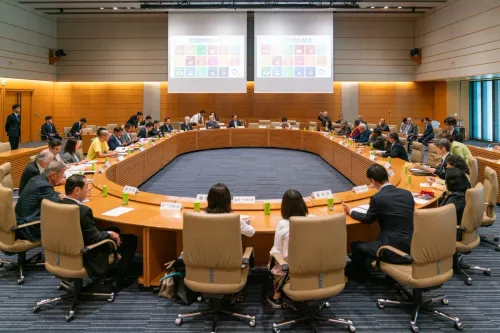
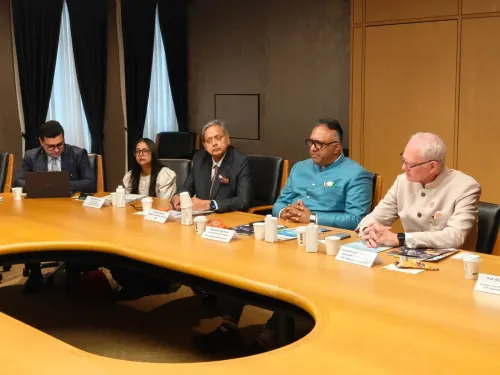
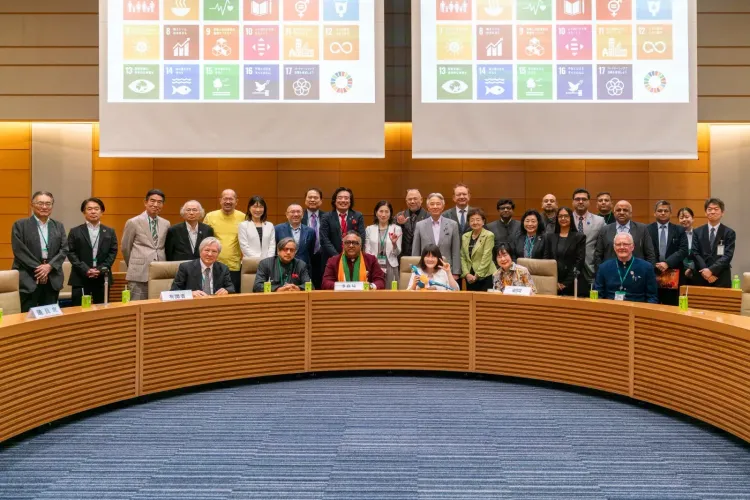
Shashi Tharoor, Member of Parliament, and Professor C. Raj Kumar, Founding Vice Chancellor of O.P. Jindal Global University (JGU), addressed a bipartisan gathering of Members of the National Diet of Japan at the National Diet Building in Tokyo on 1 July, coinciding with Japanese Prime Minister Sanae Takaichi's official visit to India and the India-Japan Annual Summit with Prime Minister Narendra Modi. The interaction underscored how bilateral relationships are strengthened not only through government channels but also through parliaments, universities, and civil society.
A High-Profile Parliamentary Forum
The session was chaired by Fukushiro Nukaga, the 80th Speaker of the House of Representatives of Japan, and brought together a distinguished, bipartisan cross-section of the National Diet, spanning both the House of Representatives and the House of Councillors. Senior parliamentary leaders, former ministers, eminent diplomats, policy experts, and industry figures from across Japan were in attendance, reflecting the breadth of Tokyo's commitment to deepening institutional ties with India.
What Prof Raj Kumar Said
Prof Raj Kumar argued that Asia's evolving geopolitical landscape demonstrates that 'the strongest international partnerships are patiently built through sustained investments in education, research, technology, human capital, institutional cooperation, and innovation.' He called for Indian and Japanese universities to collaborate more closely, for researchers to jointly address global challenges, and for students to move more freely between the two countries.
Highlighting JGU's own footprint in Japan, he noted that the university has partnerships with 27 leading Japanese institutions and that nearly 200 students have participated in study-abroad programmes across Japan — a sustained institutional commitment, he said, to building long-term academic cooperation through student mobility, faculty collaboration, joint research, and intercultural understanding.
Tharoor on Parliamentary Diplomacy
Tharoor reflected on the equally vital role of parliamentary diplomacy, observing that 'diplomacy is not merely about negotiating interests or responding to crises.' At its finest, he said, it 'preserves memory, reflects mutual respect, and inspires nations to imagine and build a better future together.'
Drawing on the centuries-old civilisational bond between the two nations, Tharoor said: 'The friendship between the two countries has been nurtured through Buddhism, cultural exchange, democratic values, and deep civilisational respect. This shared history is not only a source of pride but also a responsibility. The challenge before both nations is not to create a new friendship but to continually renew and strengthen an enduring one through institutions capable of serving future generations. While governments create strategic partnerships, it is ultimately people who sustain them.'
Response from Japanese Parliamentarians
Members of the National Diet spoke warmly of their longstanding engagement with India, expressing admiration for India's civilisational heritage, democratic traditions, and expanding global role. They reaffirmed their commitment to strengthening parliamentary exchanges, educational partnerships, scientific research, and people-to-people ties between the two democracies.
Broader Significance
The Tokyo interaction came at a moment when India and Japan are engaging at the highest political level to shape their Special Strategic and Global Partnership. Analysts note that such track-1.5 and track-2 engagements — involving universities, scholars, and parliamentarians alongside governments — provide the institutional depth that makes strategic partnerships resilient across changes in political leadership. As both governments look to the future of the Indo-Pacific, forums like this one are increasingly seen as foundational to durable bilateral cooperation.
Point of View
But it is universities and parliaments that give those frameworks institutional memory. JGU's 27 Japanese partnerships and 200 student exchanges are a rare concrete data point in a relationship that often produces more communiqués than outcomes. Tharoor's framing of diplomacy as 'preserving memory' is more than rhetoric: India-Japan ties have historically stalled when political attention drifted. The real test is whether this parliamentary engagement translates into sustained policy support for student mobility, joint research funding, and academic visa simplification — areas where both governments have repeatedly announced intent without follow-through.
NationPress
30 Sept 2026
Frequently Asked Questions
Why did Shashi Tharoor and Prof Raj Kumar address Japan's National Diet?
They addressed a bipartisan gathering of Japan's National Diet on 1 July to strengthen parliamentary and academic ties between India and Japan, coinciding with Japanese PM Sanae Takaichi's official visit to India and the India-Japan Annual Summit with PM Narendra Modi. The interaction was chaired by Fukushiro Nukaga, the 80th Speaker of Japan's House of Representatives.
What is O.P. Jindal Global University's academic relationship with Japan?
JGU has partnerships with 27 leading Japanese institutions, and nearly 200 of its students have participated in study-abroad programmes across Japan. Prof Raj Kumar described these as evidence of a sustained institutional commitment to student mobility, faculty collaboration, joint research, and intercultural understanding.
What did Shashi Tharoor say about India-Japan relations?
Tharoor said the friendship between India and Japan 'has been nurtured through Buddhism, cultural exchange, democratic values, and deep civilisational respect,' and that the challenge is to 'continually renew and strengthen an enduring one through institutions capable of serving future generations.' He emphasised that people — students, scholars, parliamentarians, entrepreneurs — ultimately sustain what governments initiate.
What is the India-Japan Special Strategic and Global Partnership?
It is the highest tier of bilateral relationship between India and Japan, encompassing defence, economic, technological, and people-to-people cooperation. The partnership is reviewed annually at the India-Japan Annual Summit between the two prime ministers, with the most recent summit involving PM Narendra Modi and Japanese PM Sanae Takaichi.
Who chaired the National Diet session addressed by Tharoor and Raj Kumar?
The session was chaired by Fukushiro Nukaga, the 80th Speaker of the House of Representatives of Japan. The gathering included members from both the House of Representatives and the House of Councillors, along with former ministers, diplomats, academics, and industry leaders.