Trump Signals Possible Resumption of US-Iran Talks in Days
Synopsis
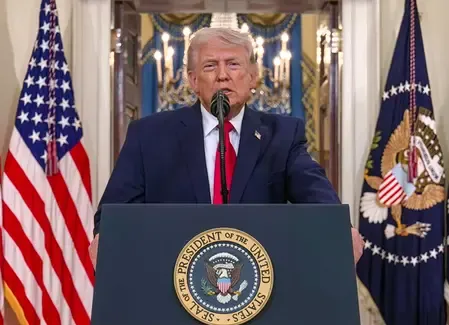
In a recent statement, President Trump indicated that negotiations with Iran may soon resume, highlighting potential developments in the next few days. This comes amidst ongoing tensions and discussions about Iran's nuclear program.
Key Takeaways
Trump suggests possible US-Iran negotiations may restart soon.
Ongoing conflict with Iran has reached its 45th day.
Iran has closed the Strait of Hormuz, affecting global oil shipments.
Previous proposals for a moratorium on Iran's nuclear program were rejected.
Domestic economic pressures are mounting on Trump as elections approach.
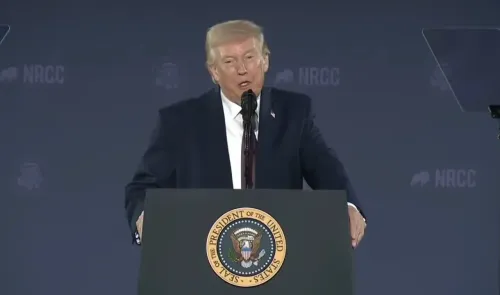
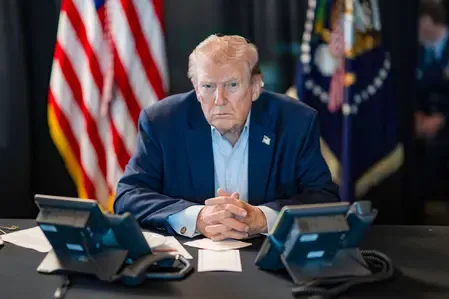
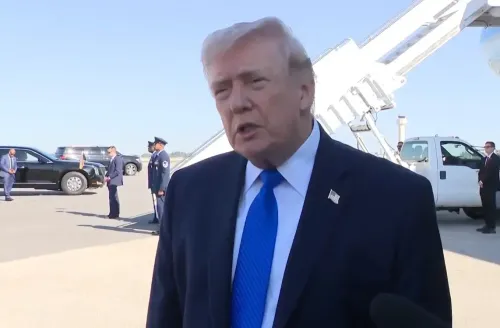
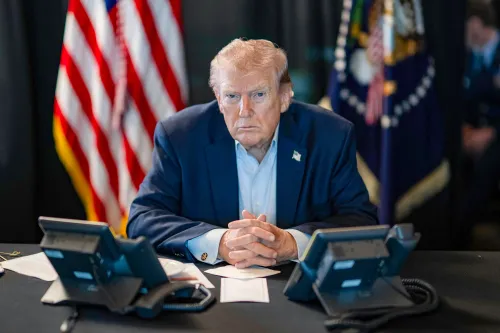
New York, April 14 (NationPress) US President Donald Trump suggested on Tuesday that negotiations between the US and Iran could recommence within the next few days, indicating that discussions are progressing.
In a phone conversation from Washington with a New York Post reporter in Islamabad, he remarked, "You should stay there, really, because something could be unfolding over the next two days, and we are more inclined to proceed." He further noted, "It's more likely," emphasizing the potential for renewed dialogue.
In a previous exchange, Trump mentioned, "Talks are ongoing, albeit at a slow pace." Initially, he indicated that a new round of discussions might occur in Europe, but later hinted at Islamabad as the venue.
The Trump administration frequently utilizes the New York Post, owned by Rupert Murdoch, a media mogul who supports Trump, to disseminate news, circumventing mainstream media outlets.
The ongoing conflict with Iran, which began with Israeli airstrikes aimed at eliminating Iranian leadership—with US participation—has now entered its 45th day. In response, Iran has closed the Strait of Hormuz, a critical passageway for 20% of the world’s fossil fuel shipments.
UN Secretary-General Antonio Guterres also suggested that negotiations might restart. He informed reporters that he had conversed with Pakistan's Foreign Minister Ishaq Dar and mentioned, "The indication we have is that it is highly probable that these talks will resume."
Although Trump excluded himself from participating in the discussions, he did not specify who would represent the US. US Vice-President J.D. Vance has been the US delegate in extensive talks with Iran's Parliament Speaker Mohammad Bagher Ghalibaf and Foreign Minister Abbas Araghchi.
Addressing reports suggesting that the US had proposed a 20-year halt on Iran's nuclear activities, Trump appeared to dismiss the idea, stating, "I've always maintained they cannot possess nuclear weapons, so I’m not in favor of the 20 years." He added, "I don’t want them (Iran) to feel they’ve gained an advantage," referring to a moratorium instead of a total ban on Iran's nuclear endeavors.
However, this may not be Trump's final stance, as he is known for treating diplomatic relations as negotiation opportunities. Reports indicate that Iran proposed a five-year suspension on uranium enrichment, which the US rejected.
Araghchi indicated that there has been advancement in the discussions but attributed the talks' failure to the "constant changes" in US positions. The Tasnim news agency captured that the Iranian Foreign Minister had informed his French counterpart Jean-Noel Barrot, "Although progress was made in the negotiation process on various issues, the American side's excessive demands and constant shifts in their requirements hindered reaching an agreement."
After the discussions concluded without resolution, Trump ordered a US naval blockade against vessels linked to Iran in the strait on Monday. However, some ships have continued to navigate the strait, so far avoiding direct conflict with Iran.
Domestically, Trump faces pressure due to the economic repercussions of the Iran conflict, evident at petrol stations and grocery stores, especially with a midterm election approaching in November that will determine control of Congress.
Globally, the International Monetary Fund cautioned that a prolonged standoff between the US and Iran that keeps the strait closed could lead to a recession.
Point of View
The recent statements by President Trump regarding the potential for renewed talks with Iran underscore the complexities of international diplomacy. While progress appears slow, the urgency of the situation demands careful monitoring as it could significantly affect global relations.
NationPress
19 Sept 2026
Frequently Asked Questions
What did Trump say about US-Iran talks?
Trump indicated that negotiations with Iran may resume in the next few days, suggesting that discussions are ongoing.
Where might the US-Iran talks take place?
Initially suggested to occur in Europe, Trump later hinted that the talks could happen in Islamabad.
Who represented the US in previous talks with Iran?
US Vice-President J.D. Vance represented the US at the marathon discussions with Iranian officials.
What is the current status of the conflict with Iran?
The conflict has reached its 45th day, marked by Iranian retaliation by closing the Strait of Hormuz.
What are the implications of a standoff in the Strait of Hormuz?
The International Monetary Fund warned that prolonged conflict could lead to a global recession.