How is Trump Strengthening the Gaza Peace Agreement?
Synopsis
In a bid to solidify the precarious Gaza peace deal, President Trump has dispatched his leading diplomatic team. With critical meetings and a strategic vision underway, the future hangs in the balance. Discover the intricate maneuvers and challenges that lie ahead in this pivotal diplomatic endeavor.
Key Takeaways
President Trump is committed to reinforcing the Gaza peace deal.
Vice-President Vance has publicly criticized actions that threaten the agreement.
There is potential for international support in peacekeeping efforts.
The reconstruction of Gaza is a priority alongside disarming Hamas.
Diplomatic negotiations are ongoing and critical to the peace process.
New York, Oct 24 (NationPress) President Donald Trump has mobilized his top diplomatic team to reinforce his most notable accomplishment to date, the Gaza peace agreement, which remains delicately poised.
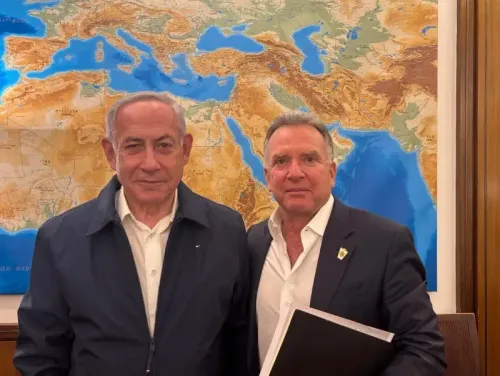
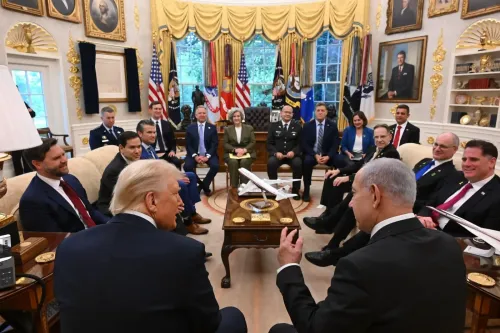
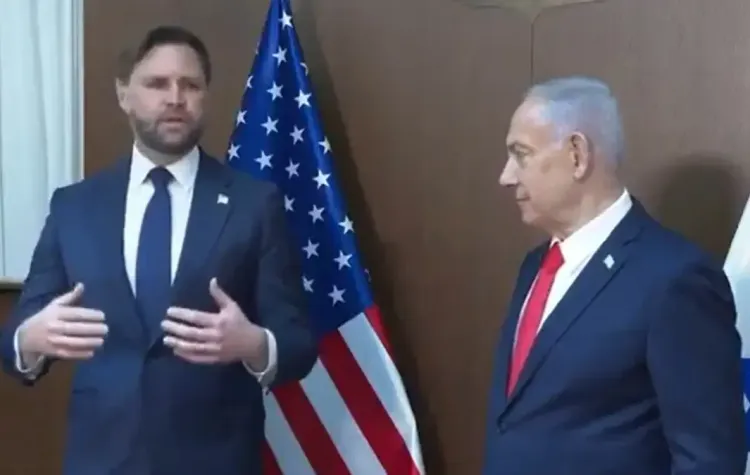
Following the deployment of the primary negotiators, Trump's son-in-law Jared Kushner and US Middle East envoy Steve Witkoff, Vice-President J.D. Vance and his wife, Usha Vance, visited Israel for three days, engaging with Israeli Prime Minister Benjamin Netanyahu and other officials.
On their return journey, they intersected with Secretary of State Marco Rubio, who was en route to advance diplomatic discussions.
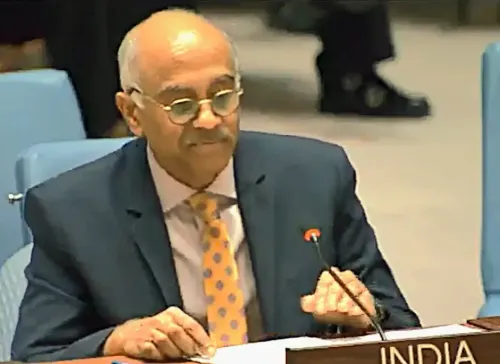
The UN's Deputy Special Coordinator for the Middle East Peace Process, Ramiz Alakbarov, conveyed a cautious message to the Security Council, stating, "The agreement signifies hope for a brighter tomorrow, yet the dynamics are exceedingly fragile."
The Gaza ceasefire—and the future of the peace agreement—faces jeopardy due to impulsive actions from both Hamas and Israeli forces.
A testament to Trump's dedication to the peace agreement is Vice-President Vance's pointed critique of the Knesset, which he labeled "stupid" for its resolution to facilitate the annexation of the West Bank, a move perceived as a threat to the peace initiative.
"This was a foolish political maneuver, and I take personal offense. The West Bank will not be absorbed by Israel," remarked the US Vice-President.
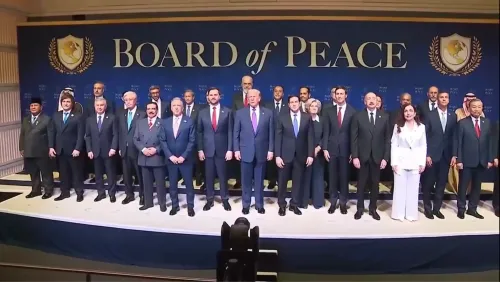
In the fortnight following the signing of the peace agreement, which included European and Arab leaders, the ceasefire was only disrupted once by some Hamas factions firing on Israeli troops, who retaliated with missiles.
Trump dismissed this as provocations from "rogue elements, not Hamas officials."
Officials have also attributed Hamas's failure to return certain hostages' bodies, as agreed, to the possibility of them being trapped amid the rubble from Israeli airstrikes.
US Permanent Representative to the UN, Mike Waltz, acknowledged the challenging path ahead in realizing Trump's 20-point strategy.
He stated, "This landmark achievement warrants celebration and determination, but it must not breed complacency. As President Trump has articulated: the work is not finished."
Efforts surrounding the exchange of hostages, prisoners, and the return of bodies by both sides are nearing completion, but the daunting task of disarming Hamas lies ahead.
Vice-President Vance remarked, "We face a very, very challenging agenda—disarming Hamas is priority number one."
The peace deal was rushed, and the vital component, an International Stabilization Force to oversee demilitarization, has yet to be established. Currently, Hamas remains armed and continues to instill fear within its populace, which threatens the peace agreement.
While Vance ruled out deploying US troops in Gaza, he mentioned they might play roles in "supervising and mediating the peace." Approximately 200 US troops are stationed in Israel in anticipation of this mission.
Indonesia, a predominantly Muslim nation, has pledged 20,000 troops, alongside other countries theoretically agreeing to join the force.
Although the US and Israel are hesitant about involving UN peacekeepers, they may seek UN endorsement to reassure participating nations.
Rubio discussed "potentially engaging the UN to obtain an international mandate for creating defensive security forces."
The UN's involvement could be modeled after the Haiti Multinational Security Support Mission led by Kenya, which has since evolved into a Gang Suppression Force to restore order.
While the UN is not directly affiliated with the force, the Security Council’s backing lends it legitimacy.
Vance also suggested that the reconstruction of Gaza, where it's estimated that 80% of homes have been obliterated due to Israeli attacks, could commence soon in stabilized regions.
"The aspiration is to revitalize Rafah within the next two to three years, potentially accommodating half a million residents," he noted.
Point of View
It is crucial for our nation to remain vigilant and supportive of diplomatic efforts aimed at securing peace in Gaza. The ongoing complexities highlight the necessity for a balanced approach, ensuring that the aspirations of all parties involved are respected. We stand with our nation in seeking a resolution that fosters stability and harmony.
NationPress
4 Oct 2026
Frequently Asked Questions
What is the current status of the Gaza peace deal?
The Gaza peace deal is currently delicate, with ongoing diplomatic efforts to maintain the ceasefire and ensure compliance from both Hamas and Israeli forces.
Who are the key figures involved in the negotiations?
Key negotiators include President Trump, Vice-President J.D. Vance, Jared Kushner, and Secretary of State Marco Rubio, alongside various international leaders.
What challenges does the peace deal face?
Challenges include impulsive actions from both Hamas and Israel, the need for disarmament of Hamas, and the establishment of an International Stabilization Force.
How does the US plan to support the peace process?
The US aims to support the peace process by deploying diplomatic teams, engaging with international partners, and potentially supervising peacekeeping efforts.
What are the implications of the peace deal for Gaza's reconstruction?
The peace deal carries implications for Gaza's reconstruction, with hopes to rebuild areas like Rafah where significant destruction has occurred.