UAE exits OPEC and OPEC+ effective May 1 in major jolt to oil cartel
Synopsis
The UAE's shock exit from OPEC and OPEC+ — stripping the cartel of 15% of its exports — lands as Iran's Hormuz closure already batters Gulf oil flows. With Donald Trump cheering from the sidelines and Saudi Arabia scrambling to hold the coalition together, this may be the most consequential crack in OPEC's unity in over a decade.
Key Takeaways
The UAE announced its withdrawal from OPEC and OPEC+ on 28 April 2025 , effective 1 May 2025 .
The UAE accounts for approximately 15 per cent of OPEC's total oil exports and produces 2.9 million barrels per day .
Energy Minister Suhail Al Mazrouei cited "long-term strategic and economic vision" and the need for greater production flexibility.
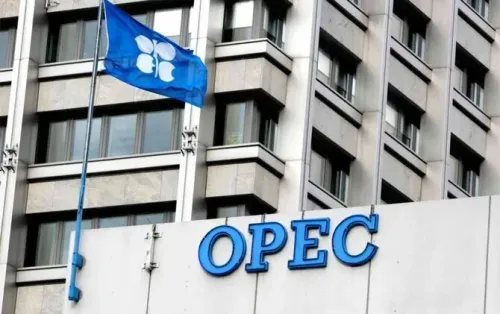
OPEC's active membership falls to 11 nations following the exit; earlier departures include Qatar , Angola , Ecuador , and Indonesia .
Analysts see the move as a gain for US President Donald Trump , who has repeatedly accused OPEC of artificially inflating oil prices.
The exit coincides with export disruptions caused by Iran's closure of the Strait of Hormuz .
The United Arab Emirates (UAE) announced on Tuesday, 28 April 2025, that it is withdrawing from both OPEC and OPEC+, effective 1 May 2025, in what analysts are calling a significant blow to the Saudi Arabia-led oil cartel. The decision strips OPEC of a member that accounts for roughly 15 per cent of the group's total oil exports.
Why the UAE Is Leaving
UAE Energy Minister Suhail Al Mazrouei announced the exit via a public statement on X, framing it as a strategic realignment. "The UAE's decision to exit OPEC aligns with sector policy-driven developments and is consistent with long-term market fundamentals," Mazrouei stated. He added that operating outside the group's obligations would give the UAE "more flexibility" in managing its energy profile. The official statement cited the country's "long-term strategic and economic vision and evolving energy profile" as the driving rationale. Despite the departure, Mazrouei expressed gratitude for "decades of constructive cooperation" and reaffirmed the UAE's "commitment to energy security by providing reliable, responsible, and low-emission supplies, supporting global market stability."
What This Means for OPEC
The UAE's exit reduces OPEC's active membership to 11 nations, following earlier departures by Qatar, Angola, Ecuador, and Indonesia over the past decade. According to the latest OPEC data, the UAE produces 2.9 million barrels of oil per day, compared to Saudi Arabia's nine million barrels — making the UAE one of the cartel's most significant producers. The loss comes at a particularly difficult moment for the group, as Persian Gulf oil exporters are reportedly absorbing heavy export disruptions linked to Iran's closure of the Strait of Hormuz.
The Trump Factor
Analysts widely view the UAE's exit as a geopolitical windfall for US President Donald Trump, who has repeatedly and publicly attacked OPEC for what he describes as artificially inflated oil prices. Trump has accused the cartel of "ripping off the rest of the world" by coordinating production cuts to keep prices elevated. The UAE's decision to operate independently of OPEC production quotas could, in theory, allow it to ramp up output — adding supply pressure that aligns with Washington's stated interest in lower global oil prices.
OPEC's Origins and Remaining Members
OPEC was founded in 1960 by five nations — Iran, Iraq, Kuwait, Saudi Arabia, and Venezuela — with the explicit goal of coordinating production to maintain price floors and maximise member revenues. Its membership has expanded and contracted over the decades. Following the UAE's departure, the remaining 11 active members are Iran, Iraq, Kuwait, Saudi Arabia, Venezuela, Algeria, Equatorial Guinea, Gabon, Libya, Nigeria, and the Republic of the Congo. The broader OPEC+ alliance, which the UAE is also exiting, includes non-OPEC producers such as Russia, Kazakhstan, Brazil, Azerbaijan, Oman, Malaysia, Mexico, Bahrain, Brunei, South Sudan, and Sudan.
What Happens Next
With the UAE now free of production quota obligations, market watchers will closely track whether Abu Dhabi moves to meaningfully increase output — a step that could accelerate a global oil price correction. Saudi Arabia, as OPEC's de facto leader, faces the dual challenge of holding the remaining coalition together while managing a market already under pressure from geopolitical disruption. The UAE's exit is likely to intensify internal debates within OPEC about the cartel's long-term relevance in a rapidly shifting energy landscape.
Point of View
Low-emission producer with significant untapped capacity. What mainstream coverage underplays is the structural signal: OPEC is now losing members not just to market fatigue but to a deliberate pivot by Gulf states toward bilateral energy diplomacy and sovereign production strategies. With Russia already a reluctant OPEC+ partner and Saudi Arabia absorbing both Hormuz-related export pain and now a 15% export share loss, the cartel's price-setting credibility is under its most serious stress since the 2016 oil price crash. Trump's opportunistic framing aside, the deeper story is whether OPEC can remain a meaningful market force as its most capable producers calculate that going it alone pays better.
NationPress
19 Sept 2026
Frequently Asked Questions
Why did the UAE leave OPEC and OPEC+?
The UAE cited its "long-term strategic and economic vision and evolving energy profile" as the primary reasons. Energy Minister Suhail Al Mazrouei stated that operating without group obligations would give the UAE greater flexibility in managing its oil production and energy strategy.
When does the UAE's OPEC exit take effect?
The UAE's withdrawal from both OPEC and OPEC+ takes effect on 1 May 2025, as announced on 28 April 2025.
How much oil does the UAE produce, and why does its exit matter?
The UAE produces approximately 2.9 million barrels of oil per day and accounts for around 15 per cent of OPEC's total oil exports. Its departure significantly reduces the cartel's collective output and bargaining power.
How many members does OPEC have after the UAE's exit?
Following the UAE's departure, OPEC will have 11 active members: Iran, Iraq, Kuwait, Saudi Arabia, Venezuela, Algeria, Equatorial Guinea, Gabon, Libya, Nigeria, and the Republic of the Congo.
How does the UAE's exit benefit the United States?
Analysts view the exit as a gain for US President Donald Trump, who has accused OPEC of artificially inflating global oil prices. A UAE free of production quotas could increase its output, adding supply to global markets and potentially pushing prices lower — aligning with Washington's stated energy policy goals.