Should AI Enhance Human Potential Rather Than Replace It?
Synopsis
The United Nations has raised alarms about the impact of Artificial Intelligence. Secretary-General Antonio Guterres urges that AI should augment human potential, not replace it. He calls for global cooperation to ensure equitable access to AI technologies, emphasizing protection for vulnerable populations and children from unregulated AI.
Key Takeaways
AI should enhance human capabilities .
Investment in workforce is crucial .
Global cooperation is needed for equitable AI access .
Protection of children from unregulated AI is essential .
AI has the potential to address global challenges .
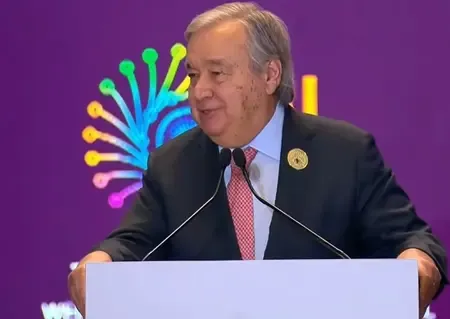
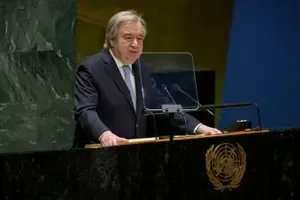
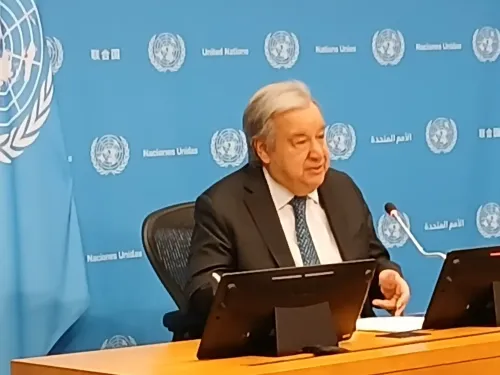
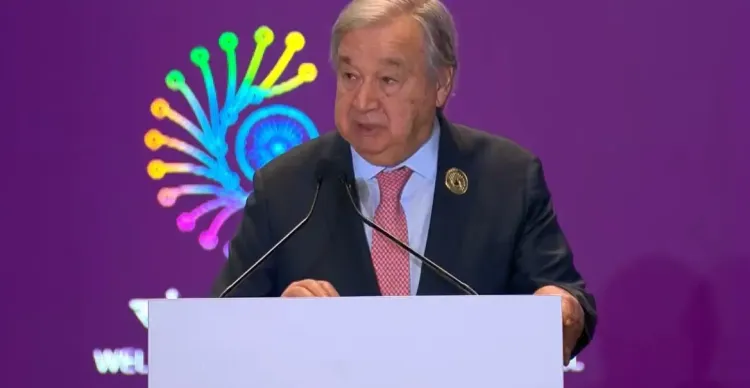
United Nations, Feb 19 (NationPress) In light of the challenges posed by Artificial Intelligence, Secretary-General Antonio Guterres emphasized on Thursday that AI should not supplant human potential but rather enhance it.
“We must invest in our workforce, ensuring that AI complements human capabilities - not substitutes them,” he stated, addressing widespread concerns regarding AI.
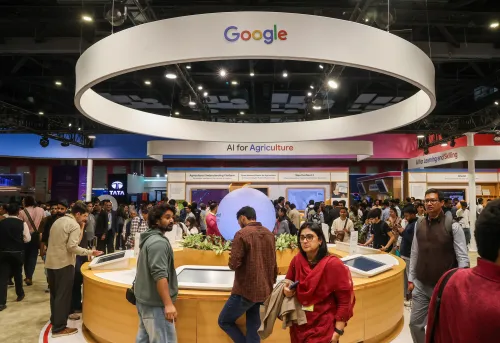
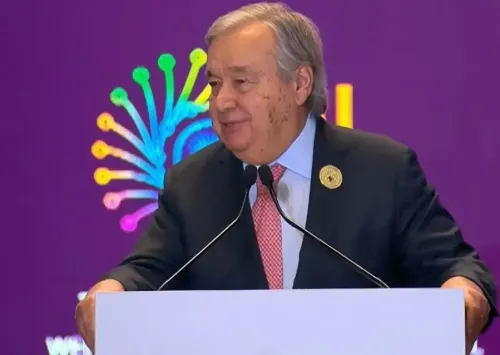
During the opening ceremony of the India AI Impact Summit at the Bharat Mandapam in New Delhi, he urged for proactive measures to address the impending social, economic, and ecological challenges stemming from the rise of AI.
“True impact involves technology that elevates lives and safeguards the environment,” he asserted. “Let us create AI that is accessible to all, with dignity as the fundamental principle.”
Concerning the repercussions of AI on climate change, he remarked, “As the energy and water requirements of AI escalate, data centers and supply chains must transition to renewable energy - rather than transferring costs to vulnerable populations.”
He stressed that “AI must be secure for every individual,” highlighting the necessity to shield “people from exploitation, manipulation, and harm.”
In light of ongoing debates about the negative effects of social media on youth, he projected into the future with AI, stating, “No child should be subjected to unregulated AI experimentation.”
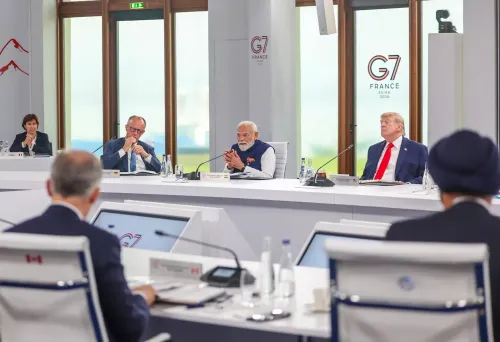
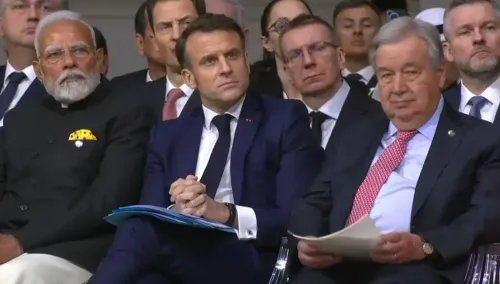
French President Emmanuel Macron, who has recently assumed the G7 presidency, echoed Guterres' concern for child protection.
“One of our G7 priorities will indeed be ensuring the protection of children from AI and digital exploitation,” he remarked.
“As you noted, Mr. Secretary-General, there is no justification for our children to encounter online what is prohibited in the physical world,” he added.
The theme of making AI universally accessible and democratizing it was a significant aspect of Guterres’ address to leaders, including presidents, prime ministers, and tech executives.
“AI should be a resource for everyone,” he stated, warning against the risk of certain nations and communities being excluded from the benefits of this technology.
“Without proper investment, numerous countries may find themselves locked out of the AI era,” he cautioned.
He reiterated his proposal for a Global Fund on AI, setting a target of $3 billion to foster basic capacities worldwide: skills, data, affordable computing resources, and inclusive ecosystems.
The proposed $3 billion is less than one percent of the annual revenue of a single tech corporation.
“That’s a minor investment for the diffusion of AI that serves everyone - including the companies developing it,” he remarked.
For instance, Microsoft, which ranks fourth among tech firms by revenue, generates $305 billion annually.
While AI has the potential to “worsen inequality, exacerbate bias, and cause harm,” Guterres affirmed that if managed correctly, it can greatly enhance the human experience.
AI has the capacity to promote the UN's Sustainable Development Goals, accelerate health advancements, fortify food security, enhance climate initiatives, improve disaster readiness, and broaden access to essential services and education, he concluded.
Point of View
It is imperative to recognize the importance of responsible AI deployment. The UN's stance underlines a shared global responsibility to ensure that technology serves humanity, rather than undermines human values. Our approach should align with the broader goal of sustainable development and protection of vulnerable populations.
NationPress
29 Sept 2026
Frequently Asked Questions
What is Secretary-General Guterres’ stance on AI?
He believes AI should enhance human potential rather than replace it, advocating for investments that support the workforce.
What are the potential risks associated with AI?
AI can exacerbate inequality and bias if not managed correctly, leading to exploitation and harm.
What is the Global Fund on AI?
It is a proposed initiative aimed at building capacity in AI across the globe, with a goal of $3 billion.
How does AI impact the environment?
AI's energy and water demands are increasing, necessitating a shift to clean power for data centers and supply chains.
What measures are being taken to protect children from AI?
Guterres emphasized that no child should be a test subject for unregulated AI, and leaders like Macron are prioritizing child protection against digital exploitation.