Wedding invite APK scam: UP man held for ₹10.02 lakh Surat fraud
Synopsis
A single tap on a WhatsApp 'wedding invitation' file cost a Surat resident ₹10.02 lakh. Police have arrested a Bijnor man who allegedly rented out his bank account to the gang for a 20% cut. His associates remain at large.
Key Takeaways
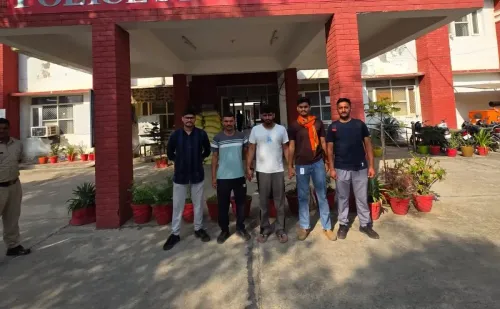
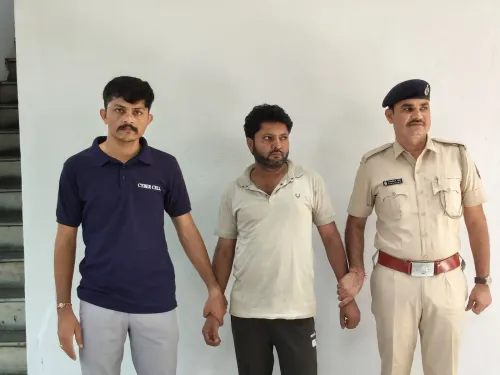
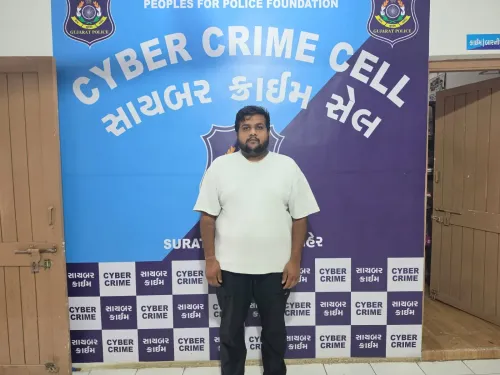
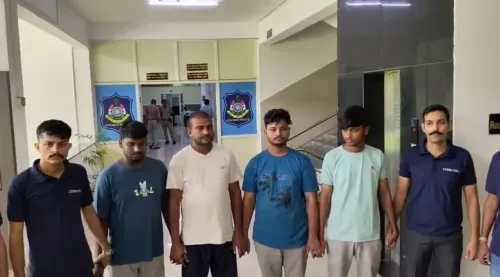
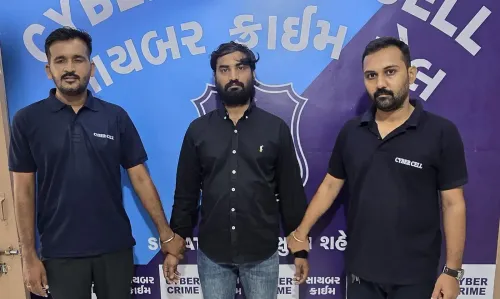
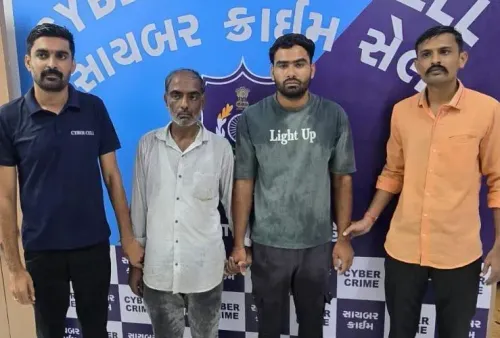
Devendra Malik , 28, of Bijnor , Uttar Pradesh, was arrested by the Surat Cyber Crime Branch .
A fake 'wedding invitation.APK' file sent on WhatsApp allegedly hacked the victim's phone, and ₹10.02 lakh was stolen.
Malik allegedly kept around 20 per cent of the withdrawn money as commission and passed the rest to absconding associates.
The case is registered under multiple BNS 2023 sections and Section 66(D) of the IT Act .
Police urge victims to call the 1930 cybercrime helpline immediately to improve chances of freezing stolen funds.
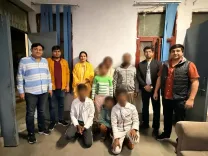
The Surat City Police's Cyber Crime Branch has arrested a 28-year-old man from Uttar Pradesh for allegedly lending his bank account to cyber fraudsters. The gang allegedly stole ₹10.02 lakh from a Surat resident after he downloaded a fake wedding invitation APK file sent on WhatsApp. Police announced the arrest on Friday, 27 November 2026.
The accused has been identified as Devendra Malik, a resident of Dharma Nagari Colony in Bijnor district, Uttar Pradesh. According to police, he allowed the fraudsters to use his account in exchange for a commission.
How the Fraud Unfolded
Police said the accused and his associates sent the complainant a malicious file named 'wedding invitation.APK' on WhatsApp, presenting it as a “genuine wedding invitation”. Once the victim downloaded the file, his mobile phone was allegedly hacked.
The fraudsters then reportedly transferred ₹10.02 lakh from his bank account without his knowledge. The money was moved into bank accounts arranged by the accused and his associates and later withdrawn through cheques.
The Accused's Alleged Role
According to the Cyber Crime Branch, Malik kept around 20 per cent of the money withdrawn and passed the rest to associates who remain absconding. Police said Malik, who studied up to Class 9 and was employed, allegedly received the stolen funds, withdrew them in cash and handed them on to other members of the network after taking his share.
Investigators examined the bank accounts used to withdraw the money. Technical analysis then led them to Malik in Bijnor.
A case has been registered at the Cyber Crime Police Station under Sections 318(4), 336(2), 336(3), 338, 340(2), 61(2) and 3(5) of the Bharatiya Nyaya Sanhita, 2023. It also invokes Section 66(D) of the Information Technology Act, 2008.
A Wider Pattern of Mule Accounts
The case shows how organised cyber fraud networks work. Those who trick victims are often far from those who hold the bank accounts, and stolen money moves through 'mule' accounts rented out for a commission. This layering makes the fraud harder to trace.
Notably, the victim was in Gujarat while the account holder was in Uttar Pradesh. The distance between the two is a common feature of such schemes. Police have not yet traced the other members of the network.
Police Advisory for the Public
The police have urged people not to download APK files received on WhatsApp or other platforms. They flagged files sent in the name of wedding invitations, RTO challans, bank services, customer support, KYC updates, government schemes, appointment bookings and grocery applications. Citizens have also been advised not to click suspicious links received by SMS or email.
“Anyone who becomes a victim of financial cyber fraud should immediately call the national cybercrime helpline, 1930, as prompt reporting can improve the chances of freezing the money in the accounts to which it has been transferred,” officials said.
Investigators are now expected to pursue Malik's absconding associates and follow the money trail further.
Point of View
But it rarely reaches the people who design and run these scams. Rented mule accounts are the weak link that lets gangs work across states, which suggests banks need sharper monitoring of unusual cheque withdrawals. The wedding-invite disguise also exploits social trust, a vulnerability no technical fix fully addresses. Until awareness of the 1930 helpline matches the scale of APK-based fraud, recoveries will remain the exception.
NationPress
27 Nov 2026
Frequently Asked Questions
What is the fake wedding invitation APK scam?
Fraudsters send a malicious file named like a wedding invitation, with an .APK extension, over WhatsApp. Once downloaded, it can hack the phone and give attackers access to bank accounts.
How much money was stolen in the Surat case?
The victim lost ₹10.02 lakh, which was transferred from his account without his knowledge. The money was later withdrawn through cheques from accounts arranged by the gang.
Who was arrested in the Surat WhatsApp APK fraud?
Police arrested Devendra Malik, 28, a resident of Dharma Nagari Colony in Bijnor, Uttar Pradesh. He allegedly provided his bank account to the fraudsters in exchange for about 20 per cent commission.
What should I do if I am a victim of cyber fraud?
Call the national cybercrime helpline 1930 immediately. Police say prompt reporting improves the chances of freezing the money in the accounts to which it was transferred.
Which APK files should people avoid downloading?
Police advise against downloading APK files that claim to be wedding invitations, RTO challans, bank services, customer support, KYC updates, government schemes, appointment bookings or grocery apps. People should also avoid suspicious links sent by SMS or email.