U.S. Unveils Extensive Multi-Domain Strikes Against Iran
Synopsis
In a significant military operation, the U.S. has revealed details of Operation Epic Fury, which executed a coordinated campaign across air, naval, cyber, and space domains, hitting over 1,000 targets in Iran within the first 24 hours. General Dan Caine highlights its extensive planning and execution.
Key Takeaways
Operation Epic Fury targeted over 1,000 sites in Iran within the first 24 hours.
The operation included air, naval, cyber, and space elements.
Thousands of personnel and advanced aircraft were involved in the campaign.
Defensive systems actively intercepted missiles aimed at U.S. forces.
The operation is seen as a culmination of years of planning and integration.
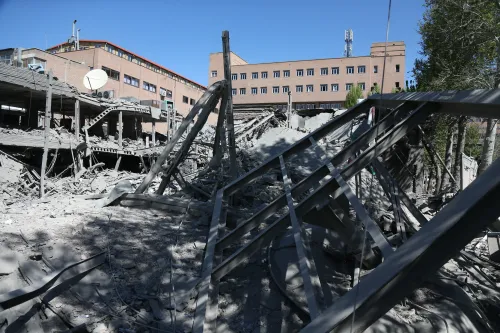
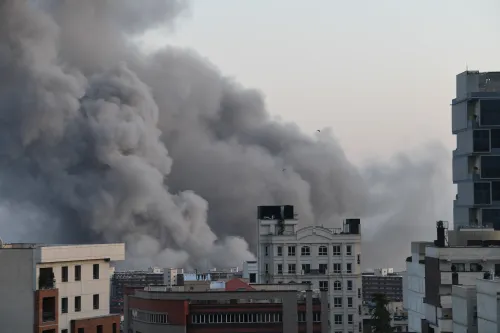
Washington, March 2 (NationPress) On Monday, the United States unveiled the magnitude of Operation Epic Fury, detailing a synchronized air, naval, cyber, and space initiative that targeted over 1,000 locations across Iran within the initial 24 hours. This operation involved thousands of military personnel, carrier strike groups, and long-range bombers that were deployed across various continents.
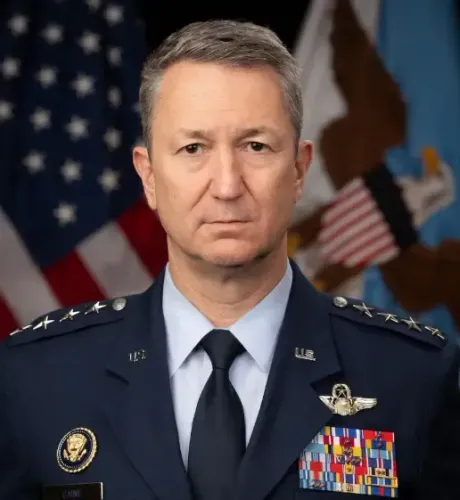
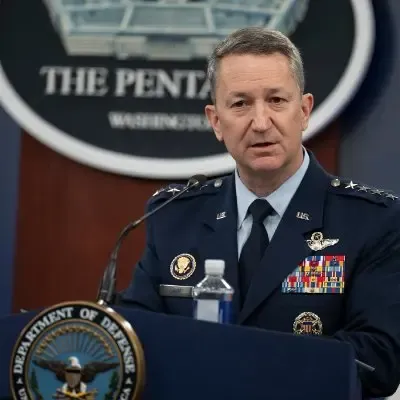
Chairman of the Joint Chiefs of Staff, Air Force General Dan Caine, stated that this operation represents the “culmination of extensive and, in some cases, years of meticulous planning and enhancement aimed at this specific target set.”
During a joint briefing at the Pentagon alongside Secretary of War, Pete Hegseth, General Caine revealed that “over 100 aircraft launched from multiple platforms including land, sea, fighters, tankers, airborne early warning, electronic attack, and bombers from the continental U.S., alongside unmanned systems, created a unified, synchronized strike.”
The operation commenced at 0115 Eastern Standard Time on February 28, following authorization from the President. Caine described the opening phase as a “massive and overwhelming assault across all warfare domains, targeting over 1,000 sites within the first day.”
In his statements and responses to inquiries, Caine elaborated on the extensive military posture established prior to the strikes. He noted that, in the previous month, the Joint Force “methodically repositioned assets and personnel throughout the region” to enhance deterrence and offer “credible responses if necessary.”
This deployment consisted of “thousands of service members from every branch, hundreds of advanced fourth and fifth-generation aircraft, numerous refueling tankers, the Lincoln and Ford carrier strike groups, and their air wings, along with a steady flow of munitions, fuel, and supplies.”
Caine highlighted the incorporation of reserve and National Guard forces, mentioning the Wisconsin Army National Guard operating in Kuwait and Iraq, as well as the Vermont Air National Guard’s 158th Fighter Wing, which redirected F-35As over the Atlantic to assist the mission.
He also stressed the critical logistics that supported the operation. “Our military leaders from World War II were correct in asserting that logistics is the backbone of military effectiveness,” he remarked.
The campaign integrated kinetic strikes with cyber and space operations. “The initial actions were carried out by U.S. Cyber Command and U.S. Space Command, layering non-kinetic effects to disrupt, degrade, and obscure Iran's capabilities to observe, communicate, and react,” Caine explained.
American B-2 bombers executed a 37-hour round-trip mission from the U.S. mainland, deploying “precision, penetrating munitions” against underground installations. Over approximately 57 hours, the Joint Force “conducted hundreds of missions from land and sea, delivering tens of thousands of munitions,” he added.
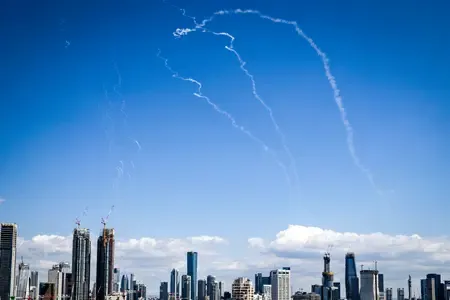
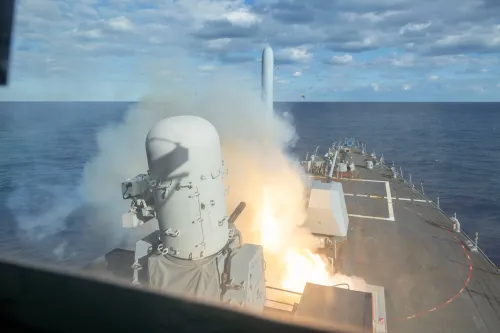
Defensive systems remained operational throughout the operation. U.S. Patriot and THAAD missile batteries, along with Navy destroyers capable of ballistic missile defense, “intercepted hundreds of ballistic missiles aimed at U.S. forces, our allies, and regional stability.”
Caine acknowledged that allied air defense systems in Qatar, the UAE, Kuwait, Jordan, and Saudi Arabia “participated in the defense effort, demonstrating that years of training, trust, and integration yield results.”
“This effort is merely the beginning and will persist,” he concluded.
Operation Epic Fury stands as one of the most extensive integrated U.S. air and naval operations in the Middle East in recent years, fusing traditional strikes with cyber and space operations in what officials describe as a fully synchronized joint-force initiative.
Point of View
It is crucial to present a comprehensive overview of the U.S. military's recent actions against Iran. This operation underscores the strategic planning and resources dedicated to ensuring national security and regional stability, while also illustrating the potential for escalation in geopolitical tensions.
NationPress
29 Sept 2026
Frequently Asked Questions
What is Operation Epic Fury?
Operation Epic Fury is a coordinated U.S. military campaign against Iran that involved air, naval, cyber, and space operations, targeting over 1,000 sites.
When did the operation begin?
The operation commenced at 0115 Eastern Standard Time on February 28, following presidential authorization.
How many aircraft were involved in the operation?
More than 100 aircraft were involved, including fighters, bombers, and unmanned platforms.
What roles did cyber and space operations play?
Cyber and space operations were crucial for disrupting and degrading Iran's capabilities to respond effectively.
What will happen next following Operation Epic Fury?
The operation's leaders have indicated that this effort is just the beginning and will continue to evolve.