How is the US Shaping Its Deterrence Strategy Towards China?
Synopsis
In a pivotal address, US Secretary of War Pete Hegseth outlines a strategy focused on deterrence through strength regarding China. This approach aims to maintain military superiority while fostering diplomatic relations, ensuring peace in the Indo-Pacific amidst rising tensions.
Key Takeaways
Deterrence through strength is the cornerstone of the US strategy towards China.
The US aims to maintain a military edge while ensuring diplomatic channels remain open.
Improving relations with China is possible without compromising on military readiness.
Allies are encouraged to increase their military investments for collective security.
The Indo-Pacific is becoming the focal point of global strategic competition.
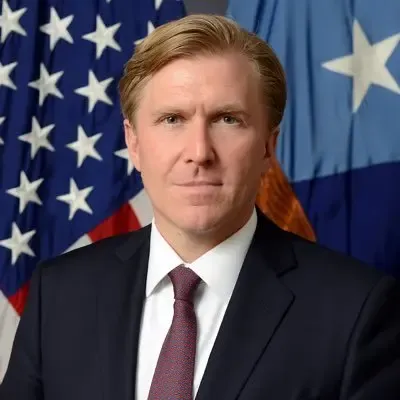
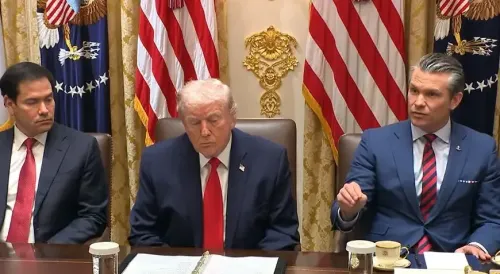
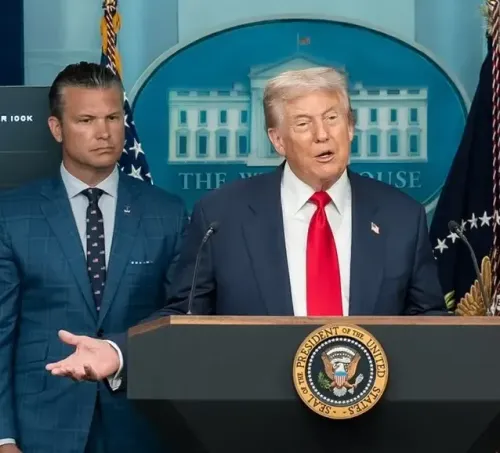
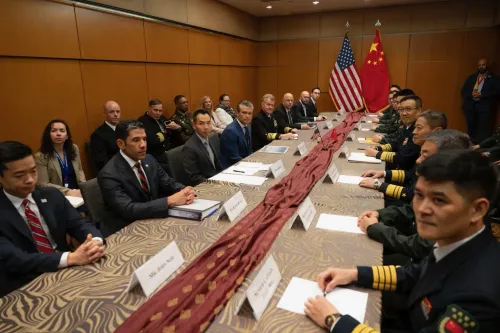
Washington, Dec 7 (NationPress) The United States is set to establish its strategy towards China based on deterrence through strength, rather than confrontation, according to US Secretary of War Pete Hegseth. He emphasized that the US will sustain a clear military advantage throughout the Indo-Pacific while simultaneously keeping diplomatic lines with Beijing accessible.
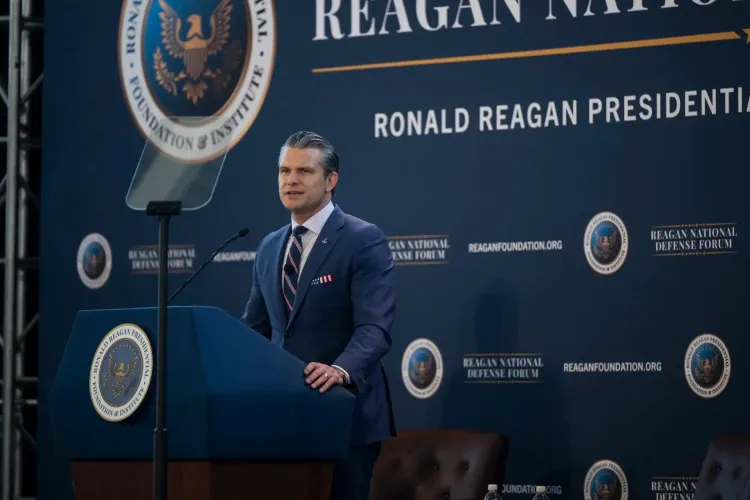
Speaking at the Reagan National Defense Forum in California, Hegseth noted that during President Donald Trump's tenure, relations with China have become more stable and robust than in previous years, highlighting a recent significant breakthrough in trade. He mentioned that reciprocal state visits planned for 2026 could lead to further advancements.
However, he clarified that enhanced communication would be supported by substantial military capability. “This initiative is grounded in flexible realism, not in naivety,” he stated. The US aims to achieve “a balance of power that allows all nations to experience a decent peace in an Indo-Pacific where trade is conducted openly and fairly, fostering prosperity for all.”
Hegseth pointed out that the US does not seek to restrict China's growth or impose strategic humiliation. “Our intention is not to stifle China's progress. We do not aim to dominate or humiliate them, nor do we wish to alter the status quo regarding Taiwan,” he affirmed.
Instead, the Trump administration is focused on maintaining a robust military presence in the region to deter any coercion or aggression. “This entails positioning ourselves, along with our allies, strongly enough in the Indo-Pacific to counterbalance China's expanding influence,” he explained. “Our definition of deterrence in the Indo-Pacific is not about dominating China, but rather ensuring they cannot dominate us or our allies.”
Hegseth emphasized the Department of War's commitment to monitoring the extent and sophistication of China's military growth. “We possess a clear understanding of the rapid and formidable nature of their military buildup. Ignoring these developments would be both foolish and disrespectful,” he remarked.
Operationally, he indicated that the United States will maintain the capability “to project sustained military power along the first island chain and across the Indo-Pacific,” ensuring that any move towards conflict becomes strategically unfeasible for Beijing. “This means being so strong that aggression is not even contemplated, thus preserving peace,” he stated.
Hegseth concluded by stating that the objective is to enable President Trump to “negotiate from a position of strength to maintain peace in the Indo-Pacific,” which he described as critical to preventing miscalculations between the two nuclear-capable powers. “We will speak softly while carrying a big stick,” he quoted Theodore Roosevelt.
He also connected China's deterrence to broader changes in allied responsibilities, particularly in Asia. He noted South Korea’s recent commitment to allocate “3.5% of GDP to essential military expenditures” and take on greater responsibility for its defense, suggesting similar initiatives would bolster the region's collective security. Allies capable of making greater military contributions, he argued, will form part of “a formidable collective defensive shield,” complicating any unilateral actions by Beijing.
The Indo-Pacific has emerged as the epicenter of global strategic rivalry, with the US, China, and regional powers heavily investing in maritime, cyber, and aerospace capabilities. Beijing’s swift naval expansion and assertiveness in the South China Sea have prompted Washington, Tokyo, Canberra, and New Delhi to intensify their security collaboration.
Point of View
It is vital to recognize the strategic importance of the US's new approach towards China. This stance emphasizes maintaining a military edge while encouraging dialogue. It reflects a nuanced understanding of global dynamics, aiming for stability in the Indo-Pacific region. We support the nation's efforts to navigate these complex waters with both strength and diplomacy.
NationPress
23 Sept 2026
Frequently Asked Questions
What is the new US strategy towards China?
The US strategy is focused on deterrence through strength, aiming to maintain military superiority while keeping diplomatic lines open.
What did Secretary Hegseth say about US-China relations?
He stated that relations are better than in recent years, highlighting a breakthrough in trade and upcoming reciprocal state visits.
Is the US trying to limit China's growth?
No, the US is not aiming to restrict China's growth or impose humiliation; it focuses instead on deterrence and maintaining balance.
How does the US plan to ensure peace in the Indo-Pacific?
By projecting military capabilities and fostering a balance of power that discourages aggression and promotes open trade.
What role do allies play in this strategy?
Allies are expected to enhance their military contributions, creating a strong defensive network that complicates unilateral actions by China.